Modern Data Stack and Data Lakehouses
Introduction to Data Platforms
The Evolution of Data Storage
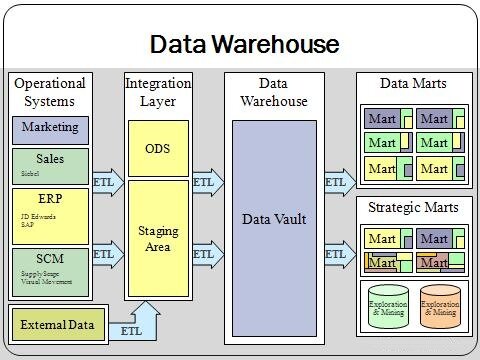
Every click, purchase, and customer interaction generates data. For decades, companies stored this information in a data warehouse. Think of a traditional data warehouse as a highly organized physical library. It's designed to hold structured data—information that fits neatly into rows and columns, like customer names, addresses, and sales figures. Just like a library's card catalog, a warehouse has a rigid schema, a predefined structure that dictates exactly what kind of data can be stored and where it goes.
This system works well for predictable, organized information. It’s excellent for standard business reporting, like tracking quarterly sales. But the digital world exploded with messy, unstructured data: social media comments, images, videos, and sensor readings. A traditional warehouse struggles with this kind of information. Trying to fit a video file into a spreadsheet column just doesn't work. They are also slow to change and expensive to scale, making them less suited for the fast-paced needs of modern analytics.
The Modern Data Stack
To handle the volume and variety of today's data, a new approach emerged: the modern data stack. It isn’t a single piece of software. Instead, it’s a collection of specialized, cloud-based tools that work together.
A modern data stack is a thoughtfully assembled collection of cloud-native tools, processes, and architecture that enables enterprises to ingest, store, transform, and analyse data with agility, scale, and governance.
Imagine building a custom stereo system. You might pick the best turntable, receiver, and speakers from different manufacturers, knowing they'll all connect and work together to produce amazing sound. The modern data stack is similar. Companies can choose the best tool for each step of the data journey—one for collecting data, another for storing it, and a third for analyzing it. This modular approach provides incredible flexibility. If a better tool comes along, you can swap it in without having to rebuild your entire system.
This modularity is a key benefit. It makes data systems more scalable and agile. Because these tools are cloud-based, they can easily handle huge increases in data volume without expensive hardware upgrades.
The Best of Both Worlds
As the modern data stack evolved, a new type of storage architecture became popular: the data lakehouse. This model combines the best features of a data warehouse and a data lake—a massive repository that can store raw data in any format.
A data lake is like a vast, natural lake. You can pour any kind of data into it, structured or unstructured, without needing to organize it first. It's cheap and flexible, but finding specific information can be like searching for a needle in a haystack. There's little to no quality control or organization.
The lakehouse architecture solves this. It provides the low-cost, flexible storage of a data lake with the powerful management and querying features of a data warehouse.
This means you can store all your data—from website clicks and ad performance metrics to customer support chats and videos—in one unified place. This structure makes it much easier to perform advanced analytics and machine learning, as you have access to a complete and unfiltered dataset.
Why This Matters for Growth
For a growth marketing agency, these modern data platforms are a game-changer. Agencies deal with a flood of data from countless sources: Google Ads, Facebook, TikTok, client CRM systems, website analytics, and more. A modern data stack and lakehouse architecture allow an agency to consolidate all this disparate information into a single source of truth.
Having everything in one place simplifies reporting and provides a complete view of the customer journey. Instead of guessing which ad campaign led to a sale, you can trace the path accurately. This is crucial for attribution—proving the value of your marketing efforts to clients.
Furthermore, these platforms are built for the future. They provide the clean, comprehensive data needed to power AI-driven tools for predictive analytics and automated reporting. You can start asking more complex questions, like "Which customers are most likely to churn?" or "What is the projected lifetime value of a customer from this campaign?"
By centralizing data, modern platforms turn complex client data into clear, actionable insights, making it easier to demonstrate marketing impact and make smarter strategic decisions.
This shift from traditional warehouses to modern data platforms isn't just a technical upgrade. It's a fundamental change in how businesses can use data to understand their customers and drive growth.
Time to check your understanding of these core concepts.
What is the primary limitation of a traditional data warehouse, as described in the analogy of a physical library?
The modern data stack is a modular collection of specialized, cloud-based tools.
These new architectures provide the foundation for powerful, data-driven strategies.