Modern Computer Systems and Architecture
CPU Pipeline Architecture
The Instruction Cycle
At its heart, a CPU's job is to follow instructions. It does this through a constant, rapid-fire process known as the fetch-decode-execute cycle. Think of the CPU as a highly efficient chef and a computer program as a recipe. The CPU's task is to go through the recipe, one step at a time, executing each instruction precisely.
The CPU repeatedly fetches instructions from memory, decodes them, executes them, and stores the results-a process called the fetch-decode-execute cycle.
This cycle breaks down into a few key stages:
- Fetch: The CPU retrieves the next instruction from memory (RAM). The address of this instruction is held in a special register called the Program Counter.
- Decode: The instruction, which is just a sequence of bits, is translated into a command the CPU's internal components can understand. The control unit figures out what needs to be done.
- Execute: The command is carried out. This might involve an arithmetic calculation in the ALU, moving data between registers, or accessing another memory location.
Once the instruction is executed, the cycle begins again with the next instruction pointed to by the Program Counter. This happens billions of times per second, creating the illusion of smooth, instantaneous computation.
Pipelining and Parallelism
A simple CPU would perform the fetch-decode-execute cycle sequentially. It would fetch one instruction, decode it, execute it, and only then fetch the next one. This is like a car wash where a single car goes through all the stages—soap, rinse, wax, dry—before the next car is allowed to enter. It works, but it's inefficient. Most of the car wash equipment sits idle waiting for one car to finish.
Modern processors use a technique called pipelining to improve throughput. Instead of waiting for one instruction to complete its entire cycle, the CPU starts working on the next instruction as soon as the first one moves to the next stage. It's an assembly line for instructions. As one instruction is being executed, the next one is being decoded, and a third is being fetched from memory. This allows multiple instructions to be in different stages of completion at the same time.
Pipelining dramatically increases the number of instructions executed per unit of time, known as throughput. However, it introduces complexity. What if an instruction depends on the result of a previous one that hasn't finished yet? This is called a data hazard. Processors use sophisticated techniques like forwarding (sending a result directly to the next instruction before it's formally written back) and stalling (pausing the pipeline) to manage these dependencies.
Another issue is a control hazard, which happens with branches (like an if statement). The CPU might fetch and start decoding instructions on one path before it knows whether the branch will be taken. If it guessed wrong, it has to flush the pipeline and start over. Modern CPUs use to make an educated guess, which is correct over 90% of the time.
RISC vs CISC
Not all instructions are created equal. The design philosophy behind a processor's instruction set, its fundamental vocabulary, has a huge impact on performance. This leads to two main approaches: Complex Instruction Set Computing (CISC) and Reduced Instruction Set Computing (RISC).
A CISC processor aims to complete a task in as few lines of assembly code as possible. A RISC processor aims to execute each instruction in a single clock cycle.
CISC, exemplified by the x86 architecture in most desktops and laptops, uses powerful, multi-step instructions. For example, a single CISC instruction might load data from memory, perform an arithmetic operation, and store the result back to memory. This makes assembly programming easier and can reduce the amount of memory a program needs.
The downside is complexity. These powerful instructions require more intricate hardware to decode and execute, and they can take a variable number of clock cycles to complete, making pipelining more difficult.
RISC, common in mobile devices (ARM architecture) and modern high-performance chips, takes the opposite approach. It uses a small set of simple, fixed-length instructions that each execute in a single clock cycle. An operation that takes one CISC instruction might require three or four (e.g., one to load, one to compute, one to store).
| Feature | CISC (Complex) | RISC (Reduced) |
|---|---|---|
| Instruction Set | Large, many complex instructions | Small, few simple instructions |
| Clock Cycles | Variable per instruction | Typically one per instruction |
| Hardware | Complex decoding logic | Simple, hardwired logic |
| Pipelining | More difficult to implement | Easier to pipeline efficiently |
| Memory Usage | Code can be more compact | Code can be larger |
| Examples | Intel x86, AMD x86-64 | ARM, Apple Silicon, RISC-V |
In reality, the lines have blurred. Modern CISC processors like those from Intel and AMD actually translate complex x86 instructions into simpler, RISC-like internal operations called micro-ops before they enter the pipeline. This gives them the best of both worlds: backward compatibility with existing software and an efficient, highly-pipelined internal core.
Cores, Clocks, and Bottlenecks
Raw clock speed, measured in gigahertz (GHz), is just one part of the performance equation. A 3 GHz processor from 2010 is vastly slower than a 3 GHz processor today. Why? Because the newer chip does far more work in each clock cycle. Its architecture is more efficient due to better pipelining, smarter branch prediction, and larger, faster caches.
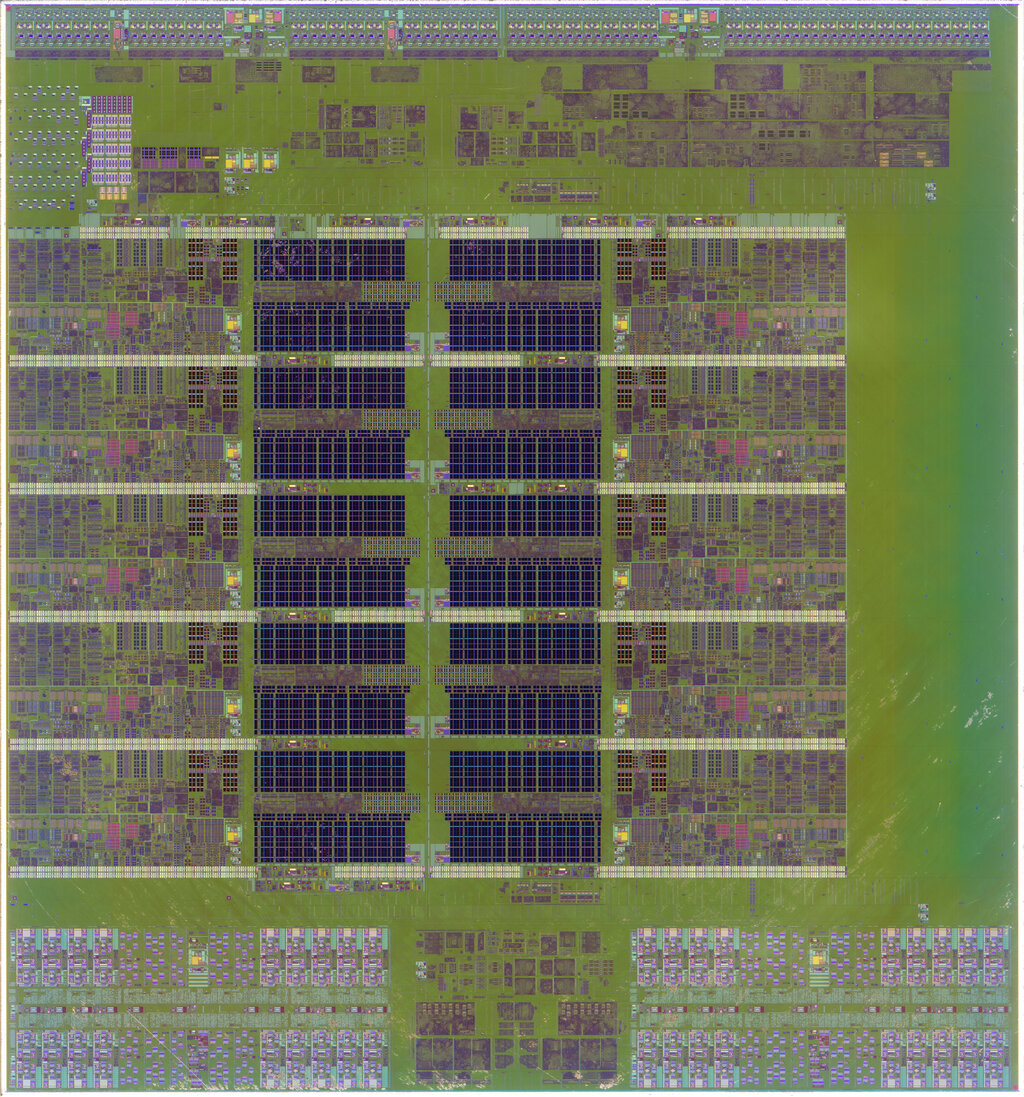
Instead of just making single cores faster, designers added more cores to a single chip. This is multi-core architecture. It allows a CPU to execute multiple instruction streams (threads) in true parallel, a huge benefit for modern software. However, it introduces a new challenge: cache coherency. Each core has its own small, fast memory cache. If one core modifies a piece of data in its cache, all other cores need to know about that change to avoid working with stale data. Hardware protocols like manage this, ensuring all cores see a consistent view of memory.
The final performance of any system is often dictated by its slowest component. Even the fastest CPU will be starved for data if it's waiting on slow RAM or a lagging storage drive. This is known as a processor bottleneck. Architects spend a great deal of effort designing balanced systems where the CPU, memory hierarchy, and I/O devices can keep up with each other, ensuring the powerful processing core is always fed with the data and instructions it needs to stay busy.
Now, let's test what you've learned about how a CPU really works.
What are the three fundamental stages of the CPU instruction cycle, in the correct order?
The text compares CPU pipelining to an assembly line. What is the primary benefit of this technique?