Modern Behavioral Synthesis
Systems Interactions and Neurobiology
The Brain's Stress Response System
When faced with a threat, your brain initiates a sophisticated chemical cascade. This isn't just a simple on/off switch. It’s a finely tuned system designed for short-term survival. The primary command center is the hypothalamic-pituitary-adrenal (HPA) axis, a network connecting your brain to your adrenal glands.
It starts in the hypothalamus, which releases Corticotropin-Releasing Hormone (CRH). This signals the pituitary gland to secrete Adrenocorticotropic Hormone (ACTH). ACTH then travels through the bloodstream to the adrenal glands, prompting them to release cortisol, the body's main stress hormone. This entire process mobilizes energy, sharpens focus, and prepares the body for a 'fight or flight' response.
In a healthy system, cortisol serves as its own brake. Once levels are high enough, it signals the hypothalamus and pituitary gland to stop releasing CRH and ACTH. This is a classic negative feedback loop. But chronic stress breaks this regulatory mechanism. Constant activation of the HPA axis leads to persistently elevated cortisol levels. The system becomes less sensitive to cortisol's stop signals, creating a state of continuous alert.
Allostasis
noun
The process of achieving stability, or homeostasis, through physiological or behavioral change. Chronic stress leads to 'allostatic load,' the wear and tear on the body that accumulates as an individual is exposed to repeated or chronic stress.
Rewiring the Brain
This constant hormonal pressure doesn't just exhaust the body; it physically remodels the brain. We see a significant shift in how the brain processes information and makes decisions, moving away from deliberate, goal-oriented actions and toward rigid, habitual behaviors.
Normally, the prefrontal cortex (PFC) is your brain's CEO. It handles executive functions: planning, impulse control, and weighing future consequences. It relies on associative circuits that connect actions to outcomes. When you're well-rested and calm, your PFC is in charge, allowing you to make thoughtful, strategic choices.
Chronic stress weakens the PFC's influence. High cortisol levels are toxic to neurons in this region, reducing synaptic connections and even shrinking its volume. As the PFC goes offline, control shifts to older, more primitive brain regions, primarily the dorsal striatum and basal ganglia. These areas govern habitual, automatic behaviors through sensorimotor loops. Instead of thinking, "If I do X, I will get Y," the brain defaults to, "When I see cue A, I automatically do B."
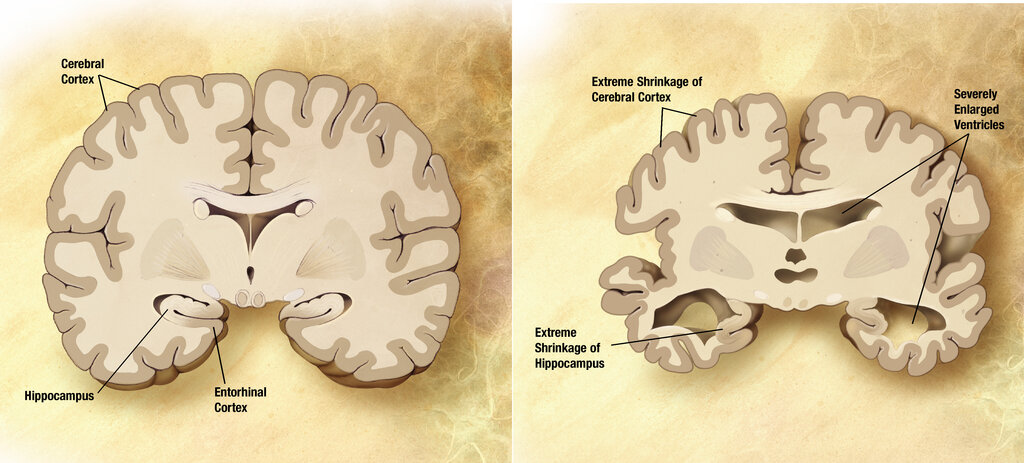
This is why, during periods of burnout, people often fall into maladaptive routines even when they know better. You might mindlessly scroll through your phone instead of working on a deadline, or eat junk food despite wanting to be healthier. It’s not a failure of willpower; it’s a neurobiological shift. Your brain's hardware has been rewired to favor immediate, automatic responses over considered, long-term goals. The habitual circuits are simply faster and more energy-efficient, and a stressed brain is a brain trying to conserve resources.
Neuroscience shows that chronic workplace stress physically alters the brain, affecting your emotions, decision-making, and even your ability to recover.
The Role of Neuroplasticity
The fight-flight-freeze response is another key piece of this puzzle. It is driven by adrenaline (epinephrine) and noradrenaline (norepinephrine), which are released instantly in response to a threat. While cortisol is about mobilizing resources for a prolonged challenge, adrenaline is about immediate survival. It floods the system, heightening alertness and physical readiness. In a professional setting, a critical email or a tense meeting can trigger this response, narrowing your focus to only the immediate threat and making complex problem-solving nearly impossible.
This might seem like a bleak picture, but the brain's capacity for change is the solution. The same mechanism that allows stress to rewire the brain—neuroplasticity—can be leveraged to build resilience and restore executive function.
Neuroplasticity is the brain's ability to reorganize itself by forming new neural connections throughout life. It means your brain's current state is not permanent.
By intentionally engaging in practices that calm the nervous system and activate the prefrontal cortex, we can begin to reverse the effects of chronic stress. Activities like mindfulness meditation, focused exercise, and even novel learning experiences encourage the growth of new connections in the PFC. They help dampen the overactive HPA axis and strengthen the circuits responsible for emotional regulation and thoughtful decision-making.
This process creates a positive feedback loop. As you build these new neural pathways, it becomes easier to choose adaptive responses over automatic, stress-driven habits. You're not just managing stress; you're fundamentally upgrading your brain's operating system to handle pressure more effectively.
Let's test your understanding of these interactions.
Which of the following correctly describes the sequence of the HPA axis activation in response to a threat?
What is the primary consequence of chronic stress on the HPA axis's negative feedback loop?
Understanding these neurobiological mechanisms is the first step toward regaining control from the automatic, reactive patterns that chronic stress reinforces.