Modern Art Movements Comparison
Impressionist Revolutions
Breaking the Frame
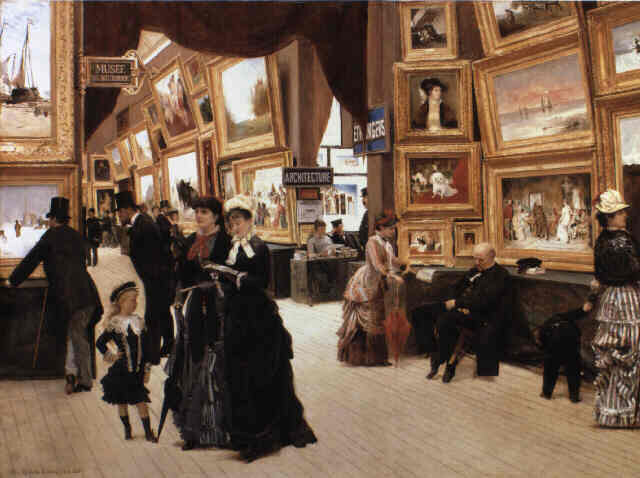
In the mid-19th century, the center of the art world was Paris. And the center of Parisian art was the Salon de Paris, an annual exhibition run by the state-sponsored Académie des Beaux-Arts. To have your work accepted by the Salon was to have a career. To be rejected was to be an outcast. The Salon championed a style known as Academic art, which prized historical subjects, mythological scenes, and pristine, almost invisible brushwork. The goal was a flawless, idealized realism, perfected within the controlled environment of the artist's studio.
But a group of young artists grew tired of these rigid conventions. They looked at the world around them—the bustling boulevards, the smoky train stations, the shimmering light on the river—and saw subjects worthy of art. They wanted to capture the immediate, sensory experience of modern life, not a polished historical drama. This required leaving the studio behind.
A Revolution in a Tube
Painting outdoors, or en plein air, wasn't a new idea, but it was impractical. Artists had to grind their own pigments by hand and store them in clumsy animal bladders. A trip to the countryside meant lugging a whole portable chemistry set. This all changed in 1841 with the invention of pre-packaged paint in tin tubes. Suddenly, artists could grab a set of colors and an easel and go wherever they pleased. This simple innovation was a catalyst for an artistic revolution.
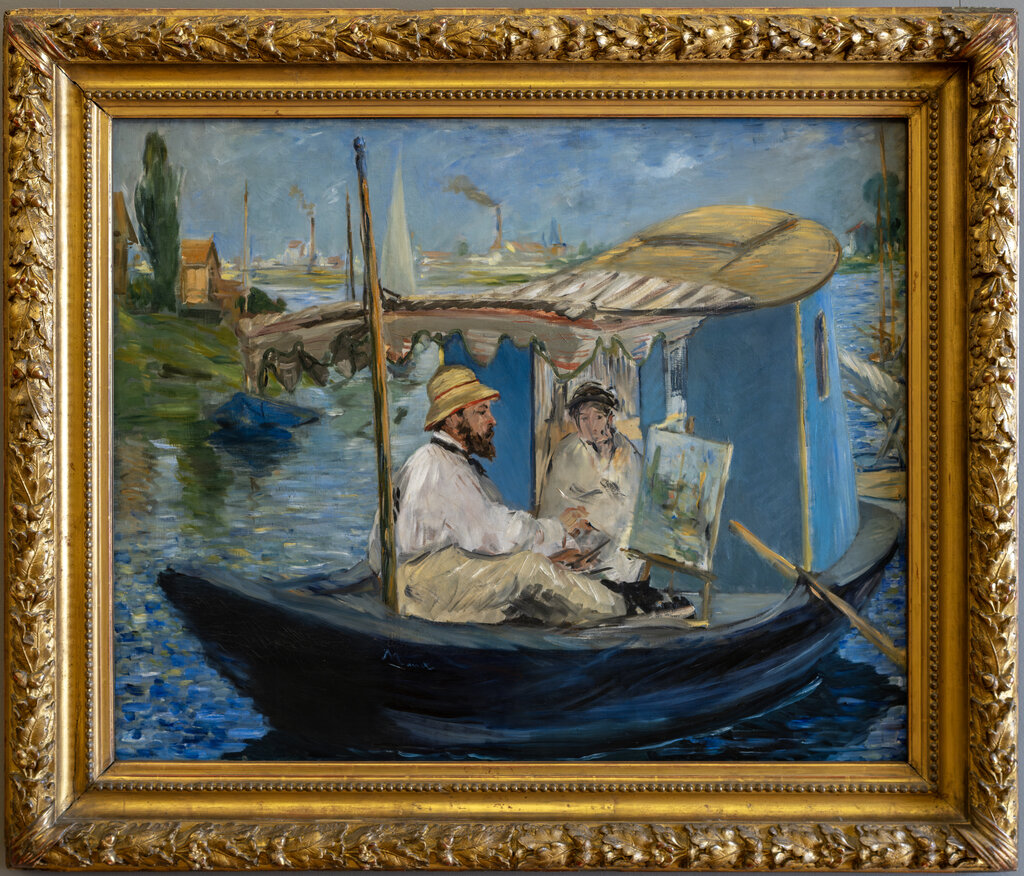
This new freedom coincided with the Industrial Revolution, which was reshaping France. Railways made the countryside accessible, while cities like Paris transformed into dynamic, modern metropolises. Artists like Claude Monet and Camille Pissarro were drawn to this new world. They painted the Gare Saint-Lazare train station, with its billowing steam, and the rapidly changing landscapes on the banks of the Seine. They weren't just painting a place; they were painting a moment in time.
Painting What the Eye Sees
When you paint outdoors, you notice things the studio hides. The biggest is that light is constantly changing. A shadow isn't just gray; it's filled with reflected light from the sky, making it blue or violet. The sun on a field of poppies isn't just one shade of red, but a dazzling mix of reds, oranges, and pinks.
Academic painters used what is called local color—the inherent color of an object. A lemon is yellow, a leaf is green, a brick is red. The Impressionists rejected this. They were more interested in the perceived color, the way light from the environment mixes in the viewer's eye. They placed small dabs of pure, unmixed color side-by-side on the canvas. From a distance, these dabs merge in a process called optical mixing to create a more vibrant, shimmering effect than any color mixed on a palette could achieve.
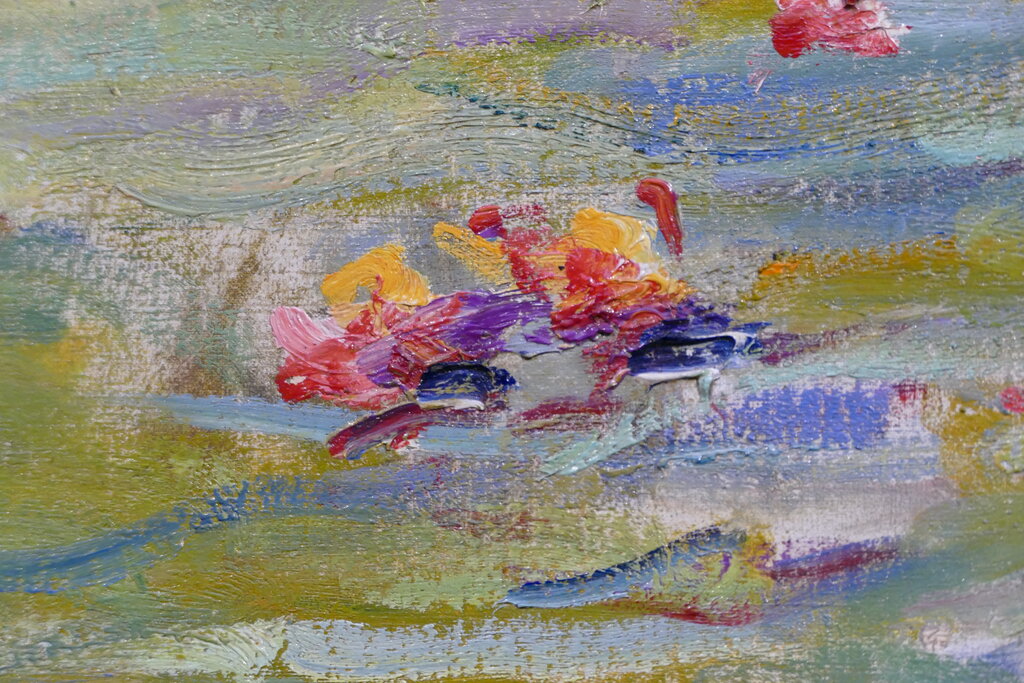
This technique forced a trade-off. To capture a fleeting moment of light, you couldn't fuss over tiny details. Brushstrokes became quicker, looser, and more visible. For the Salon, this looked unfinished. For the Impressionists, it was honest. They were painting not the object itself, but the impression of the object on their senses.
The rise of photography also played a crucial role. If a camera could capture reality with perfect accuracy, what was the point of a painter doing the same? Photography liberated painters from the need to be purely representational. It freed them to explore what painting could do that a camera couldn't: capture emotion, sensation, and the subjective experience of seeing.
The Impressionists sought to capture the former – the optical effects of light – to convey the passage of time, changes in weather, and other shifts in the atmosphere in their canvases.
In 1874, after years of rejection from the official Salon, the group decided to hold their own exhibition. A critic, mocking Monet's painting Impression, Sunrise, derisively labeled the group "Impressionists." They wore the name as a badge of honor.
That exhibition marked a turning point. It declared that art no longer needed the approval of an academy to be valid. By prioritizing sensory perception over narrative clarity and detail, the Impressionists were taking the first definitive step away from realism and toward the abstraction that would define modern art.
What was the dominant style of art championed by the Salon de Paris in the mid-19th century?
Which invention was a primary catalyst for the practice of painting "en plein air" (outdoors)?