Model Rocket Construction and Launch
Introduction to Model Rocketry
A Hobby Takes Flight
The story of model rocketry begins just after World War II, but it truly took off during the Space Race. With the launch of Sputnik in 1957, public fascination with rockets soared. Unfortunately, so did dangerous amateur experiments. People were mixing volatile chemicals in their garages, leading to serious injuries.
Enter Orville Carlisle, a shoe store owner and pyrotechnics hobbyist. He designed a small, safe, and reusable model rocket engine. He teamed up with G. Harry Stine, a safety officer at a missile range, to commercialize the idea. Together, they founded Estes Industries and turned a dangerous pastime into a safe, educational hobby enjoyed by millions.
Anatomy of a Model Rocket
At first glance, a model rocket seems simple, but each part plays a critical role in its flight. A typical rocket is made up of a handful of key components designed to work together to achieve a stable launch and safe recovery.
Here’s what each part does:
- Nose Cone: Located at the top, its aerodynamic shape reduces drag. It's also designed to separate from the body at the peak of the flight to deploy the recovery system.
- Body Tube: This is the main frame of the rocket, a lightweight but strong cardboard or plastic tube that houses all the internal components.
- Fins: These are crucial for stability. Like the feathers on an arrow, they keep the rocket flying straight by ensuring the center of pressure is behind the center of gravity.
- Engine Mount: This secure housing holds the engine in place at the bottom of the body tube.
- Recovery System: After the rocket reaches its highest point (apogee), a parachute or a streamer is deployed from the nose cone. This creates drag and slows the rocket's descent, allowing it to land gently and be used again.
The Science of Flight
How does a simple tube with fins actually fly? The answer lies in one of the most fundamental laws of physics: Newton's Third Law of Motion. For every action, there is an equal and opposite reaction.
The model rocket engine provides the "action." It rapidly expels hot gases downward. The "reaction" is the powerful upward push, or thrust, that propels the rocket into the sky. This is the same principle that powers full-sized rockets to orbit and beyond.
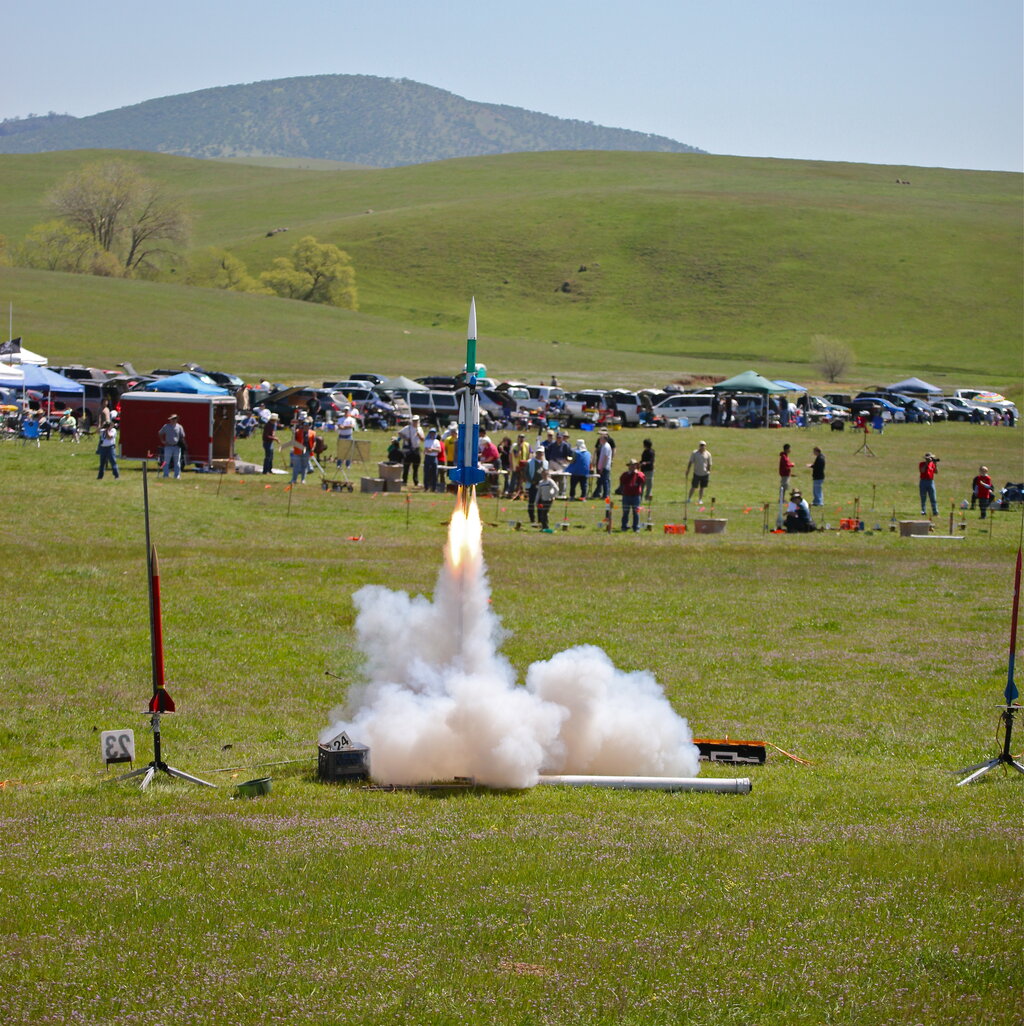
Once airborne, the rocket is in a constant battle between forces. Thrust pushes it up, while gravity pulls it down and air resistance, known as drag, tries to slow it. For a successful flight, the thrust must be greater than the forces of gravity and drag.
The rocket's stability is determined by the relationship between two key points: the center of gravity (the balance point of the rocket) and the center of pressure (the point where aerodynamic forces act). For the rocket to fly straight, the center of gravity must be located ahead of the center of pressure. The fins are key to making this happen.
Powering the Ascent
The heart of a model rocket is its engine. These are not complex liquid-fueled machines, but simple, safe, and reliable solid-propellant motors. They are single-use and contain everything needed for the flight: a solid propellant, a delay element, and an ejection charge.
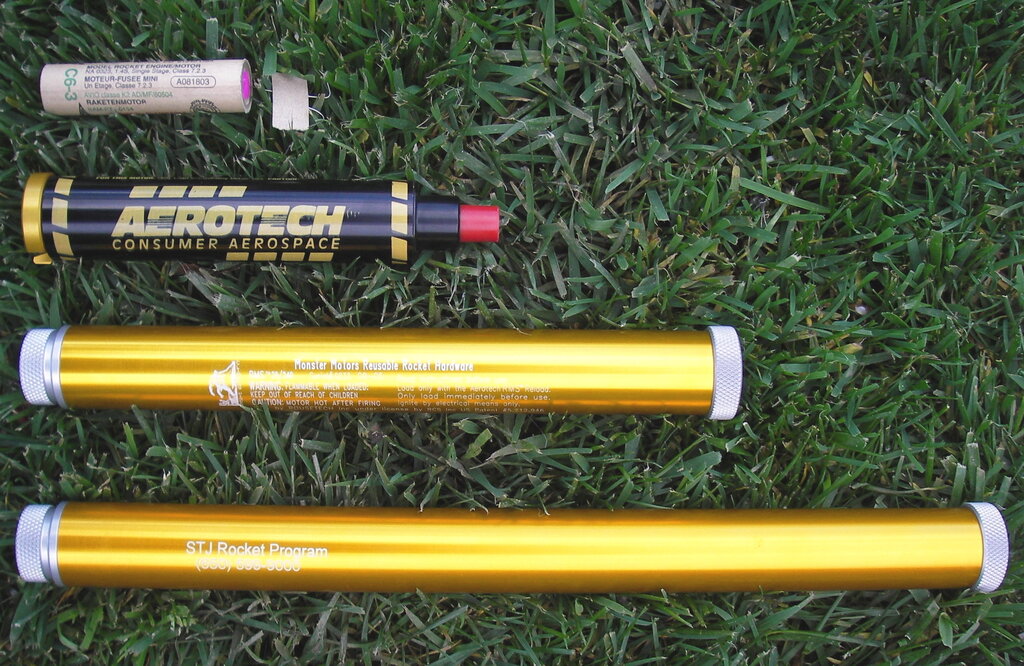
When you buy an engine, you'll see a code like C6-5 printed on it. This code tells you everything about its performance.
The letter indicates the engine's total impulse (power). The first number is the average thrust in Newtons. The second number is the time delay in seconds before the ejection charge fires.
Let’s break down that C6-5 engine:
- C: This letter represents the total impulse, or total power, of the engine. The letters go up alphabetically (A, B, C, etc.), with each letter representing up to double the power of the one before it.
- 6: This is the average thrust in Newtons. It tells you how hard the engine pushes on average during its burn.
- 5: This is the delay, in seconds, between when the propellant burns out and when the ejection charge fires to deploy the parachute. You choose this number based on how high you expect your rocket to fly, ensuring the parachute deploys at the peak of the flight.
| Code Part | Meaning | Example (C6-5) |
|---|---|---|
| Letter | Total Impulse (Power) | C (Twice the power of a 'B' engine) |
| First Number | Average Thrust (Newtons) | 6 N |
| Second Number | Ejection Delay (Seconds) | 5 seconds |
Time to review what we've covered.
Ready to test your knowledge?
What was the primary motivation for the invention of safe model rocketry?
For a stable flight, a model rocket's center of gravity must be located ahead of its center of pressure.
With these basics, you now understand the fundamental parts and principles that make model rocketry a fascinating blend of science and fun.