Model Context Protocol for AI
Introduction to MCP
A Universal Translator for AI
Before universal standards like USB-C, connecting devices was a mess. You needed a different cable for your phone, your camera, and your music player. It was complicated and inefficient. For a long time, connecting artificial intelligence models to the outside world felt a lot like that.
Every time a developer wanted an AI to read a file, access a database, or use a new software tool, they had to build a custom, one-off connection. This “glue code” was brittle, time-consuming to write, and had to be redone for each new tool.
Model Context Protocol (MCP) is a recently introduced open standard that gives AI systems a kind of “memory” and interoperability, allowing them to maintain context over multi-turn dialogues, plug into external tools and data sources, and coordinate actions across sessions.
In November 2024, the AI company Anthropic introduced a solution: the Model Context Protocol (MCP). It’s an open standard, like a shared language, that lets any AI model communicate with any external tool in a standardized way. Instead of building countless custom bridges, developers can now use one universal protocol.
The Old Way vs The New Way
The shift from custom integrations to a standardized protocol is a big deal. It makes building powerful AI applications faster, more scalable, and more secure. Before MCP, connecting a large language model (LLM) to a new data source was a significant engineering project. With MCP, it's more like plugging in a new device.
| Feature | Before MCP (Custom Integrations) | With MCP (Standardized Protocol) |
|---|---|---|
| Connection | Brittle, one-off code for each tool | Reusable, universal connection |
| Development | Slow and resource-intensive | Fast and efficient |
| Scalability | Difficult to add new tools | Easy to plug in new capabilities |
| Flexibility | AI is locked into specific tools | AI can discover and use new tools |
| Security | Handled case-by-case | Standardized and easier to manage |
This new approach allows an AI to do more than just process information. It enables the AI to act on the world by executing functions, fetching live data, and interacting with other systems seamlessly.
Key Objectives
MCP was designed with a few core goals in mind. First, to standardize how AI models request and receive information. This common language is the foundation for everything else.
Second, it allows an AI to discover what tools are available and learn how to use them. An application can simply tell the AI, "Here are the tools you have access to," and the AI can figure out which one to use for a given task, whether it's looking up a stock price, booking a flight, or analyzing a spreadsheet.
Finally, MCP helps manage context. It gives the AI a reliable way to remember past interactions and use that history to inform its next steps. This is crucial for complex, multi-step tasks.
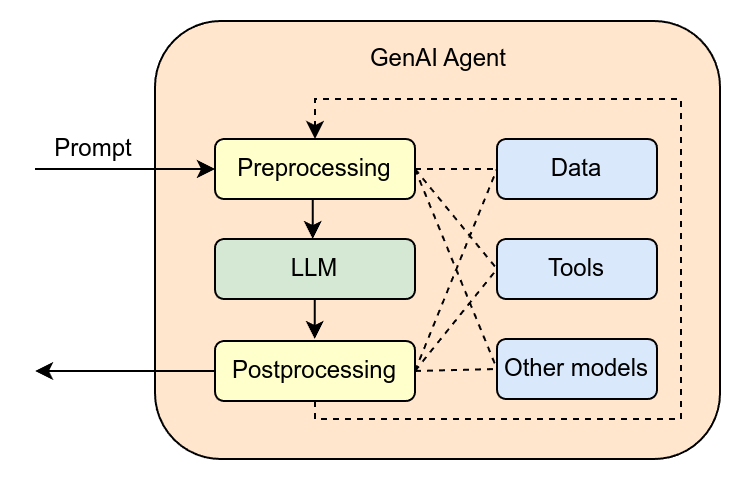
By achieving these goals, MCP creates a more robust and dynamic ecosystem. AI models are no longer isolated brains in a digital jar; they are active participants that can interact with the digital world in a meaningful way.
This protocol serves as a foundational layer. It doesn't perform the tasks itself, but it provides the critical communication channel that makes complex, agentic AI systems possible.