Mobile Money Fundamentals
Introduction to Mobile Money
What is Mobile Money?
At its core, mobile money is exactly what it sounds like: a way to manage and use money with your phone. It isn't a bank account, though. It's a service that stores funds in a secure electronic account linked to your mobile phone number. With a simple feature phone, no smartphone or internet required, users can send money to friends and family, pay bills, and buy goods.
Mobile banking or M-banking is a system that allows customers of a financial institution to conduct a number of financial transactions through a mobile device such as a mobile phone or personal digital assistant.
The idea began to take shape in the early 2000s. People were already transferring mobile airtime as a form of payment in some places. Companies saw an opportunity to build a formal system around this behavior. The result was a service that turned a phone number into a financial tool, allowing for simple, fast, and secure transactions without ever stepping into a bank.
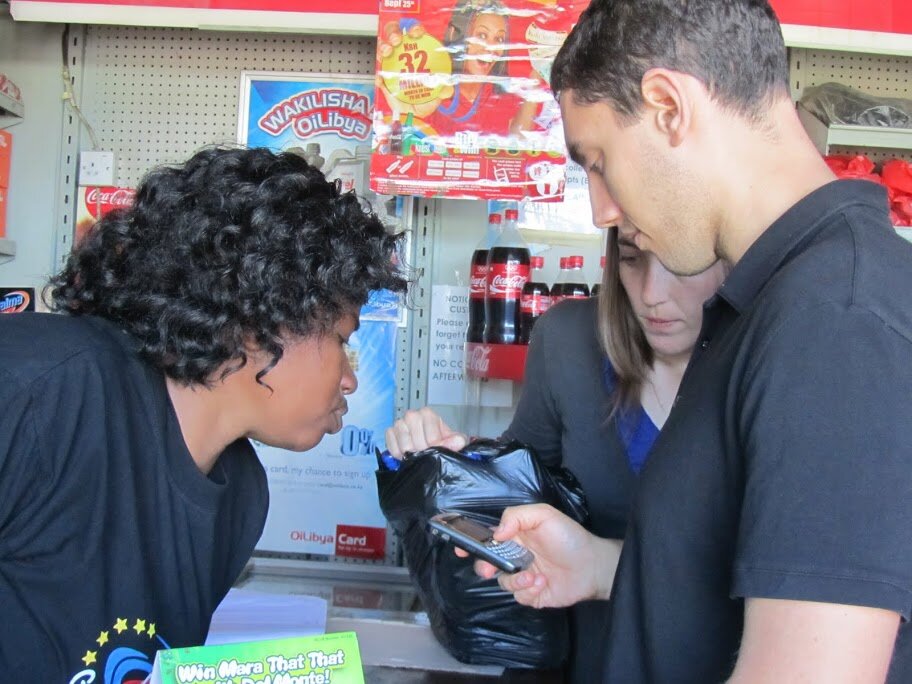
Banking the Unbanked
The real power of mobile money lies in its ability to reach people who have been left out of the traditional financial system. For billions of people, a physical bank branch is simply too far away or too expensive to use. This lack of access, known as being "unbanked," makes it difficult to save securely, receive payments, or get a loan.
Mobile money changes that. It piggybacks on existing mobile networks, which often have a much wider reach than banks. Anyone with a basic mobile phone and an ID can typically sign up for an account in minutes at a local corner store or with a mobile money agent. This accessibility is why mobile money has become a cornerstone of financial inclusion, giving people the tools to participate more fully in the economy.
By transforming a phone into a wallet, mobile money gives people who were previously unbanked a secure way to manage their finances.
The impact is huge. Small business owners can accept payments from more customers. Families can send and receive money across long distances without relying on risky cash transfers. In emergencies, people can receive aid directly on their phones. It's not just about convenience; it's about creating economic opportunity and resilience.
Not All Digital Payments are the Same
It’s easy to group mobile money in with other forms of digital payment, but there are key differences. Traditional banks offer a wide range of services like loans, mortgages, and investment accounts. Mobile money focuses on the basics: storing, sending, and receiving funds.
Digital payment platforms, like Apple Pay or PayPal, are also different. They usually require a link to a traditional bank account or credit card. They also depend on internet access and a smartphone. Mobile money, on the other hand, was designed to work on the simplest of phones using basic text-based menus, making it far more accessible in regions with limited infrastructure.
| Feature | Traditional Banking | Mobile Money | Other Digital Payments |
|---|---|---|---|
| Requirement | Bank branch, extensive ID | Basic phone, SIM card | Smartphone, internet, bank account |
| Primary Use | Savings, loans, investments | Payments, transfers, cash-in/out | Online shopping, peer-to-peer |
| Accessibility | Limited by physical branches | High, uses agent networks | Depends on internet & bank access |
The global adoption of mobile money has been most dramatic in sub-Saharan Africa, South Asia, and Latin America. In several countries, the number of mobile money accounts has surpassed the number of traditional bank accounts. This shift has not only empowered individuals but also boosted entire economies by making commerce faster, cheaper, and more secure.
Now that you understand the basics, let's test your knowledge.
What is the core feature that links a mobile money account to a user?
What is the primary societal problem that mobile money was designed to address?