MMA Integration Mastery
Striking into Wrestling
Weaving It All Together
In modern mixed martial arts, the line between striking and grappling is blurry. The best fighters don't just switch from one to the other; they use one to create opportunities for the other. Think of your strikes and your takedown attempts not as separate tools, but as two parts of a single, integrated attack. The goal is to create dilemmas for your opponent, forcing them to defend one threat while leaving another one wide open.
Every strike can be a feint for a takedown, and every takedown attempt can be a feint for a strike.
This integration starts with understanding how to use your striking to manipulate your opponent's posture and defenses. A fighter defending punches will naturally raise their hands and bring their weight up, making them vulnerable to a takedown. Conversely, an opponent worried about a takedown will lower their stance and drop their hands, opening them up for strikes to the head. Your job is to exploit this back-and-forth.
The GSP Dilemma
No one exemplified this principle better than , who mastered the art of using the jab to set up his explosive double-leg takedown. The concept is simple but devastatingly effective. When you throw a sharp jab, your opponent has two basic reactions: block it or get hit. To block it, they must raise their hands to protect their head.
The moment their hands come up, their hips and legs are exposed. This is the opening. By changing levels immediately after the jab, you can drop under their raised guard and shoot for the takedown. The jab serves as a distraction and a tool to create the perfect posture in your opponent for your real attack. This is called creating a dilemma: defend the head and expose the legs, or defend the legs and expose the head. Either way, you have an opening.
The key is selling the strike. A lazy jab won't get a reaction. It needs to be sharp enough to be a credible threat. As you throw it, you can begin your and simultaneously. Your rear foot steps up as you punch, closing the distance and loading your weight, ready to drive forward into the takedown the instant you see their hands rise.
Capitalizing on Mistakes
Another prime opportunity for a takedown is when your opponent overcommits to a power punch, like a big overhand right or a wild hook. When a fighter throws with maximum power, they often bring their weight too far forward and their head comes over their lead foot. This momentary loss of balance is your window to strike.
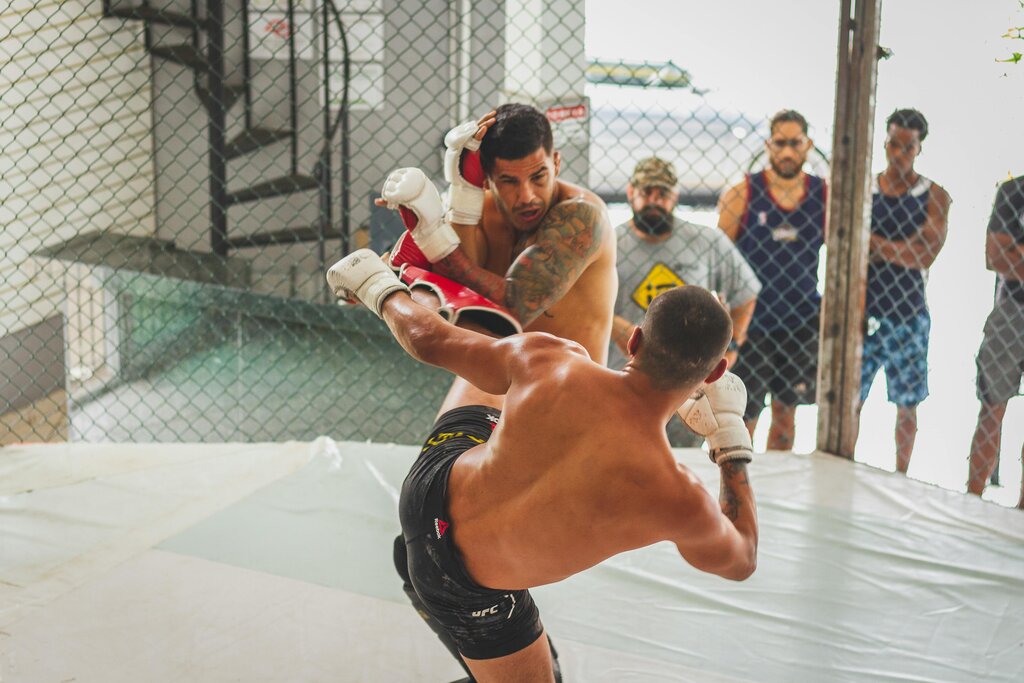
Instead of absorbing the punch, you can slip it. As you move your head offline to evade the strike, you are already halfway into a level change. Their momentum is coming toward you, making your takedown even more powerful. You are not just shooting on a static target; you are redirecting their own force. A slip to the outside of a rear-hand power punch puts your head in a perfect position to attack their lead leg for a single-leg takedown, or to drive through them for a double.
If at First You Don't Succeed
Even the best-timed takedown can be defended. Your opponent might have a great sprawl, getting their hips back and stuffing your initial shot. This is where comes into play. It's the idea that one takedown attempt flows directly into another. A failed double-leg doesn't mean the attempt is over.
From that sprawled position, you can immediately transition to a single-leg takedown by grabbing an ankle. If they defend that, you can try to drive them towards the fence or switch to a body lock. The key is to not stop moving or thinking. Every defense creates a new opening. By constantly changing your angle and attack, you force your opponent into a purely reactive state, increasing the odds that one of your attempts will eventually succeed.
Modern MMA fighters often blend BJJ with wrestling to create a hybrid grappling style.
Now, let's test your understanding of these transitional concepts.
What is the primary strategic goal of integrating striking and grappling in modern MMA, as described in the text?
According to the text, what specific strike did Georges St-Pierre master to set up his explosive double-leg takedown?