MLOps for Management
Introduction to MLOps
What is MLOps?
Creating a machine learning model is a bit like building a concept car. It might look amazing and perform well in a controlled test environment, but that's a long way from mass production. How do you build thousands of them reliably, ensure they all work on the road, and fix them when they break down?
That's where MLOps, or Machine Learning Operations, comes in. It’s a set of practices that applies the principles of DevOps—a philosophy that combines software development (Dev) and IT operations (Ops)—to the world of machine learning. The goal is to standardize and streamline the lifecycle of machine learning models, from initial design to real-world deployment and maintenance.
MLOps refers to a set of processes that ensure reliable and efficient deployment and maintenance of machine learning models in production.
Without MLOps, a brilliant model might remain stuck on a data scientist's laptop, never delivering real value. It creates a reliable path for models to get from the workshop to the highway.
Bridging the Gap
Traditionally, data science and IT operations teams have worked in separate silos. Data scientists focus on experimenting with data and building predictive models. IT teams, on the other hand, are responsible for maintaining stable, secure, and scalable systems.
This separation often creates a bottleneck. A data scientist might build a highly accurate model, but getting it to work within the company's live production environment can be a major challenge. The tools, dependencies, and data access needed to run the model might conflict with the existing infrastructure. MLOps acts as the crucial bridge between these two worlds, fostering collaboration and creating a unified, automated process.
This diagram shows the key stages in a typical MLOps lifecycle. It's a continuous loop, not a one-time process. Insights from monitoring might trigger retraining a new model, starting the cycle all over again.
Why Bother with MLOps?
Implementing MLOps requires effort, but the benefits are significant. It transforms machine learning from a research-oriented, experimental practice into a reliable and scalable business function.
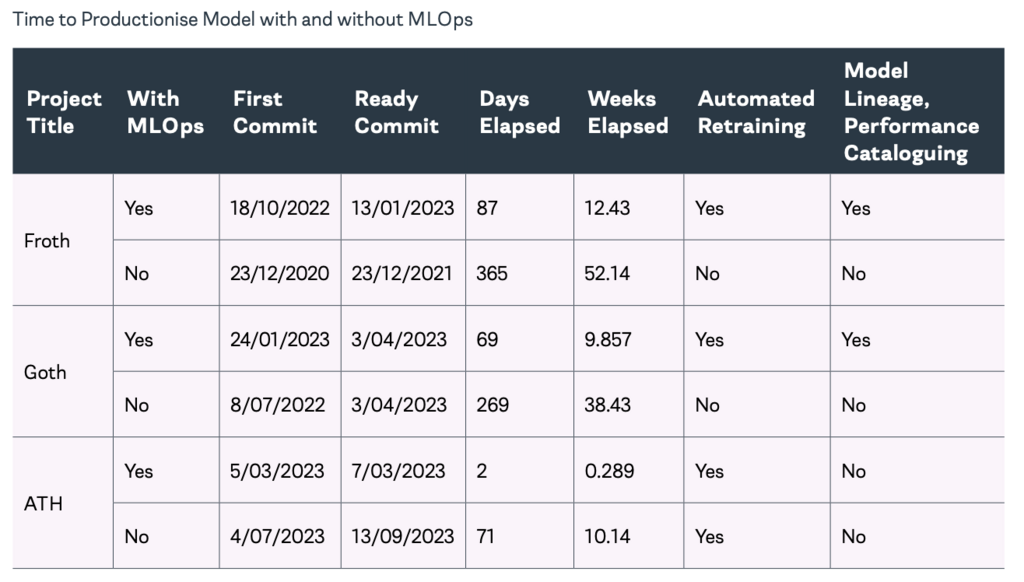
Faster Deployment: Automation is at the heart of MLOps. By automating the steps for testing, validating, and deploying models, teams can release new models and updates much more quickly and with fewer errors. This speed allows a business to adapt rapidly to changing market conditions.
Improved Reliability: MLOps introduces rigorous testing and validation at every step. Models are continuously monitored in production to catch performance degradation or data drift, where the live data starts to look different from the training data. This ensures the models in production are always making reliable predictions.
Enhanced Collaboration: MLOps provides a common framework and shared tools for data scientists, ML engineers, and IT operations staff. Everyone understands the process, which breaks down silos and encourages teamwork. This leads to a more efficient and less frustrating development lifecycle for everyone involved.
The key components of MLOps work together to create this robust system.
- Data Management: This includes everything related to data, like collection, cleaning, labeling, validation, and versioning. Just as code is versioned, so too should data and models be, to ensure reproducibility.
- Model Development: This is the traditional domain of data scientists, but within MLOps, it’s structured for automation. It involves training, testing, and packaging models in a way that they can be easily deployed.
- Deployment: This is the process of getting a trained model running in a live environment where it can serve predictions to users or other systems. This can range from a simple API endpoint to a complex, distributed system.
- Monitoring: Once a model is deployed, its job isn't done. It needs to be watched constantly. Monitoring tracks the model's performance, resource usage, and prediction accuracy to ensure it's behaving as expected.
- Governance: This is the oversight layer that ensures the entire process is compliant, secure, and ethical. It involves tracking model lineage, managing access controls, and ensuring that models are fair and explainable.
Let's review the main ideas.
Ready to check your understanding?
What is the primary goal of MLOps?
The MLOps lifecycle is a one-time process that ends once a model is deployed.
By embracing these principles, organizations can unlock the full potential of their machine learning initiatives, moving beyond experimentation to create real, lasting value.