MLOps for Agentic AI
Introduction to MLOps
From Prototype to Production
Building a machine learning model in a lab is one thing. It's like a team of engineers crafting a single, high-performance prototype car. It's impressive, but it's not ready for the real world. Getting that model to work reliably for millions of users, day after day, is a completely different challenge. That's where MLOps comes in.
MLOps, or Machine Learning Operations, is the practice of applying software engineering and DevOps principles to the machine learning lifecycle. It's the factory floor, the quality control, and the maintenance crew all rolled into one. It provides the structure needed to build, deploy, and maintain ML models efficiently and reliably.
MLOps refers to a set of processes that ensure reliable and efficient deployment and maintenance of machine learning models in production.
Without MLOps, a brilliant model might never leave the data scientist's computer. Or worse, it could be deployed and then slowly become inaccurate as the world changes around it, a problem known as model drift. MLOps provides the tools and processes to prevent this, ensuring that models remain valuable over time.
The MLOps Lifecycle
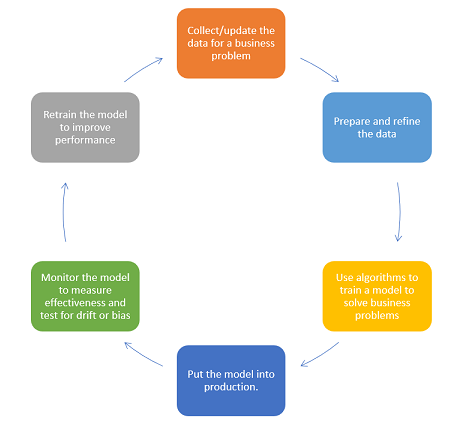
MLOps isn't a single tool, but a philosophy that covers the entire journey of a model. It creates a continuous, automated loop that ensures models are always performing at their best. This loop has several key stages.
Data Management: High-quality models are built on high-quality data. This stage involves collecting, cleaning, and versioning data. Just like code, data changes. Keeping track of these changes is crucial for reproducing results and understanding model behavior.
Model Development: This is where data scientists train and evaluate models. In an MLOps environment, this process is automated and repeatable. Experiments are tracked, and code is stored in a central repository, making it easy for teams to collaborate.
Deployment: Once a model is ready, it needs to be released into a live environment where it can make predictions on new data. Deployment strategies can range from a simple release to more complex methods like A/B testing, where different models are shown to different users to see which one performs better.
Monitoring: A deployed model is never truly "done." It must be continuously monitored for performance, accuracy, and fairness. If the model's performance degrades, an alert is triggered, and the cycle begins again with new data or a new model.
Collaboration and Ethics
MLOps creates a bridge between different teams. Data scientists, software engineers, and operations specialists can finally speak the same language and work together seamlessly. This collaboration is essential for building robust AI systems. By using shared tools and automated workflows, teams can move faster and reduce the risk of human error.
Beyond efficiency, MLOps also plays a critical role in responsible AI. A structured MLOps process provides transparency and accountability. Every step, from data sourcing to model deployment, is logged and auditable.
This makes it easier to answer important questions:
- What data was this model trained on?
- How did we test it for bias?
- Why did the model make a specific prediction?
By building these checks into the automated lifecycle, organizations can ensure their AI systems are not only powerful but also fair, transparent, and aligned with ethical principles.
Good MLOps practices make it easier to build AI responsibly, providing a clear audit trail for a model's behavior.
Now, let's test your understanding of these core concepts.
What is the primary goal of MLOps?
What is "model drift," and how does the MLOps lifecycle address it?
Understanding these foundational ideas is the first step in appreciating how complex, automated systems are built and managed in the real world.