MLIR Fundamentals
Introduction to Compiler Design
From Code to Machine
At its heart, a compiler is a translator. It takes the code you write in a high-level language like C++ or Python and converts it into machine code, the low-level instructions that a computer's processor can actually execute. Without this translation, your carefully crafted program is just a text file, meaningless to the hardware.
A compiler works in several stages to transform high-level source code into efficient machine code.
This process isn't a single, monolithic step. Instead, it’s more like an assembly line, where your code passes through a series of distinct phases. Each phase transforms the code, adding information and refining it, until it’s ready for the processor.
The Compilation Pipeline
Let's walk through the key stages of this pipeline. Imagine you've written a simple line of code: position = initial + rate * 60;.
-
Lexical Analysis: The compiler first scans the text and breaks it into small, meaningful chunks called tokens. It’s like breaking a sentence into words and punctuation. For our example, the tokens would be
position,=,initial,+,rate,*,60, and;. -
Parsing (Syntax Analysis): Next, the compiler checks if these tokens are arranged according to the language's grammar rules. It builds a tree-like structure called an Abstract Syntax Tree (AST) that represents the code's structure. This phase ensures your code is syntactically correct, just like checking for proper grammar in a sentence.
-
Semantic Analysis: Just because a sentence is grammatically correct doesn't mean it makes sense. This phase checks the meaning of the code. For instance, are you trying to add a number to a string? Have the variables
position,initial, andratebeen declared? Are their types compatible? The compiler annotates the AST with this type of information. -
Optimization: This is where the compiler tries to make your code better, typically faster or smaller, without changing its behavior. It might rearrange instructions or eliminate redundant calculations. For example, if
ratewas a constant, the compiler could calculaterate * 60ahead of time and replace it with the result. -
Code Generation: Finally, the compiler takes the optimized representation and translates it into the target machine code—the sequence of binary instructions the CPU can execute.
The Role of the Middleman
Notice that the optimization phase doesn't work directly on the AST or the final machine code. Instead, most compilers convert the code into an Intermediate Representation (IR) after the semantic analysis phase. An IR is an abstract language that's independent of both the original source language and the target hardware.
Think of an IR as a universal blueprint. It captures the essence of the program in a way that's easy for the compiler to analyze and transform.
Using an IR has a huge advantage. If you want your compiler to support five different programming languages and target ten different types of hardware, you don't need to write 50 different translators. You can write five "front ends" that convert each language to the common IR, and ten "back ends" that convert the IR to machine code for each hardware target. This modularity makes compiler development much more manageable.
Modern Challenges
Compiler design has gotten much harder over the years. The clean separation of a single front end, IR, and back end is no longer enough. Two major challenges stand out.
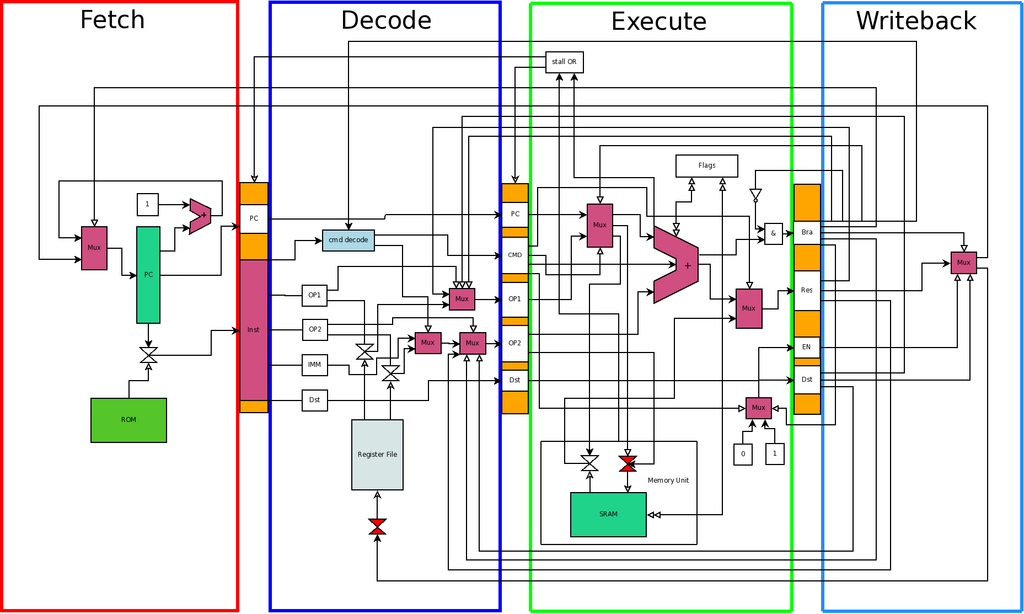
Heterogeneous Hardware: A single system might contain multiple types of processors. Your phone, for example, has a main CPU, a graphics processing unit (GPU), and maybe even a specialized chip for artificial intelligence tasks (like a TPU or NPU). Each of these speaks a different language and has unique strengths. A traditional, single IR isn't good at representing code for all these different targets simultaneously.
Domain-Specific Optimizations: Optimizing a machine learning model is very different from optimizing a video game's graphics engine. These different domains require specialized knowledge. A general-purpose optimizer working on a generic IR often misses opportunities to make domain-specific code run much faster.
These challenges—the need to support diverse hardware and apply specialized optimizations—are the driving force behind new compiler technologies. Understanding this foundation of what a compiler does and the problems it faces is key to appreciating why modern infrastructures like MLIR are necessary.
What is the primary function of a compiler?
Consider the code value = 10 * 5;. Which phase of compilation breaks this line into tokens like value, =, 10, *, 5, and ;?