ML AI and Economics Expert
Introduction to Machine Learning
What Is Machine Learning?
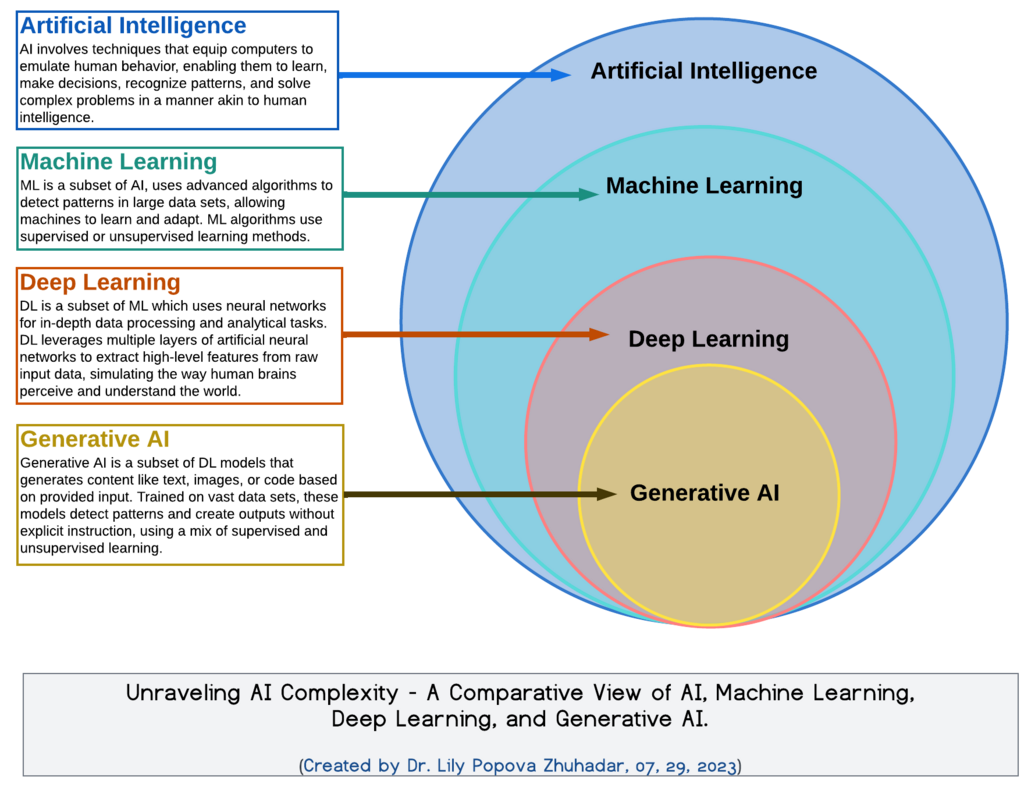
Machine learning teaches computers to learn from experience, much like humans do. Instead of writing explicit, step-by-step instructions for every possible task, we give the computer data and let it figure out the patterns on its own.
Think of it like this: you could write a program with countless rules to identify a cat in a photo—it must have pointy ears, whiskers, fur, and so on. But what about a cat with its ears folded back, or one hiding behind a bush? A machine learning approach is different. We show the computer thousands of photos, some labeled "cat" and others "not a cat." The machine then learns the underlying features that define a cat, even ones we might not think to describe.
The goal is to use these learned patterns to make predictions or decisions about new, unseen data. From recommending your next favorite song to detecting fraudulent transactions, machine learning powers systems that adapt and improve over time.
Two Main Flavors of Learning
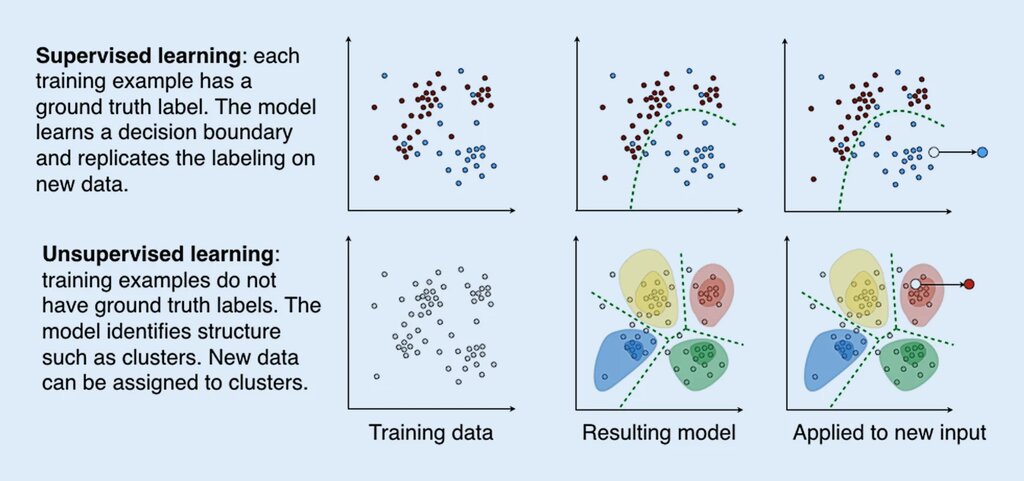
Most machine learning falls into two main categories: supervised and unsupervised learning. The difference comes down to whether the data has labels, like an answer key for a student.
Supervised learning uses labeled data. The algorithm learns by comparing its predictions to the correct answer and then adjusts itself to get closer to the truth. It's like learning with flashcards that have the question on one side and the answer on the other.
Spam filters are a classic example. They are trained on millions of emails that have already been labeled as "spam" or "not spam." The model learns the characteristics of junk mail so it can sort your incoming messages correctly.
Unsupervised learning works with unlabeled data. The algorithm's job is to explore the data and find hidden patterns or structures without any pre-existing answers. It's like being given a pile of mixed LEGO bricks and asked to sort them into groups that make sense.
For instance, a company might use unsupervised learning to analyze customer purchase data. The algorithm could identify distinct groups of customers, like "weekend shoppers" or "bulk buyers," without being told what to look for. This helps the company understand its customer base better.
Common Learning Algorithms
Algorithms are the specific methods computers use to learn from data. There are many, but a few form the backbone of many machine learning applications.
In supervised learning, Linear Regression is used to predict a continuous value, like the price of a house based on its size and location. Decision Trees make predictions by asking a series of yes-or-no questions, creating a flowchart-like structure to reach a conclusion. They are great for classification tasks, like deciding if a loan application should be approved or denied.
In the unsupervised world, Clustering algorithms are key. The most famous is K-Means, which groups data points into a specified number of clusters (). Its goal is to make the points within each cluster as similar as possible, while making the clusters themselves distinct from one another.
How Do We Know If It Works?
Building a model is only half the battle. We also need to know how well it performs. This is where model evaluation comes in. We test the model on data it has never seen before to get an honest assessment of its predictive power.
For supervised tasks, we use metrics to measure how close our predictions are to the actual values. Accuracy is a common one. It simply tells us what fraction of predictions were correct. For example, if our spam filter correctly identifies 95 out of 100 emails, it has an accuracy of 95%.
However, accuracy isn't always the full story. If we're trying to predict a rare disease, a model that always predicts "no disease" might be 99.9% accurate but completely useless. Other metrics like precision and recall provide a more nuanced view by looking at different types of errors.
Evaluating a model is a critical step. It ensures that the model is not just memorizing the training data but has actually learned general patterns that are useful in the real world.
What is the primary difference between supervised and unsupervised machine learning?
A real estate company wants to build a model to predict the selling price of a house based on features like its size, number of bedrooms, and location. Which machine learning algorithm is best suited for this task?
This foundation in supervised and unsupervised learning opens the door to a huge range of applications, allowing us to find insight and make predictions from complex data.