Mitochondria The Powerhouses of the Cell
Mitochondrial Structure
Inside the Powerhouse
Mitochondria are often called the "powerhouses" of the cell, and for good reason. They generate most of the cell's supply of adenosine triphosphate (ATP), which is used as a source of chemical energy. To understand how they do this, we first need to look at their unique structure. Think of a mitochondrion as a tiny, specialized factory.
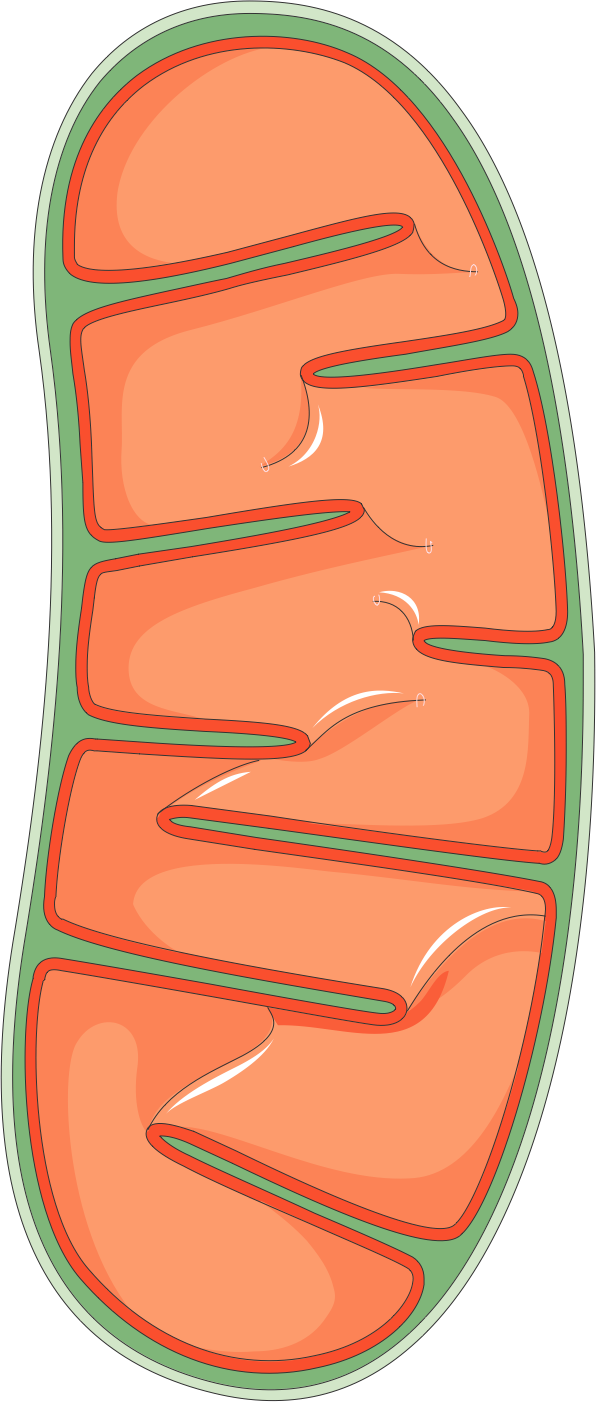
Every mitochondrion is enclosed by two separate membranes, one inside the other. This double-membrane system is key to its function. The outer membrane is smooth and covers the organelle like a skin, controlling what enters and leaves. It contains proteins called porins, which form channels that allow small molecules to pass through easily.
The inner membrane, however, is much more selective. It's tightly regulated, only allowing certain molecules like oxygen and ATP to cross. This strict control is crucial for maintaining the right conditions for energy production. But its most striking feature isn't what it blocks, but its shape.
Folds for Function
Unlike the smooth outer membrane, the inner membrane is elaborately folded. These folds, called cristae (singular: crista), dramatically increase the surface area of the membrane. Imagine trying to fit a very long piece of thread into a small box. You wouldn't just stuff it in; you'd wind it up carefully. The inner membrane folds in on itself for a similar reason: to pack as much surface as possible into a tiny space.
Why is more surface area better? Because the machinery for making ATP is embedded directly into this inner membrane. More folds mean more room for these protein machines, leading to much higher energy production.
The Inner Compartment
The space enclosed by the inner membrane is called the mitochondrial matrix. It's a gel-like substance, dense with enzymes, ribosomes, and other molecules necessary for the mitochondrion's work. Many of the chemical reactions involved in cellular respiration happen right here in the matrix.
matrix
noun
The substance filling the space within the inner mitochondrial membrane, containing a mixture of enzymes and other molecules.
Together, the two membranes and the matrix create distinct compartments, each with a specific role in the complex process of converting food into cellular energy. The architecture of the mitochondrion is perfectly suited for its job as the powerhouse of the cell.
Now, let's test your knowledge of the mitochondrion's architecture.
What is the primary role of mitochondria in the cell?
The inner mitochondrial membrane is elaborately folded. What is the main advantage of these folds, known as cristae?
Understanding this structure is the first step to seeing how cells power everything you do, from thinking to moving.