Mitochondria The Cell's Powerhouse
Mitochondrial Structure
Inside the Powerhouse
Mitochondria are often called the cell's powerhouses, but before we can understand how they generate energy, we need to look at how they're built. Think of a mitochondrion not just as a single object, but as a complex structure with multiple layers and compartments, each with a specific role. This intricate design is key to its function.
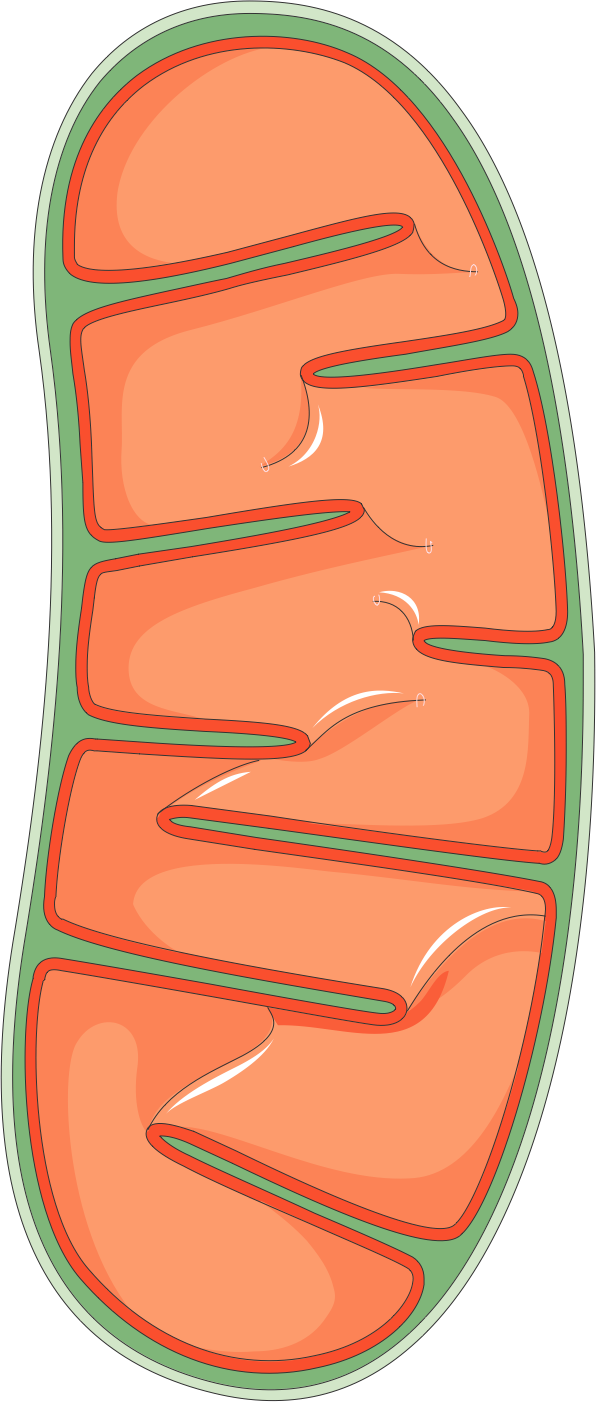
The entire organelle is enclosed in a double membrane, creating a 'bag within a bag' structure. Let's peel back these layers one by one, starting from the outside.
The Membranes
The first layer you'd encounter is the outer membrane. It's a smooth, continuous boundary that separates the mitochondrion from the rest of the cell's cytoplasm. This membrane contains many protein channels called porins, which allow small molecules and ions to pass through freely. In essence, it acts as a simple filter, keeping large molecules out while letting smaller ones in.
Nestled just inside is the intermembrane space, a narrow gap between the outer and inner membranes. The chemical composition of this space is quite different from the main cellular cytoplasm because the inner membrane is much more selective about what it lets through.
The inner membrane is the real gatekeeper. Unlike the outer membrane, it is highly folded and strictly controls which molecules can cross into the mitochondrion's core. This selective permeability is crucial for the mitochondrion's energy-producing processes. Its unique, folded structure is one of its most important features.
The inner membrane has infoldings called the cristae that increase the surface area for the complexes and proteins that aid in the production of ATP, the energy rich molecules.
These folds are called cristae. They look like shelves or finger-like projections extending into the center of the mitochondrion. By dramatically increasing the surface area of the inner membrane, the cristae provide much more room for the proteins and enzymes involved in energy conversion to operate.
The Core
Finally, we reach the innermost compartment, known as the matrix. This dense, gel-like substance fills the center of the mitochondrion. The matrix is a bustling hub of metabolic activity.
It contains a concentrated mixture of enzymes, mitochondrial DNA (mtDNA), ribosomes, and various small molecules. The presence of its own DNA and ribosomes is a fascinating feature, allowing the mitochondrion to produce some of its own proteins and replicate independently of the cell's main division cycle.
Let's check your understanding of these different components.
What is the primary role of the porins found in the mitochondrial outer membrane?
The dense, gel-like substance that fills the innermost compartment of the mitochondrion is called the ____.
Each part of the mitochondrion, from its protective outer layer to its enzyme-filled core, is precisely arranged. This detailed architecture provides the framework for the vital process of cellular energy production.