Mining M&A Strategy for Executives
Mining Lifecycle Economics
From Resource to Reserve
In mining M&A, the core asset isn't the mine itself, but the geological confidence in the ore body. This confidence is standardized through reporting codes like Australia's JORC Code or Indonesia's KCMI. These frameworks are not interchangeable, but they share a common goal: to systematically classify mineral assets based on increasing levels of geological knowledge and economic viability.
Resources are split into Inferred, Indicated, and Measured categories. An Inferred Resource is speculative, based on limited sampling. An Indicated Resource has enough data for preliminary mine planning. A Measured Resource has high geological confidence from detailed evaluation, like infill drilling.
Crucially, Resources are not Reserves. The transition requires applying 'Modifying Factors'—economic, metallurgical, legal, and environmental constraints. A Reserve (Proven or Probable) is the portion of a Resource that is demonstrably economic to extract. For M&A due diligence, a target's value is heavily skewed towards its Proven and Probable reserves, as these underpin near-term cash flow projections. An asset rich in Inferred Resources is a high-risk exploration play, not a predictable production asset.
Lifecycle Risk and Capital
The mining lifecycle dictates the risk and capital profile of an asset. A greenfield exploration project is defined by high geological risk and speculative capital expenditure. The goal is resource discovery, with no guarantee of success. The financial model for a greenfield asset is essentially a real options analysis, valuing the potential for a future discovery.
As a project moves into development, geological risk decreases while capital intensity skyrockets. This phase involves building infrastructure: roads, processing plants, and tailings facilities. The risk profile shifts from geological uncertainty to execution risk—can the project be built on time and on budget?
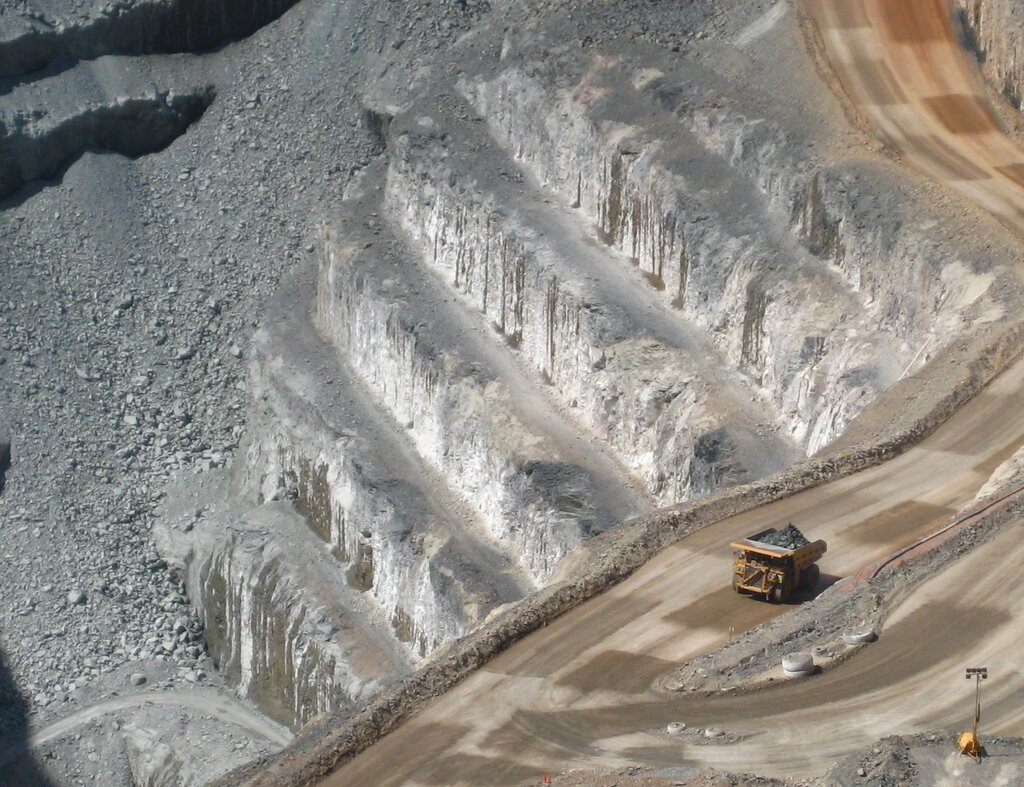
A producing asset, or a brownfield expansion, operates in a different financial realm. Here, the primary focus is operational efficiency, cost control, and managing grade variability. The asset generates predictable cash flows, and valuation shifts to standard DCF analysis, albeit with careful attention to reserve depletion rates and sustaining capital requirements.
For an acquirer, the key is to match the asset's lifecycle stage with the conglomerate's risk appetite and strategic objectives. Buying a greenfield project is a venture capital-style bet on exploration upside. Acquiring a producing mine is a play on operational improvements and commodity price outlook.
The Hilirisasi Imperative
Indonesia's or 'downstreaming' policy fundamentally reshapes the economics of mining assets. The government mandate to process raw ore domestically before export transforms a simple extraction project into an integrated mine-and-refinery operation. This has profound implications for valuation and M&A strategy.
A traditional mining model's NPV is driven by the price of ore, mining costs, and logistics. An integrated project's NPV must account for the immense capital intensity of smelter or High-Pressure Acid Leaching (HPAL) plant construction. Project timelines are extended by years, and the risk profile becomes a hybrid of mining risk and industrial processing risk. The final product is no longer ore, but a refined metal or chemical precursor, subject to different market dynamics and pricing benchmarks.
| Metric | Traditional (Export) Model | Integrated (Hilirisasi) Model |
|---|---|---|
| Primary Asset | Mine + Ore Stockpile | Mine + Processing Plant |
| Capital Intensity | Moderate (Mining Fleet, Haul Roads) | Very High (Mine + Smelter/Refinery) |
| Project Timeline | 2-4 years to production | 5-8+ years to refined product |
| Dominant Risk | Geological & Permitting | Construction & Technology Ramp-up |
| Cash Flow Driver | Ore Price (e.g., $/tonne) | Refined Metal Price (e.g., LME Nickel) |
| Key Constraint | Port access & export quotas | Energy cost & technological expertise |
When evaluating a target under Hilirisasi, due diligence must extend far beyond the ore body. It requires a rigorous assessment of the proposed processing technology, energy supply agreements, offtake contracts for the refined product, and the massive upfront capital required. The discount rate applied to the processing facility's cash flows should be distinct from the mine's, reflecting its different risk profile. A failure to properly model this integrated lifecycle will lead to a severe misjudgment of the asset's true value and risk.
What is the primary factor that transforms a Mineral Resource into a Mineral Reserve?
Which of the following correctly ranks mineral resource categories from the lowest to the highest level of geological confidence?
Evaluating mining assets requires a deep understanding of geological confidence and the specific economic realities of the project's lifecycle and jurisdiction. The transition from resource to reserve, and the added complexity of policies like Hilirisasi, are the central challenges in modern mining M&A.