Ming Dynasty Defense Strategies
Ming Military Organization
A Self-Sufficient Army
The Ming Dynasty built one of the largest standing armies in the world. To manage and pay for this massive force, the Hongwu Emperor established a unique, self-sustaining military structure called the wei-suo system. The goal was simple but ambitious: create an army that could feed itself and wouldn't burden the civilian population.
At its heart, the wei-suo system was hereditary. A family's military status was passed from father to son. When a soldier died or retired, his son was required to take his place. This ensured a constant supply of manpower for the army.
This system essentially created a permanent military class, with families tied to military service for generations.
The key to the system's self-sufficiency was land. The government assigned agricultural plots, known as military colonies or tuntian, to garrisons. Soldiers were registered as military households and spent part of their time farming this land. In frontier regions, soldiers might spend 70% of their time farming and 30% training. In less critical areas, the ratio could be flipped. The grain they produced fed their families and supplied their units, dramatically reducing the state's logistical and financial strain.
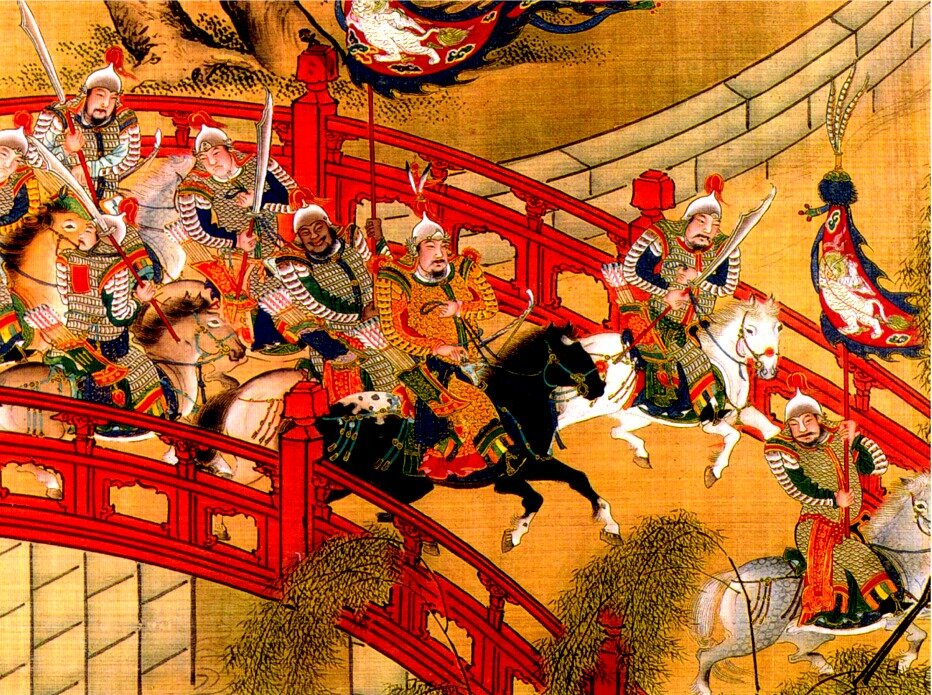
Structure and Command
The army was organized into a clear hierarchy. The basic units were guards (wei) and battalions (suo). The structure was standardized across the empire.
wei
noun
A military unit in the Ming army, roughly equivalent to a modern regiment, consisting of about 5,600 soldiers.
Each unit had a specific number of soldiers, creating a predictable and orderly framework.
| Unit | Composition | Approximate Size |
|---|---|---|
| Wei (Guard) | 5 Suo | 5,600 soldiers |
| Suo (Battalion) | 10 Qianhu Suo | 1,120 soldiers |
| Qianhu Suo (Company) | 10 Baihu Suo | 112 soldiers |
| Baihu Suo (Platoon) | 2 Zongqi | 56 soldiers |
| Zongqi (Squad) | 5 Xiaoqi | 10 soldiers |
Command was intentionally split to prevent any single general from becoming too powerful. The Ministry of War in the capital handled administrative tasks like recruitment, supplies, and payroll. However, it had no direct command over troops in the field.
On the other hand, five Chief Military Commissions were responsible for leading campaigns and managing garrisons. But they couldn't mobilize troops or manage logistics without orders from the Ministry of War. This dual system created checks and balances, ensuring military power remained firmly under imperial control.
Land and Sea Integration
The wei-suo system wasn't just for land forces. The Ming navy, one of the most powerful in the world at the time, was also organized this way. Naval bases and garrisons were established along China's long coastline and on major waterways like the Yangtze River.
These naval units were responsible for patrolling coastal waters, protecting trade routes, and defending against pirates. In times of war, land and naval forces were designed to work together. A coastal wei might include both infantry soldiers and sailors, allowing for coordinated amphibious operations and a flexible defense against threats from the sea.
Let's review the core concepts of Ming military organization.
Now, test your understanding of how the Ming Dynasty structured its army and navy.
What was the primary goal of the Ming Dynasty's wei-suo system?
How did the wei-suo system ensure a constant supply of manpower for the army?
While effective in the early years, the wei-suo system eventually faced challenges. Over time, desertion became common, and the self-sufficiency model broke down, forcing the government to rely more on paid mercenaries. Nevertheless, it was a remarkable system that sustained the Ming empire for centuries.