Mindful Photography
Introduction to Mindfulness
What Is Mindfulness?
Our minds are constantly busy. We replay past conversations, plan our next meal, and worry about tomorrow's to-do list. We spend a lot of time living anywhere but here and now. Mindfulness is the simple practice of returning to the present moment.
It’s not about stopping your thoughts or emptying your mind. It's about paying attention on purpose, without judging what you find. You simply notice what's happening as it's happening, whether it's the feeling of your breath, the sound of a distant siren, or a fleeting thought. Most of us are so used to living on autopilot that this simple act can feel revolutionary.
Mindfulness
noun
The practice of maintaining a nonjudgmental state of heightened or complete awareness of one's thoughts, emotions, or experiences on a moment-to-moment basis.
This practice is built on a few core ideas. The first is present-moment awareness—gently guiding your attention back to the here and now whenever it wanders. The second is non-judgmental observation. Instead of labeling thoughts and feelings as 'good' or 'bad,' you just acknowledge them. A thought is just a thought. A feeling is just a feeling. You observe them without getting tangled up in them.
Finally, there’s intentional focus. You choose what to pay attention to. This simple act of choosing puts you back in the driver's seat of your own mind.
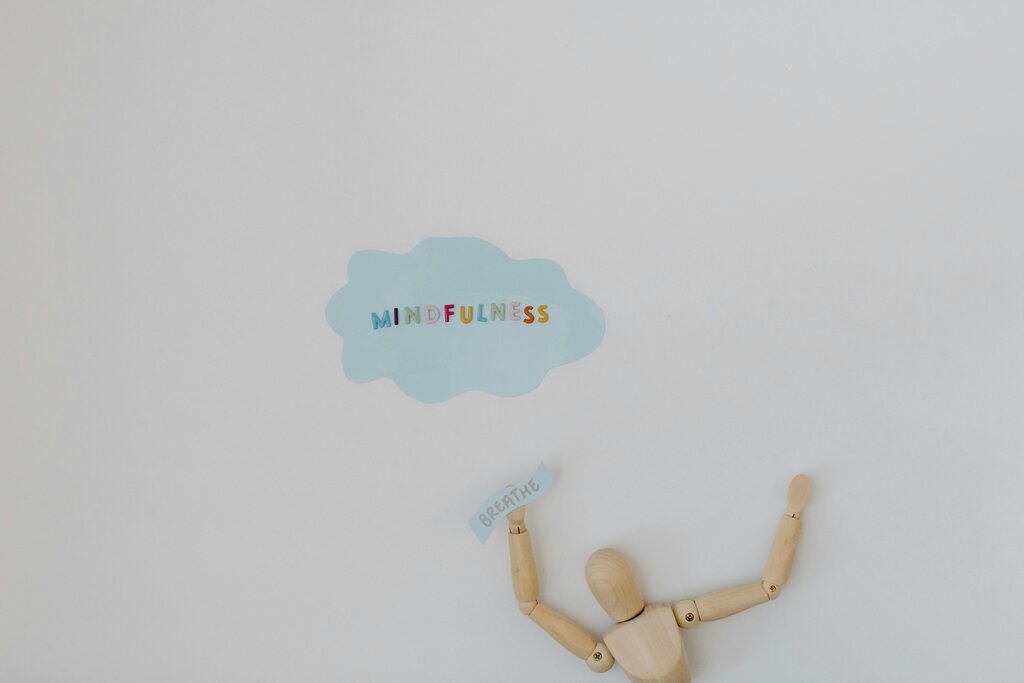
Why Bother With Mindfulness?
Practicing mindfulness has profound benefits for both your personal well-being and your creative work. When you're more present, you start to notice details you'd otherwise miss. The world becomes richer and more vibrant. For any creative person, this is like discovering a new set of colors to paint with. It helps you see the world with fresh eyes, breaking you out of familiar patterns and ruts.
On a personal level, being more aware of your thoughts and feelings without judgment can significantly reduce stress. You learn to respond to situations thoughtfully instead of reacting out of habit. This creates a sense of calm and clarity, improving your overall well-being and giving you more mental space to create.
Mindfulness isn't about emptying your mind. It's about being fully aware of it.
How to Get Started
Cultivating mindfulness doesn't require any special equipment or a lot of time. You can start right now. One of the simplest ways is to focus on your senses. What do you see? Notice five different things in the room without labeling them as good or bad. What do you hear? Listen for sounds near and far.
Another foundational technique is to focus on your breath. You don't need to change how you're breathing. Just notice the sensation of the air entering and leaving your body. When your mind wanders, as it will, gently guide it back to your breath. Each time you bring it back, you're strengthening your ability to focus.
A basic technique for practicing mindfulness is focusing on the breath, which can include various meditation techniques.
The goal isn't to be perfectly mindful all the time. It's about building a habit of checking in with yourself and the present moment, even for just a minute or two.
What is the primary focus of mindfulness?
According to the principles of mindfulness, how should you treat your thoughts and feelings?