Milton Friedman's Free Market Philosophy
Introduction to Milton Friedman
Who Was Milton Friedman?
Milton Friedman was one of the most influential economists of the 20th century. Born in Brooklyn, New York, in 1912, he was the child of working-class Jewish immigrants from Austria-Hungary. His sharp intellect earned him a scholarship to Rutgers University, which set him on a path to study economics at the University of Chicago and Columbia University.
Throughout his long career, Friedman became a powerful advocate for free markets and individual liberty. He taught at the University of Chicago for three decades, where he became the leading figure of what is now known as the Chicago school of economics. His work challenged the prevailing economic wisdom of the time and eventually earned him the Nobel Memorial Prize in Economic Sciences in 1976.
Freedom and the Free Market
At the heart of Friedman's philosophy was a simple but profound idea: economic freedom is a vital prerequisite for political freedom. He believed that when governments control economic activity, they inevitably gain power over individuals' lives, which can threaten personal liberties. The best way to organize society, he argued, was through voluntary cooperation and free enterprise.
This led him to be a sharp critic of government intervention. In Friedman's view, many government programs, though well-intentioned, often had negative unintended consequences. He argued that policies like price controls, rent controls, and extensive regulation distorted the natural efficiency of the market, leading to shortages, lower quality goods, and less innovation.
Friedman instinctively took the liberal view instead: that government intervention was more likely to do harm than good, and that the most government could do was to set an appropriate structure of rules, especially the rule of law, and leave the rest to competition and the freedom of the individual to choose in a system of free markets.
Instead of direct intervention, Friedman championed the idea of monetarism. This theory posits that the government's primary economic role should be to maintain a slow, steady growth in the money supply. By providing a stable monetary environment, the central bank could foster economic stability without trying to micromanage the economy. This stood in stark contrast to the dominant Keynesian view at the time, which advocated for active government spending to manage economic cycles.
Spreading the Word
Friedman was not just an academic; he was a brilliant communicator who brought his ideas to the general public. He wrote several landmark books that are still widely read today.
Capitalism and Freedom (1962): In this book, Friedman makes the case that competitive capitalism is not only an engine for economic prosperity but also an essential component of a free society. He argued for policies like a volunteer army, floating exchange rates, and a negative income tax.
A Monetary History of the United States, 1867–1960 (1963): Co-authored with Anna Schwartz, this monumental work analyzed a century of monetary data. Its most famous conclusion was that the Great Depression was not a failure of capitalism, but a failure of government policy, specifically the Federal Reserve's mismanagement of the money supply.
Perhaps his greatest impact on the public came from his 1980 television series and accompanying book, Free to Choose. Co-created with his wife Rose, the series explained free-market principles through real-world examples from around the globe, making complex economic ideas accessible to millions.
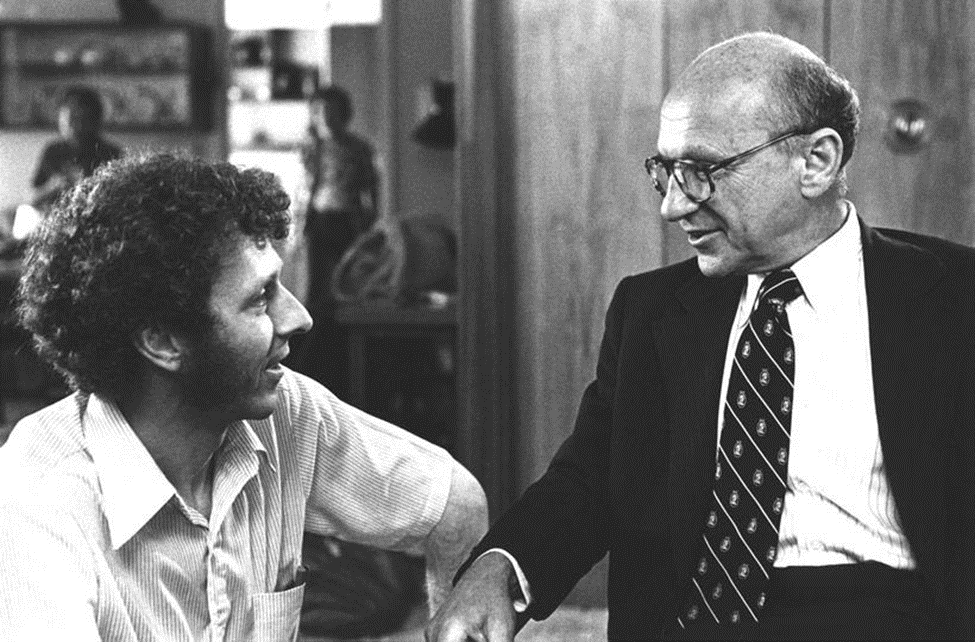
Milton Friedman's work provided the intellectual firepower for a global shift toward free-market policies. While his ideas remain the subject of intense debate, his role as a champion of individual liberty and limited government is undeniable.