Mighty Ancient Armies
Introduction to Ancient Military Systems
From Chaos to Cohorts
Early human conflict was a messy affair. Think small bands of warriors, fighting for survival, honor, or resources. Combat was often a clash of individuals, where personal strength and bravery were paramount. There were no neat lines of soldiers, no complex maneuvers. It was brutal, personal, and chaotic.
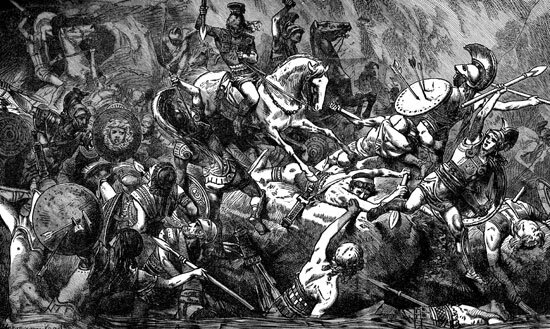
This began to change as societies grew. With the rise of agriculture, people settled down, built cities, and accumulated wealth. Suddenly, there was much more to protect: grain stores, trade routes, and territory. Defending a city wall requires more than a few skilled fighters; it demands coordination and numbers.
This need gave birth to the first organized armies. Leaders began to group fighters into units, creating a basic structure. Instead of a free-for-all, battles started to involve groups of soldiers moving and fighting together. This shift from individual champion to disciplined soldier was one of the most important military developments in history. It was the first step toward the complex military machines that would build and break empires.
The Lay of the Land
Where an army fought was just as important as how it fought. Geography shaped military strategy and the very composition of armies. A force perfectly suited for one environment could be useless in another.
In the rugged, hilly terrain of Greece, heavy infantry who could fight in tight spaces and hold their ground were king. The open plains of Mesopotamia and Central Asia, however, were a different story. These vast, flat lands were the domain of the swift war chariot and, later, cavalry, which could cover great distances and outmaneuver infantry.
For civilizations like the Phoenicians or Athenians, who lived by the sea, naval power was everything. Controlling the waterways meant controlling trade and projecting power far from home. Their military innovation focused on building faster, stronger ships and developing tactics for sea battles.
Tools of the Trade
Military evolution is also a story of technology. The transition from the Bronze Age to the Iron Age, around 1200 BCE, was a major turning point. Bronze is an alloy of copper and tin, ingredients that weren't always easy to find. Iron, on the other hand, is one of the most common elements on Earth.
Once smiths mastered the art of forging iron, it became possible to equip larger armies with stronger, more durable weapons and armor. An army with iron swords had a decisive edge over one with bronze.
The move from bronze to iron didn't just change weapons; it changed the scale of warfare itself.
But it wasn't just about metals. Other innovations had a huge impact. The invention of the composite bow by pastoral nomads in Central Asia created a weapon with superior range and power. In the Near East, empires like the Assyrians became masters of siege warfare, developing battering rams, siege towers, and tactics for undermining walls to conquer fortified cities.
Developments in defensive gear were just as critical. Better helmets, stronger shields, and more effective body armor allowed soldiers to survive longer in the heat of battle, making formations more resilient and professional.
Culture and Combat
Finally, an army is always a reflection of the society that creates it. A culture's values, social structure, and government all influence how it wages war.
The city-state of Sparta, for example, organized its entire society around military training. From a young age, Spartan boys were prepared for a life of discipline and combat, producing some of the most feared infantry in the ancient world. Their army was a direct product of their rigid, militaristic culture.
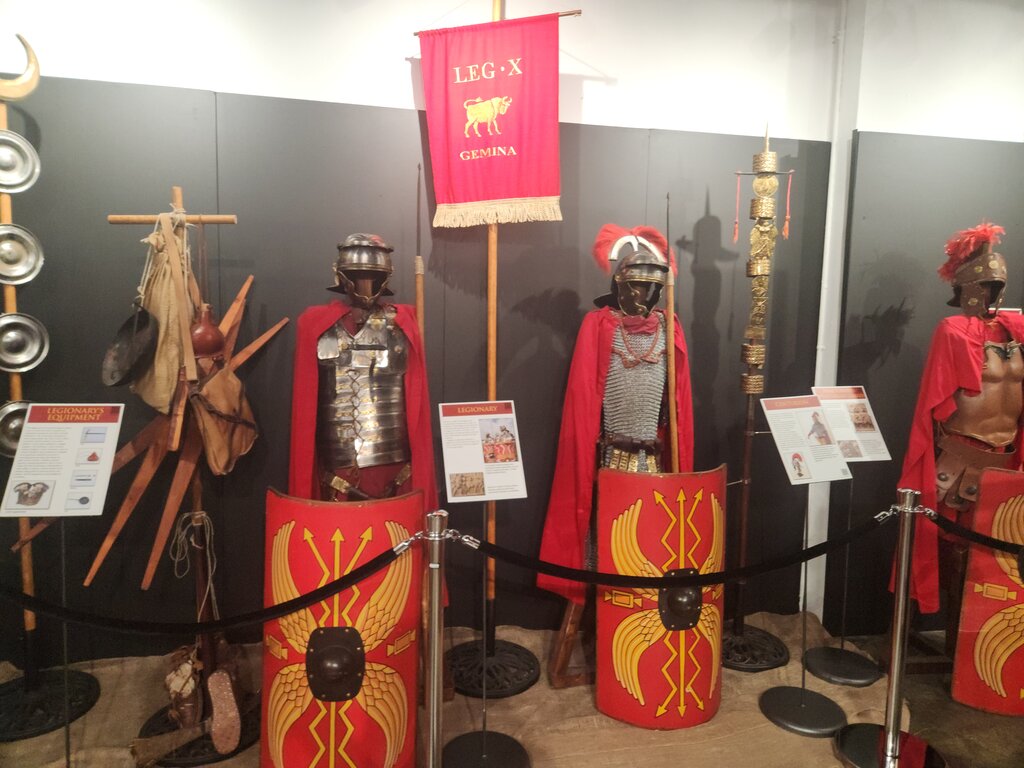
In contrast, the Roman Republic and later Empire valued engineering, law, and organization. This was reflected in their military. Roman legions were not only disciplined fighting forces but also incredible engineering corps. They built roads, bridges, and fortifications wherever they went, allowing them to supply their armies and control vast territories. Roman success was built on discipline and logistics as much as on swords and shields.
The integration of allied forces into the Roman military system was a key element of expanding Roman power and influence throughout its territories.
These core elements—organization, geography, technology, and culture—are the building blocks of any military system. Understanding how they fit together is the key to understanding how ancient armies conquered the world.
What was the primary driver for the shift from small, individualistic bands of warriors to the first organized armies?
The open, flat plains of Mesopotamia and Central Asia were most suitable for which type of military unit?