Middle Epicureanism and Canon Consolidation
Middle Epicurean Historiography
The Myth of the Static Garden
The traditional historiography of Epicureanism often paints the Garden as a philosophical fossil, perfectly preserved from the time of Epicurus and his immediate successors. This narrative suggests an unbroken, unaltered doctrinal transmission, where the scholarchs who followed the Diadochi were mere custodians of a fixed canon. This view, however, collapses under scrutiny, especially when examining the Middle Epicurean period of the 2nd century BCE.
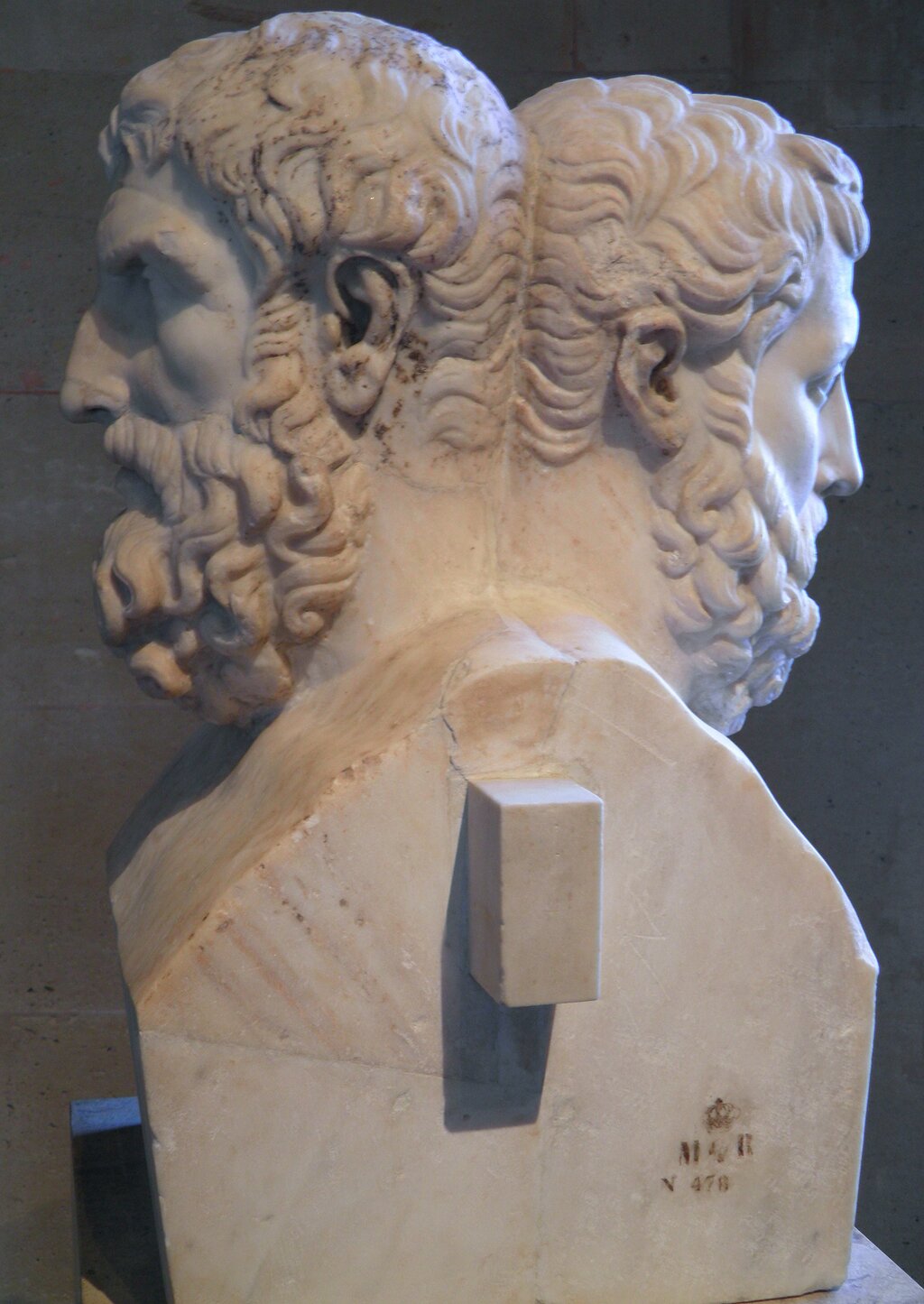
The perception of an ideologically static Garden stems largely from the nature of the surviving sources. We have Epicurus's own words, particularly in his letters preserved by Diogenes Laertius, and then a vast collection of later material from figures like Philodemus and Lucretius. The intervening period, the so-called Middle Garden, is comparatively obscure. This gap has led to a convenient but flawed assumption: that nothing much changed because we lack the records of that change. The school's own emphasis on the authority of the founder and the memorization of the Kuriat Doxai certainly contributes to this picture of immutability.
The absence of evidence is not evidence of absence. The quiet period of the Middle Garden was likely one of adaptation, not stagnation.
This placid image is a retrospective construction. The 2nd century BCE was a period of immense sociopolitical upheaval in Athens. The city was navigating its place within an expanding Roman sphere of influence, a reality that brought new intellectual and cultural pressures. Competing schools, particularly the Stoics and the New Academy, were locked in fierce debate. It is historically naive to imagine the Garden remained aloof, insulated from the need to defend, clarify, and perhaps even adapt its doctrines in response to sophisticated external critiques.
Deconstructing the Durable Canon
The idea of a 'durable canon' suggests that the teachings of Epicurus were treated like sacred texts, unalterable and complete. While the core principles, such as the Tetrapharmakos, were certainly non-negotiable, the application and elaboration of these principles were another matter entirely. The scholarchs of the 2nd century BCE, such as Apollodorus 'the Garden Tyrant' and Zeno of Sidon, were not just parrots; they were active interpreters and defenders of the faith.
Their task was to make Epicureanism relevant and resilient in a changing world. This required scholastic expansion. They wrote voluminously, reputedly hundreds of scrolls, to counter the arguments of rivals. For instance, the skeptical critiques emerging from the New Academy under Carneades would have demanded sophisticated epistemological defenses from the Epicureans, forcing them to articulate their concept of the kanōn (the criteria of truth) with far more detail than Epicurus himself had provided. This wasn't a deviation from the canon; it was a necessary fortification of it.
This pragmatic expansion created a tension that defines the historiography of the school. On one hand, the Epicureans themselves projected an image of perfect fidelity to the founder. On the other, the historical context demanded innovation and response. The 'frozen' narrative fails to appreciate this dynamic. It mistakes the school's public-facing reverence for the founder as a sign of intellectual inertia, ignoring the scholastic labor happening behind the Garden walls. The work of figures like in the 1st century BCE, which provides much of our evidence, should be seen as the product of this middle period's intellectual development, not as a direct echo of the 3rd-century founder.
Ultimately, the historiography of the Middle Epicurean Garden requires a more nuanced approach. We must read the silences in the historical record not as proof of inactivity, but as a challenge to reconstruct the intellectual vibrancy that the surviving later texts imply. The 'durable canon' was not a cage, but a foundation—strong, respected, and providing the necessary groundwork for the scholastic construction that kept Epicureanism a living philosophy.
Time to test your understanding of the period's historiographical debates.
What is the traditional historiographical view of the Epicurean Garden following the death of its founder?
The perception of the Middle Epicurean Garden as intellectually inert is a retrospective construction. True or False?
And that's a look at the evolving view of the Epicurean Garden. The story of philosophy is rarely one of static ideas, but of constant dialogue and adaptation.