Microwave Oven Power and Electricity Explained
Magnetron Operation
The Heart of the Oven
At the core of every microwave oven is a device called a magnetron. It’s a special type of vacuum tube designed for one purpose: to convert electricity into high-powered microwaves. Think of it as a whistle, but instead of using air to create sound waves, it uses a stream of electrons to create electromagnetic waves.
The magnetron has two main parts. In the center, there's a heated filament called a cathode. Surrounding it is a circular copper block called an anode. The anode isn't a simple ring; it has several small chambers, or cavities, carved into it.
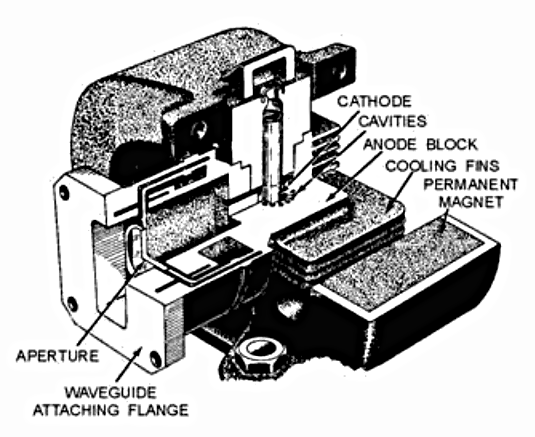
The whole assembly is placed inside a powerful magnetic field, and a vacuum is created within the tube. The vacuum is crucial because it allows electrons to fly from the cathode to the anode without bumping into air molecules and losing energy.
Putting Electrons to Work
The process begins when the cathode is heated, causing it to release a cloud of electrons through a process called thermionic emission. At the same time, a very high positive voltage is applied to the anode. This creates a strong electric field that pulls the negatively charged electrons toward the anode.
If that were the whole story, the electrons would just shoot straight from the cathode to the anode. But this is where the magnetic field comes in. A strong magnetic field is applied parallel to the cathode, perpendicular to the electric field.
This magnetic field exerts a force on the moving electrons, causing them to travel in a curved path instead of a straight line. This is known as the Lorentz force.
Instead of hitting the anode directly, the electrons are forced into a circular path, forming a spinning cloud of charge that sweeps past the anode cavities.
Making Waves
As this spinning wheel of electrons brushes past the openings of the cavities in the anode, something remarkable happens. The clumps of electrons in the cloud push and pull on the electrons in the copper walls of the cavities.
This interaction causes currents to oscillate back and forth within each cavity, much like blowing air across the top of a bottle creates a specific musical note. The cavities are designed to act as resonators. They amplify these oscillations, building them up into a powerful, high-frequency electromagnetic field.
The physical size and shape of these cavities are precisely machined to determine the exact frequency of the microwaves produced. For household microwave ovens, these cavities are built to resonate at 2.45 gigahertz (GHz), meaning the field oscillates 2.45 billion times per second.
Finally, a small antenna or probe inserted into one of the cavities picks up this intense microwave energy and channels it out of the magnetron through a waveguide, which directs the waves into the cooking chamber.
What is the primary function of a magnetron in a microwave oven?
What is the role of the strong magnetic field within the magnetron?