Microsporanginesis and Pollen Development in Angiosperms
Anther Differentiation
Building the Pollen Factory
Inside a young anther, what begins as a uniform mass of meristematic cells soon undergoes a remarkable transformation. At the four corners of this structure, a few hypodermal cells become distinct. They grow larger, their cytoplasm becomes denser, and their nuclei become more prominent. These are the archesporial cells, the master architects of the microsporangium, or future pollen sac.
Hypodermal
adjective
Relating to the layer of cells lying immediately below the epidermis in plants.
The fate of the entire pollen sac hinges on the first move made by these specialized cells. Each archesporial cell undergoes a crucial division, splitting parallel to the anther's outer surface. This specific type of cell division is called a periclinal division.
This single division creates two foundational layers with very different destinies:
- The Primary Parietal Layer (PPL): The outer layer, situated just under the epidermis.
- The Primary Sporogenous Layer (PSL): The inner layer, which will eventually produce the pollen itself.
This event establishes the fundamental polarity of the microsporangium: an outer, protective region and an inner, reproductive core.
Raising the Walls
The primary parietal layer now begins a series of rapid divisions to build the anther wall. It divides using both periclinal and anticlinal divisions to form multiple concentric layers of cells. This creates the structural support and nutrient supply system for the developing pollen.
The final wall consists of three to five distinct layers, each differentiating from the parietal cells:
- Endothecium: Located just beneath the epidermis. Its cells develop fibrous thickenings that help the anther split open (dehisce) to release pollen.
- Middle Layers: One to three layers of cells that often flatten and degenerate as the anther matures, providing initial nourishment.
- Tapetum: The innermost layer, directly surrounding the sporogenous tissue. This layer is crucial, acting as a nursery that provides nutrition and enzymes essential for pollen development.
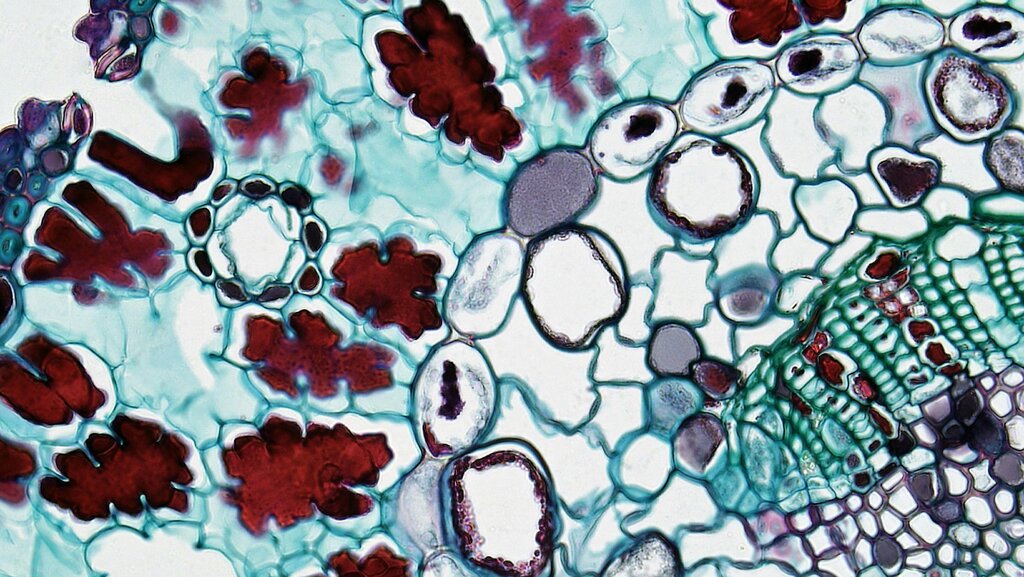
While the parietal layer is busy building the walls, the primary sporogenous cells also begin to divide. These divisions increase the number of cells that will eventually undergo meiosis to become microspore mother cells, the direct precursors to pollen grains. The development of the anther wall and the sporogenous tissue is a tightly coordinated process, controlled by a complex interplay of genetic and hormonal signals originating from both layers.
Which specialised cells, located at the four corners of a young anther, initiate the development of the microsporangium?
The first division of an archesporial cell is a crucial event known as a periclinal division. What are the immediate products of this division?