Microsoft Fabric for HIPAA Compliant AI
Introduction to Microsoft Fabric
What is Microsoft Fabric?
Think of a company's data like tools in a workshop. In many businesses, these tools are scattered everywhere. The data for sales is in one shed, customer information is in another, and the tools for analyzing it all are in yet another building. Getting anything done means running back and forth, trying to make different systems talk to each other. It's inefficient and complicated.
Microsoft Fabric is designed to solve this problem. It's an all-in-one analytics platform that brings all of a company’s data and analytics tools into a single, unified environment. Instead of separate, disconnected services for data storage, data engineering, and data science, Fabric provides one integrated product.
The goal is to simplify data projects. With Fabric, teams can work together on a single platform, using a central pool of data without constantly moving or duplicating it.
At the heart of this platform is a concept called OneLake. You can think of it like OneDrive for data. It acts as a single, unified data lake for the entire organization. All data, regardless of where it comes from, can be stored and accessed from this one location. This eliminates the data silos that make analytics and AI so challenging.
Key Components
Microsoft Fabric is built around a set of specialized experiences, each tailored for a specific role or task. Because they are all part of the same platform, they work together seamlessly. A user can switch between these experiences easily to complete their work.
Here's a quick look at the main components:
- Data Factory: Provides tools for ingesting data from a wide variety of sources and creating data pipelines to move and transform it.
- Synapse Data Engineering: Offers a Spark platform for transforming data at a massive scale, perfect for big data jobs.
- Synapse Data Warehouse: A traditional data warehousing solution for high-performance SQL analytics on large datasets.
- Synapse Data Science: An end-to-end workflow for data scientists to build and deploy sophisticated AI models.
- Synapse Real-Time Analytics: Used for analyzing data streaming from sources like IoT devices and logs in real time.
- Power BI: The business intelligence tool for creating interactive reports and dashboards to visualize data and share insights.
Fabric's Role in AI
Having a unified platform like Fabric is a major advantage for building AI solutions. AI and machine learning models depend on access to large amounts of high-quality data. Traditionally, data scientists spend a huge portion of their time just finding, cleaning, and preparing data before they can even start building a model.
Fabric streamlines this entire process. With all the organization's data available in OneLake, data scientists can easily access and prepare the information they need using familiar tools. They can use Data Engineering experiences to process massive datasets and then switch to the Data Science experience to train, test, and deploy their machine learning models.
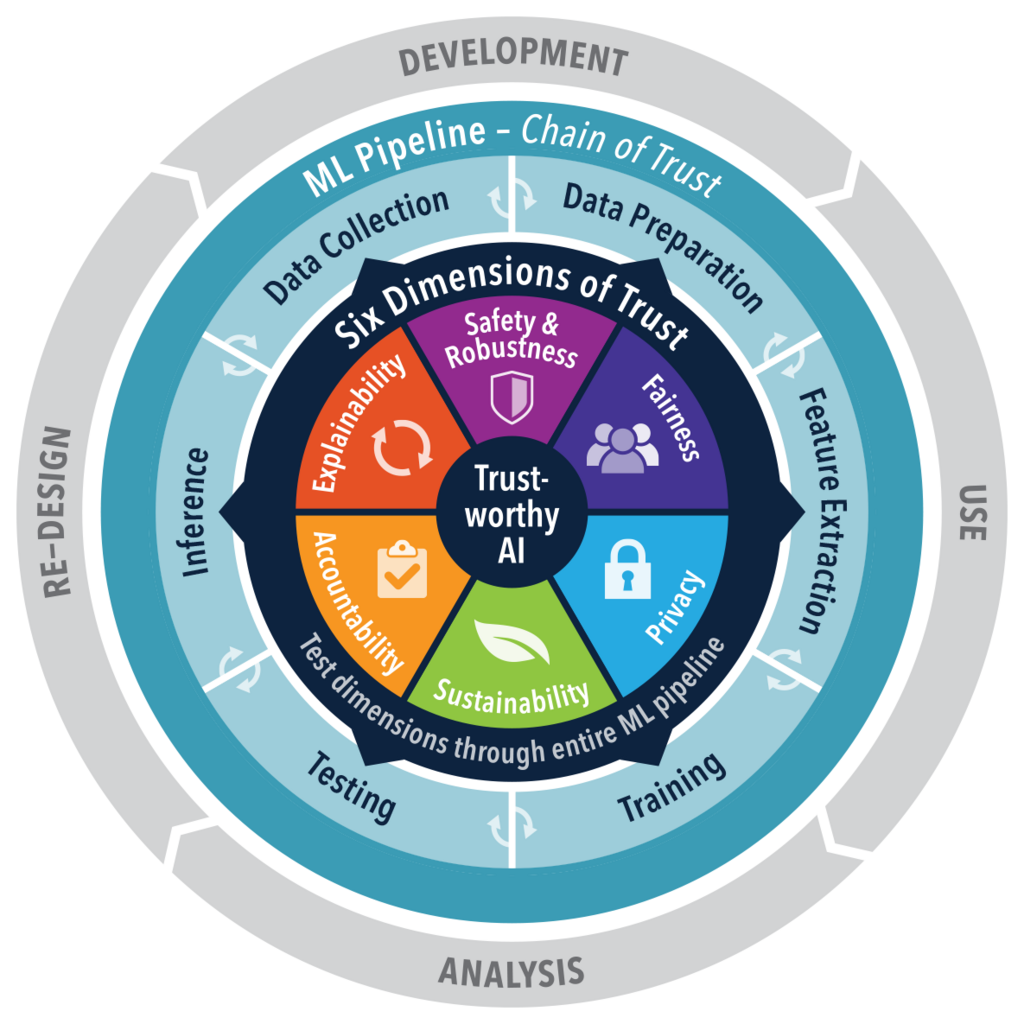
This integration reduces friction and accelerates the AI development lifecycle. Instead of stitching together multiple services, teams can manage everything from data ingestion to model deployment in one place. This not only makes development faster but also improves collaboration between data engineers, data scientists, and business analysts.
What is the primary problem Microsoft Fabric is designed to solve?
In Microsoft Fabric, the concept of a single, unified data lake for the entire organization is called ________.
By bringing together previously separate analytics tools, Microsoft Fabric creates a powerful, simplified environment for building the next generation of data-driven AI solutions.