Microsoft Dynamics NAV for Beginners
Introduction to ERP Systems
What is an ERP?
Think of a business as a living organism. It has different parts that need to work together: finance manages the money, sales brings in customers, and the warehouse keeps track of products. If these parts don't communicate, chaos ensues. An Enterprise Resource Planning (ERP) system acts like a central nervous system, connecting all these different functions into one cohesive whole.
Enterprise Resource Planning (ERP) refers to a type of software system designed to help organizations manage and automate core business processes across various departments.
Instead of using separate software for accounting, human resources, and inventory, an ERP integrates them. This means everyone in the company looks at the same, up-to-date information. When the sales team closes a deal, the inventory and finance departments know about it instantly. There's no need to re-enter data or wait for a weekly report. It's all connected in real time.
The Core Components
ERP systems are typically modular, which means a business can choose the components it needs. While different ERPs offer different modules, most are built around a few core business functions.
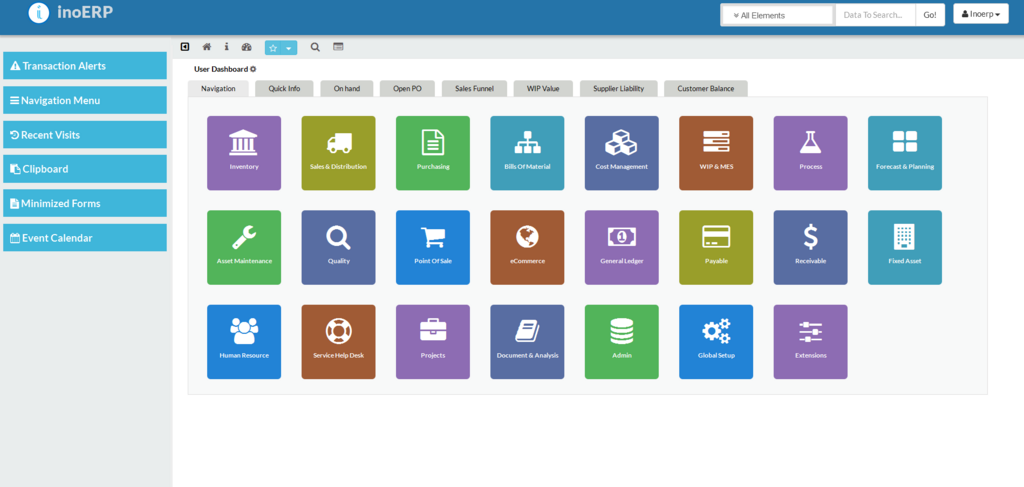
These modules all share data from a single, central database. This shared foundation is what makes an ERP so powerful.
| Module | Primary Function |
|---|---|
| Finance & Accounting | Manages the general ledger, accounts payable/receivable, and financial reporting. |
| Human Resources (HR) | Handles payroll, employee records, recruiting, and benefits administration. |
| Supply Chain Management (SCM) | Tracks goods from manufacturing to the warehouse to the customer. |
| Customer Relationship Management (CRM) | Manages interactions with current and potential customers to improve sales and service. |
| Manufacturing | Oversees production planning, scheduling, and quality control. |
Why Bother with an ERP?
Implementing a new software system is a big undertaking, so what makes an ERP worth the effort? The benefits are all about integration and information. By creating a single source of truth, an ERP system helps a business run smarter and more efficiently.
With an ERP, there are no more data silos. Every department works from the same playbook, reducing errors and saving time.
This leads to several key advantages:
- Improved Efficiency: Automating routine tasks frees up employees to focus on more valuable work. With streamlined processes, orders are filled faster and customer questions are answered more quickly.
- Better Decision-Making: Leaders get a real-time, comprehensive view of the entire business. This allows them to spot trends, identify problems, and make informed decisions based on accurate data, not guesswork.
- Greater Scalability: As a business grows, its processes become more complex. An ERP system provides a stable foundation that can scale with the company, supporting more users, transactions, and locations without falling apart.
- Enhanced Collaboration: When every department has access to the same information, teamwork improves. The sales team can see inventory levels before making a promise, and the finance team can see upcoming purchases to manage cash flow.

Ready to check your understanding of the basics? Let's dive into a quick quiz.
What is the primary function of an Enterprise Resource Planning (ERP) system in a business?
What is the foundational component that allows an ERP to provide a 'single source of truth' for the entire company?
In essence, an ERP system breaks down barriers between departments, creating a more unified and responsive organization.