Microsoft 900 Fundamentals Exam Prep
Cloud Concepts
What Is the Cloud?
At its core, cloud computing is about renting someone else's computers. Instead of buying and maintaining your own physical servers and infrastructure, you access computing services—like servers, storage, and software—over the internet. This frees you from the hassle of managing hardware and lets you tap into powerful resources on demand.
Cloud computing is the delivery of computing services (servers, storage, databases, networking, software, and more) over the internet (the cloud), offering faster innovation, flexible resources, and economies of scale.
Think of it like electricity. You don't build your own power plant to light your house. You just plug into a grid managed by a utility company and pay for what you use. The cloud works on a similar principle, but for computing power.
Three Flavors of Cloud Services
Cloud services come in three main models, each offering a different level of control and convenience. A popular way to understand them is the "pizza as a service" analogy. You can make a pizza from scratch (on-premises), buy a take-and-bake pizza (Infrastructure as a Service), have a pizza delivered (Platform as a Service), or dine out at a restaurant (Software as a Service). Each option offloads more of the work to someone else.
Infrastructure as a Service (IaaS) is the most basic model. It provides fundamental building blocks like virtual servers, storage, and networking. You rent the IT infrastructure but are responsible for managing the operating system, applications, and data. It offers the most flexibility and control.
A common use case is for companies that need to scale their computing resources up or down quickly, such as a startup launching a new app that might experience unpredictable traffic.
IaaS
noun
Infrastructure as a Service. A cloud computing model where a vendor provides users with access to computing resources such as servers, storage, and networking.
Platform as a Service (PaaS) goes a step further. The provider manages the hardware and operating systems, giving developers a platform to build, test, and deploy software without worrying about the underlying infrastructure. It's an environment designed to make application development faster and easier.
PaaS is ideal for development teams that want to focus solely on writing code and managing their applications, not on patching servers or configuring networks.
PaaS
noun
Platform as a Service. A cloud computing model that provides a platform allowing customers to develop, run, and manage applications without the complexity of building and maintaining the infrastructure.
Software as a Service (SaaS) is the most comprehensive model. The provider manages everything—the hardware, the platform, and the software itself. You simply access the application over the internet, typically through a subscription. This is the model most people are familiar with.
Examples are everywhere: web-based email, customer relationship management (CRM) software, and online productivity suites like Microsoft 365. You just sign in and use it.
SaaS
noun
Software as a Service. A software licensing and delivery model in which software is licensed on a subscription basis and is centrally hosted.
Where Does the Cloud Live?
Cloud infrastructure isn't just one thing; it can be deployed in different ways depending on an organization's needs for security, control, and cost.
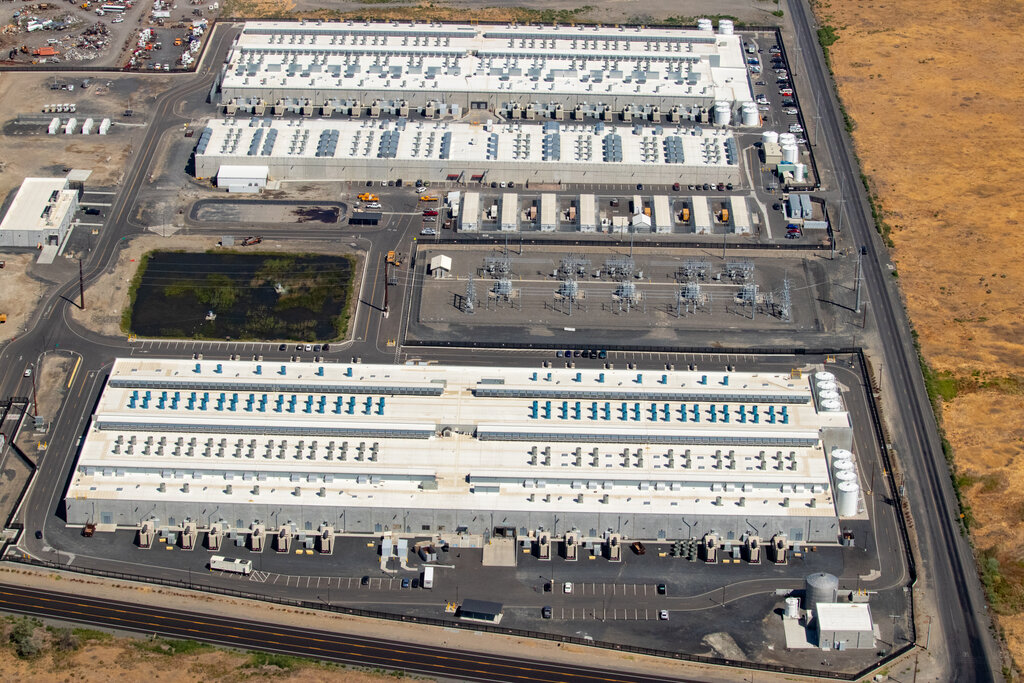
Public Cloud: This is when services are run on hardware owned and operated by a third-party provider, like Amazon Web Services (AWS), Google Cloud, or Microsoft Azure. The infrastructure is shared by multiple organizations, or "tenants." It offers massive scale and a pay-as-you-go pricing model.
Private Cloud: This is a cloud environment operated exclusively for a single organization. The hardware can be located in the organization's own data center or hosted by a third party. A private cloud provides greater control and security, which is often a requirement for industries with strict data regulations.

Hybrid Cloud: This model combines a private cloud with one or more public cloud services, allowing data and applications to be shared between them. A hybrid approach gives businesses greater flexibility and more deployment options. For example, a company might use its private cloud for sensitive data while using the public cloud for less-critical workloads or to handle bursts in traffic.
Benefits and Trade-Offs
Moving from traditional, on-premises infrastructure to the cloud involves a shift in how you think about IT resources. It's not just a technical change; it's a financial and operational one, too.
| Benefit | On-Premises Consideration | Cloud Advantage |
|---|---|---|
| Cost | High upfront capital expenditure (CapEx) for hardware. | Pay-as-you-go model converts costs to operating expenses (OpEx). |
| Scalability | Scaling requires buying and setting up new hardware, which is slow. | Resources can be scaled up or down almost instantly. |
| Maintenance | Your team is responsible for all hardware maintenance and updates. | The cloud provider handles maintenance of the underlying infrastructure. |
| Accessibility | Access is typically limited to the physical network. | Services can be accessed from anywhere with an internet connection. |
| Control | Full control over hardware, software, and data. | Less direct control over physical infrastructure. |
The primary trade-off is control versus convenience. With on-premises solutions, you have complete control but also bear the full burden of cost and maintenance. The cloud abstracts away the complexity, offering flexibility and cost savings in exchange for handing over some of that control to a provider.
Understanding these basic concepts is the first step to seeing how powerful tools like Microsoft 365 are built and delivered. They rely on this cloud foundation to provide services to users around the world.
Ready to check your understanding?
Which analogy best describes the fundamental principle of cloud computing?
A software development team wants to focus exclusively on writing and deploying their application, without worrying about managing servers, operating systems, or patching. Which cloud service model is the best fit for their needs?
With this foundation, you're now ready to explore how specific services are built on top of these cloud models.