Micropile Construction Quality Control
Micropile Basics
What Are Micropiles?
Imagine trying to build a heavy structure on soft, unstable ground. The building would sink or shift. To solve this, you need to transfer the building's weight down to a stronger layer of soil or rock, deep beneath the surface. This is the job of a deep foundation, and one of the most versatile types is the micropile.
micropile
noun
A small-diameter, drilled and grouted foundation element that transfers structural loads to deeper, more competent soil or rock layers.
Think of a micropile as a high-strength steel pipe, typically less than 12 inches in diameter. A specialized drill rig bores a hole deep into the earth, even through difficult ground with boulders or other obstructions. The steel casing is inserted into the hole, which is then filled with a high-strength cement grout. This combination of steel and grout creates an incredibly strong, rigid element firmly bonded to the surrounding ground.
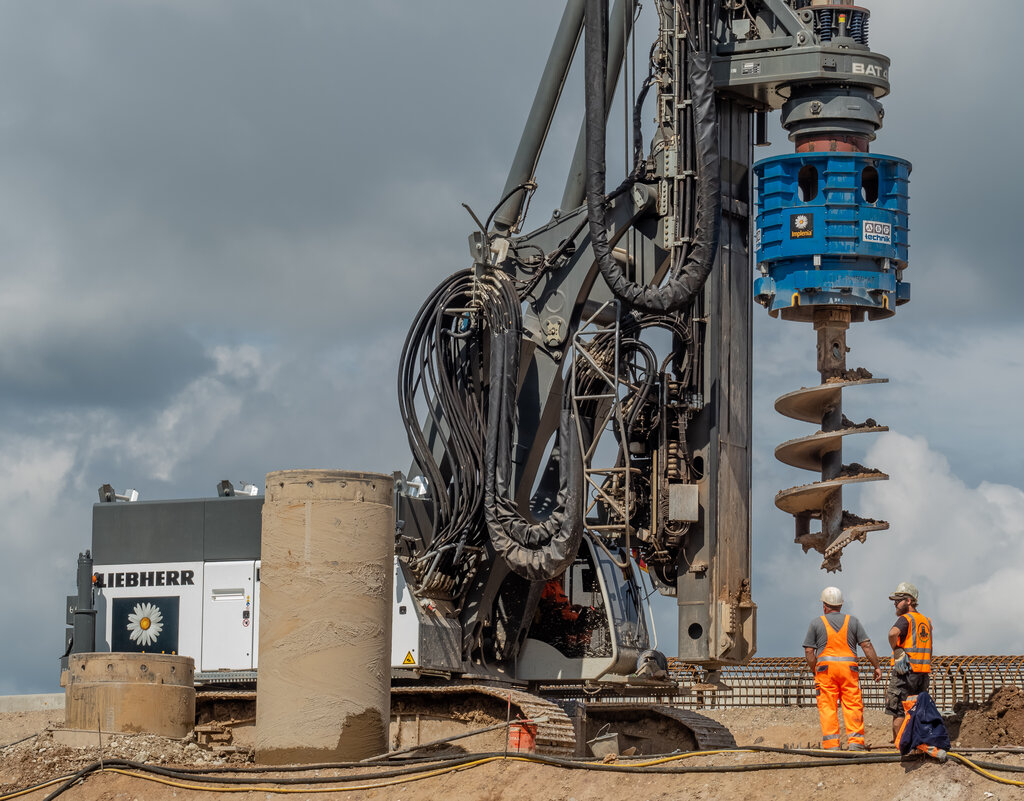
The core purpose of a micropile is to act as a structural support, carrying tension and compression loads. They essentially bypass weak upper soil layers and anchor the foundation into a stable stratum, ensuring the long-term stability of whatever is built on top.
Common Applications
Micropiles are a problem-solver's tool, often used where other foundation types are impractical. Their versatility makes them suitable for a wide range of situations.
One of the most common uses is underpinning existing structures. If an older building starts to settle or if a new, heavier load is being added, micropiles can be installed directly underneath or alongside the existing foundation to provide new support. This can be done with minimal disruption to the building itself.
They are also ideal for sites with difficult access. Think of a narrow alley in a dense city or a remote, steep hillside. The drilling equipment for micropiles is relatively small and can be brought into locations where the large cranes and hammers needed for traditional piles simply won't fit.
Because they can be installed at an angle, micropiles are also excellent for resisting lateral or uplift forces, making them useful for stabilizing slopes, retaining walls, and towers.
Finally, complex ground conditions are where micropiles shine. In soil mixed with boulders, old foundations, or other obstructions, micropiles can be drilled through the debris that would stop other foundation types in their tracks.

Advantages and Limitations
The primary advantage of micropiles lies in their flexibility. The ability to use small equipment means less noise and vibration during installation compared to hammering massive piles into the ground. This is a crucial benefit when working next to sensitive historic buildings or in residential neighborhoods.
Despite their small diameter, they can be designed to support very high loads. By grouping them together, they can form a robust foundation system capable of supporting significant structures.
| Feature | Micropiles | Traditional Driven Piles |
|---|---|---|
| Equipment Size | Small, adaptable | Large, heavy-duty |
| Noise & Vibration | Low | High |
| Ground Conditions | Very adaptable (soil, rock, obstructions) | Best in soft, uniform soils |
| Access Needs | Good for tight or low-headroom sites | Requires open, accessible space |
| Installation Angle | Can be angled (battered) | Typically vertical |
However, micropiles have their limitations. They are generally more expensive per pile than other foundation types due to the specialized equipment and grouting process. The installation process is also often slower than, for example, driving a prefabricated concrete pile.
Because each pile is constructed in place, the quality of the installation is paramount. It requires skilled operators and careful oversight to ensure the pile performs as designed. This makes quality control a critical part of any micropile project.
What is the primary function of a micropile in a deep foundation system?
In which of the following scenarios would micropiles be the most suitable foundation solution?