Microphone Preamp Design and Components
Audio Signal Basics
From Whisper to Roar
When a microphone picks up a sound, the electrical signal it creates is incredibly faint. Think of it as a whisper in a crowded room. This initial signal is called a mic-level signal. It’s measured in millivolts, or thousandths of a volt. It's far too weak to be useful for recording equipment like mixers or audio interfaces.
Most professional audio gear operates at a much stronger, standardized level called line level. This is a robust signal, typically around 1.23 volts. To get from the whisper of a mic-level signal to the confident speaking voice of a line-level signal, we need a special tool.
The job is simple: make a very small signal much, much bigger without ruining it.
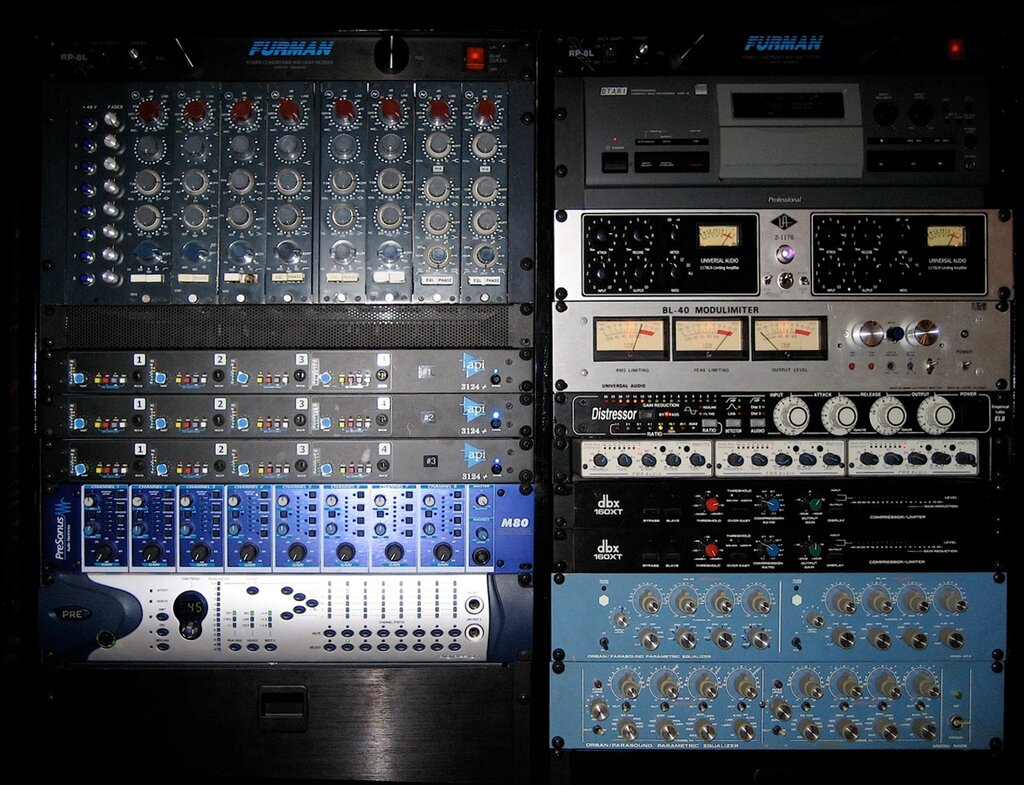
That tool is the microphone preamplifier, or preamp. Its one and only purpose is to take the weak mic-level signal and boost it cleanly to line level. It's the crucial first step in any recording chain.
What is Gain?
The amount of amplification a preamp applies to a signal is called gain. It’s not the same as volume. Gain happens at the very beginning of the signal path, setting the fundamental strength of the recording. Volume is adjusted later, at the output stage, like the volume knob on your stereo.
Think of it like a photograph. Setting the gain is like adjusting the camera’s sensitivity to light (the ISO) before you take the picture. Adjusting the volume is like changing the brightness of the photo on your screen after it’s already been taken.
We measure gain using a unit called the (dB). Because our hearing works in a logarithmic way, the decibel scale is also logarithmic. This means it represents a ratio or a comparison. When we say a preamp adds +50 dB of gain, we're describing a massive increase in signal power.
The Battle Against Noise
Every electronic component generates a tiny amount of background hiss, or noise. When you amplify a signal, you also amplify the noise that’s already there. The goal of a good preamp is to make the original signal much stronger without adding much new noise in the process.
This relationship is called the (SNR). A high SNR means you have a lot of clean, desired signal and very little unwanted background noise. A low SNR results in a noisy, hissy recording. Applying gain properly at the preamp stage is the most important step in achieving a high SNR.
The quality of preamps in an audio interface plays a essential role in capturing clear, detailed sound, especially for vocals and instruments with low output levels.
By understanding these fundamentals—mic level, line level, gain, and the signal-to-noise ratio—you can see why the preamp is such a foundational piece of gear. It sets the stage for everything that follows, turning a fragile whisper into a signal strong enough to create powerful music.
What is the primary function of a microphone preamplifier (preamp)?
Which of the following best describes the difference between gain and volume?