Microbial World: Engineers of the Biosphere
Life in Extremes
Life on the Edge
The Five Kingdom classification gives us a broad map of life, but some of the most fascinating organisms exist at the very extremes of that map. These are the extremophiles, microbes that don't just survive but thrive in conditions we once considered completely inhospitable. Boiling hot springs, crushingly deep oceans, and water saltier than the Dead Sea are all home to these remarkable life forms. Many of them belong to the domain Archaea, but specialised Bacteria have also mastered the art of extreme survival.
Extremophiles push the known limits of life, redefining where we can expect to find it, both on Earth and potentially elsewhere.
Masters of Heat and Cold
Temperature is one of the most fundamental barriers to life. Most organisms have a narrow comfort zone, but not all. Thermophiles, or 'heat-lovers', flourish in temperatures from 60 to 80°C. Go even higher, above 80°C, and you find the hyperthermophiles. These microbes are common in geothermal areas like hot springs and deep-sea hydrothermal vents—underwater geysers spewing superheated, mineral-rich water.
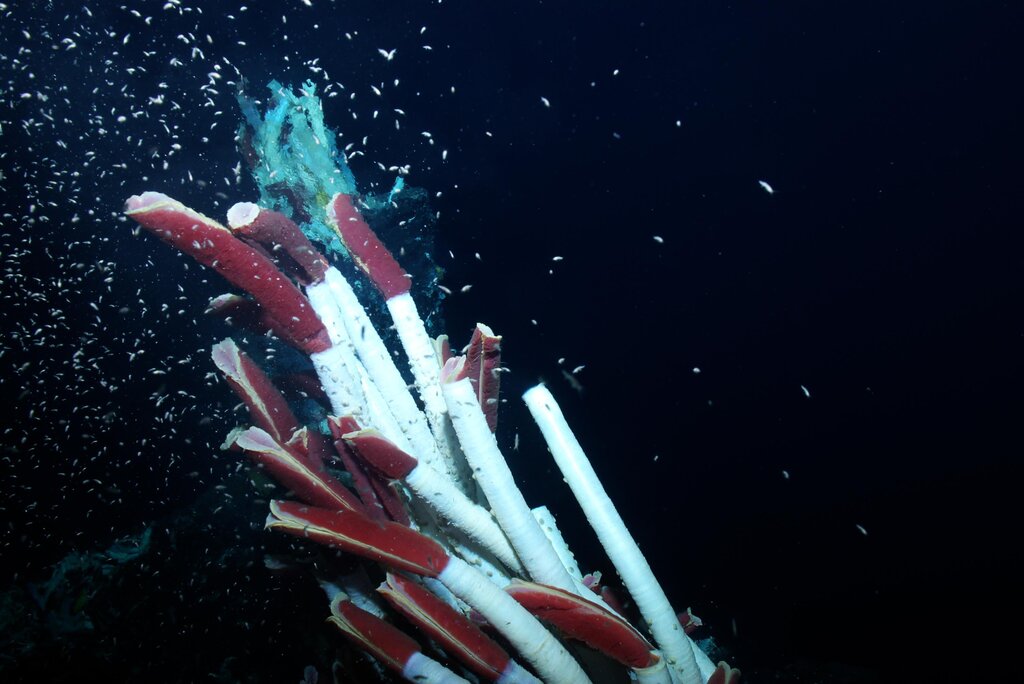
How do they withstand heat that would denature the proteins and melt the membranes of other cells? Their survival depends on key molecular adaptations. Their proteins have more chemical bonds holding them together, creating a rigid structure that resists falling apart. Their cell membranes are also built differently, containing saturated fatty acids that pack tightly together to maintain integrity at high temperatures. It's a bit like using hard butter instead of soft margarine on a hot day; one holds its shape while the other melts away.
At the other end of the thermometer are the psychrophiles, or 'cold-lovers'. They inhabit permanently cold environments like glaciers, permafrost, and the deep ocean, often thriving at temperatures below 15°C. Their main challenge is keeping their cellular processes running and their membranes from becoming rigid and shattering.
To achieve this, psychrophiles have evolved membranes with a high concentration of unsaturated fatty acids. These lipids have kinks in their tails, which prevent them from packing tightly together. This adaptation maintains membrane fluidity, ensuring the cell membrane remains flexible and functional, allowing for transport and communication even in freezing conditions.
Chemical Extremes
Some microbes thrive in chemical conditions that would be toxic to most life. Halophiles, or 'salt-lovers', are a prime example. They colonise extremely saline environments like Utah's Great Salt Lake or artificial salt evaporation ponds. In such places, the salt concentration can be up to ten times that of seawater.
The constant threat for any cell in a salty solution is dehydration through osmosis. Water naturally moves from an area of low solute concentration (inside the cell) to high solute concentration (outside the cell). To prevent all their water from leaving, halophiles have mastered in two main ways. Some pump inorganic ions, like potassium (), into their cytoplasm to match the external saltiness. Others produce massive amounts of organic compounds, like glycerol, which have the same effect.
Beyond salt, pH poses another major challenge. Acidophiles live in acidic hot springs or in the runoff from mining operations, sometimes at a pH of 0—the equivalent of battery acid. Alkaliphiles, on the other hand, prefer highly alkaline habitats like soda lakes, with a pH of 11 or higher. Both types of microbes maintain a near-neutral internal pH. They do this by using powerful pumps in their membranes to actively transport protons ( ions) in or out of the cell, creating a stable internal environment despite the chemical chaos outside.
Pressure, Products, and Potential
In the deepest parts of the ocean, like the Mariana Trench, the pressure can exceed 1,000 times that at the surface. This is the realm of piezophiles (or barophiles), microbes adapted to high-pressure conditions that would crush most other life forms. Their membranes feature a high degree of unsaturated fatty acids to stay fluid under intense pressure, and their proteins are structured to be more stable and function correctly when compressed.
The secret to extremophile survival often lies in their enzymes. These specialised proteins, called extremozymes, can function under conditions that would destroy normal enzymes.
This unique stability makes extremozymes incredibly valuable. For example, Taq polymerase, an enzyme from the thermophile Thermus aquaticus, is heat-stable and became the cornerstone of the Polymerase Chain Reaction (). This technique, which is used to amplify DNA, is fundamental to modern genetics, diagnostics, and forensics. Other extremozymes are used in laundry detergents (to break down stains in hot or cold water), food processing, and the production of biofuels. By studying these masters of survival, we not only learn about the boundaries of life but also unlock powerful tools for technology.
Time to test your knowledge about these resilient microbes.
What is the primary challenge that psychrophiles ('cold-lovers') must overcome to survive in their environment?
A microbe discovered thriving near a deep-sea hydrothermal vent would most likely be classified as both a: