Micro Structure Scalping and Execution
Limit Order Book Mechanics
Beyond the Chart
Price doesn't move in a vacuum. Behind every tick up or down on a chart is a dynamic, live auction. This auction takes place in the limit order book (LOB), often called the 'ladder' or 'depth of market'. It's a real-time list of all the buy and sell limit orders waiting to be executed for a specific asset.
Think of it as an organized queue. On one side, you have the bids – all the limit orders from traders wanting to buy. On the other, you have the asks (or offers) – the limit orders from traders wanting to sell. These aren't just random numbers; they represent the intentions of other market participants. The highest bid price and the lowest ask price form the best available prices, and the gap between them is the bid-ask spread.
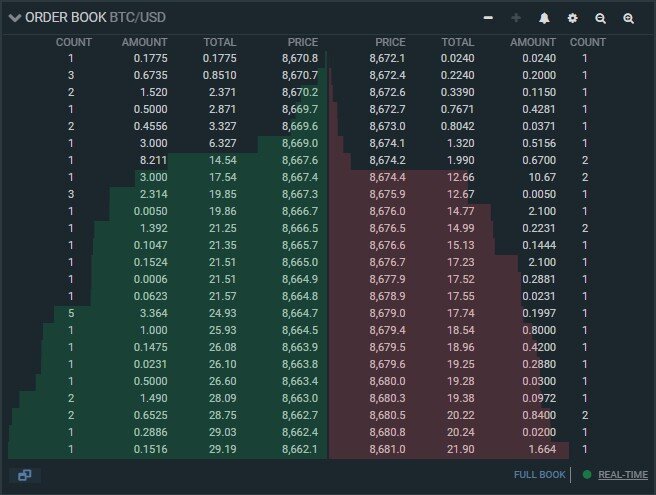
Each price level on the ladder has a certain size, or depth. This is simply the total volume of all orders placed at that specific price. A price level with a large volume of orders is considered a significant layer of liquidity. These layers can act as temporary support or resistance, as it takes a large opposing force to trade through them. Viewing the LOB isn't just about seeing prices; it's about seeing the supply and demand structure of the market in its rawest form.
The Rules of the Game
How does an exchange decide which order gets filled first when multiple orders are at the same price? It follows a strict rule: Price-Time Priority. This is the fundamental principle governing almost every modern market. It's a two-part rule that ensures fairness.
- Price Priority: The highest bid and the lowest ask get precedence. If you're buying, your order will only be filled after all bids at higher prices are gone. If you're selling, you're behind all asks at lower prices.
- Time Priority: If multiple orders are at the same price, they are filled in the order they were received. First come, first served.
This system underpins the entire market structure. It's the job of the exchange's to enforce these rules at lightning speed. When you place a limit order, you're placing a passive order. You are adding liquidity to the book and waiting for the price to come to you. You've stated your terms and are content to wait in the queue.
In contrast, a market order is an aggressive order. You're not stating a price; you're demanding to be filled immediately at the best available price. A market buy order will consume orders from the ask side of the book, starting with the lowest price and moving up until the order is filled. A market sell order does the opposite, consuming liquidity from the bid side, starting with the highest price and moving down.
This dance between passive liquidity providers and aggressive liquidity takers is what creates price movement. For price to move up, aggressive buyers must consume all the limit sell orders at the current best ask price and then start consuming orders at the next price level up. The reverse is true for price to move down.
Reading the Flow
Simply looking at the LOB gives you a static snapshot. But the real insight comes from watching the flow of orders. One concept traders watch for is . This refers to a situation where there is a significantly larger volume of orders on one side of the book compared to the other.
For example, if the top five levels of the bid side have 1,000 contracts waiting, while the top five levels of the ask side only have 200, there's a clear imbalance. This might suggest that buyers are more eager, and it would take less selling pressure to move the price down than it would take buying pressure to move it up.
However, interpreting OBI requires caution. Large orders can be 'iceberg' orders, with only a small portion visible on the book. They can also be placed and cancelled in milliseconds (spoofing) to mislead other traders. The order book is a battleground of information and misinformation.
Understanding these mechanics is crucial. It transforms the chart from a simple line into a story of supply and demand, where every stall and acceleration can be traced back to the push and pull of passive and aggressive orders in the limit order book.
What is the primary function of a Limit Order Book (LOB)?
In the context of the limit order book, an aggressive order __________ liquidity, while a passive order __________ liquidity.