Meta's Manus Acquisition
Introduction to Hand-Tracking Technology
What is Hand Tracking?
Hand tracking is technology that allows a computer to understand the position, orientation, and movement of your hands in three-dimensional space. In virtual and augmented reality, it’s a game-changer. Instead of learning complex button combinations on a controller, you can just use your hands naturally. You can point, grab, pinch, and wave just like you would in the real world.
This makes virtual experiences feel much more real and intuitive. When you see your own hands move in a virtual environment, your brain accepts the illusion more readily. It bridges the gap between the physical you and your digital avatar, deepening the sense of immersion.
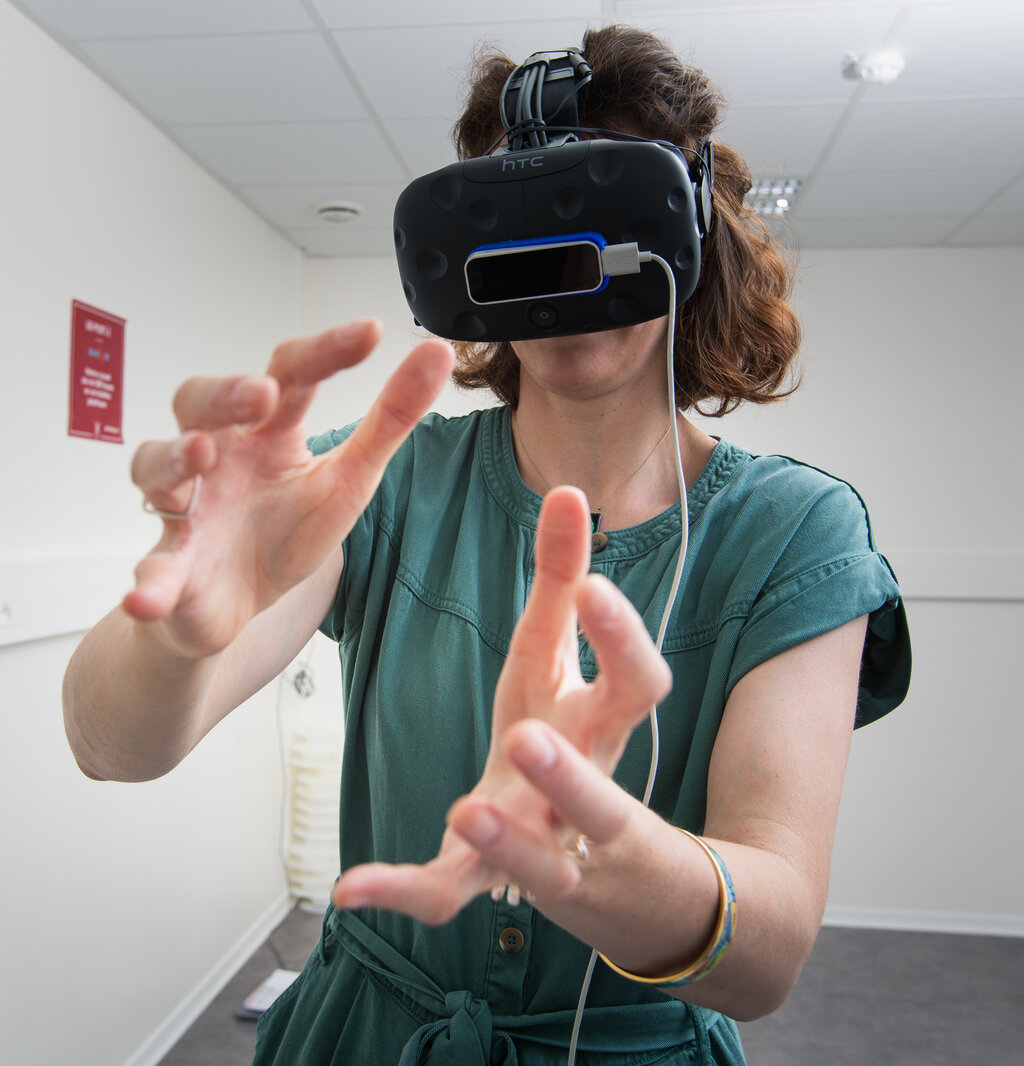
This direct interaction removes a layer of abstraction. You're no longer pressing a button to simulate grabbing an object; you are simply reaching out and closing your fingers around it. This is a huge leap toward making VR/AR feel less like a game and more like an extension of reality.
How Does It Work?
There are two primary methods for tracking hands: optical tracking and sensor-based tracking. Most modern consumer headsets rely on optical tracking.
Optical Tracking uses cameras, typically mounted on the outside of a VR headset, to watch your hands. Sophisticated computer vision algorithms analyze the video feed in real-time. They identify your hands, distinguish them from the background, and create a 3D model, or skeleton, of your fingers and palms. This digital skeleton then mirrors your movements in the virtual world.
Sensor-based Tracking takes a different approach. It involves wearing a device, usually a glove, equipped with tiny sensors. Inertial Measurement Units (IMUs), which contain accelerometers and gyroscopes, track the overall motion and rotation of your hands. Flex sensors embedded in the fabric measure how much each finger is bent. The combined data from these sensors provides a highly accurate picture of your hand's position and posture.
Each method has its trade-offs. Optical tracking is convenient because it doesn't require extra hardware, but it can lose track of your hands if they're hidden from the cameras or in poor lighting. Sensor-based gloves offer higher precision and don't rely on line-of-sight, but they are an additional piece of equipment to wear and set up.
A Brief History
The idea of tracking hands to interact with computers isn't new. One of the earliest and most famous examples is the DataGlove, developed in the 1980s. It was a pioneering piece of technology, but it was also bulky, covered in wires, and extremely expensive, limiting its use to research labs and high-end industrial applications.
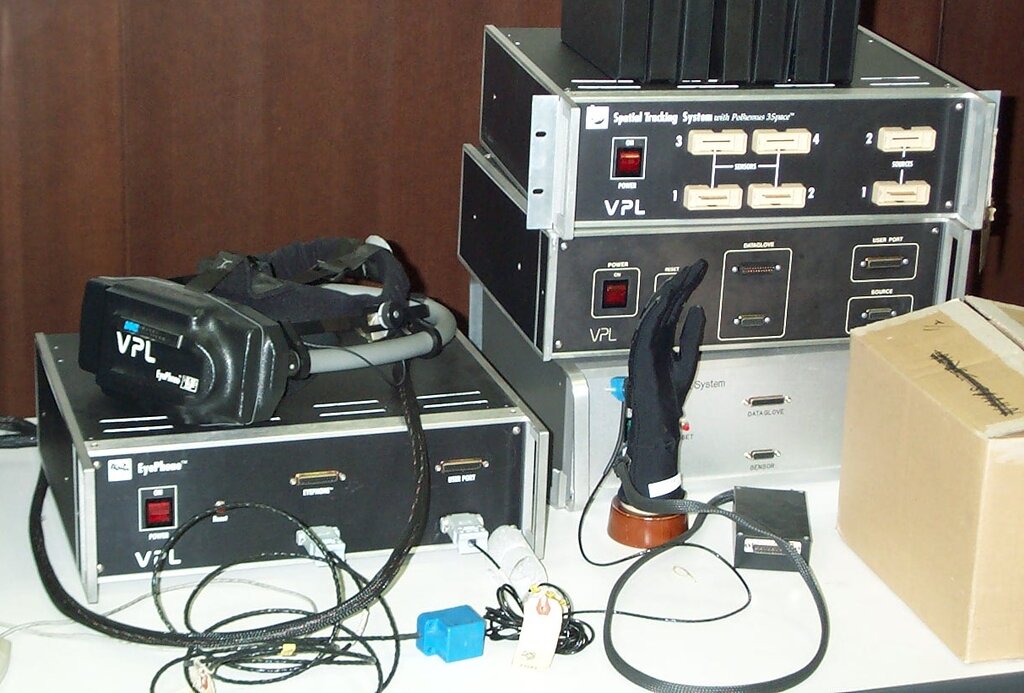
For decades, this was the state of hand tracking: powerful but inaccessible. The major turning point came with the advancement of computer vision and the integration of cameras into consumer VR headsets. Suddenly, passable hand tracking was possible without any extra peripherals.
This shift democratized the technology. Early versions were experimental and sometimes clumsy, but they rapidly improved. Now, controller-free hand tracking is a standard feature on many standalone VR headsets, allowing anyone to experience more natural virtual interactions.
Applications in VR and AR
With natural hand interaction, the possibilities for VR and AR expand dramatically. It’s more than just a novelty; it’s a fundamental shift in how we engage with digital content.
Use natural gestures and hand-tracking controls to make interactions intuitive.
In professional training, surgeons can practice complex procedures in a risk-free environment, and engineers can assemble virtual prototypes with their bare hands. For creative professionals, it opens up new ways to sculpt, paint, and design in 3D space as if working with physical clay or paint.
In gaming, it allows for deeper immersion, where you might cast a spell by making a specific gesture or climb a virtual mountain by actually reaching for handholds. And in social VR, it makes communication more expressive and lifelike. A simple wave or thumbs-up from an avatar's hand feels much more personal and real than a pre-canned animation triggered by a button press.
Now that you've got a handle on the basics, let's test your knowledge.
What is the primary function of hand tracking technology in VR and AR?
Which of the following describes how optical hand tracking typically works on consumer VR headsets?
Hand tracking is a key technology pushing VR and AR towards their ultimate promise: creating digital experiences that are indistinguishable from reality.