Metaphysics and Vibrational Reality
Introduction to Metaphysics
What Is Real?
At its heart, philosophy asks big questions. Metaphysics asks the biggest one of all: What is reality?
It’s a field dedicated to understanding the fundamental nature of being, existence, and the world. The name itself comes from the Greek “meta ta physika,” which means “beyond the physical.” It was a label given by ancient editors to the books Aristotle wrote after his works on physics. The name stuck because it perfectly describes what metaphysics does: it goes beyond the physical world that science observes to ask about the principles that structure everything.
Metaphysics is a branch of philosophy concerned with the fundamental nature of reality, existence, and the underlying principles that structure the universe.
Science, like physics, can tell us how the universe works. It can describe the laws of gravity and the behavior of subatomic particles. But it doesn't address why there is a universe at all, or what it means for something to “exist.” Metaphysics tackles these deeper questions. It's not about running experiments, but about using logic and reason to explore the very foundations of what is.
A Quick Tour Through Time
The quest to understand reality is as old as philosophy itself. It began in ancient Greece with thinkers now called the Pre-Socratics. They were the first to move away from mythological explanations and toward rational ones. Philosophers like Thales wondered if everything was ultimately made of a single substance, like water. They were looking for the fundamental stuff, or archē, of the cosmos.
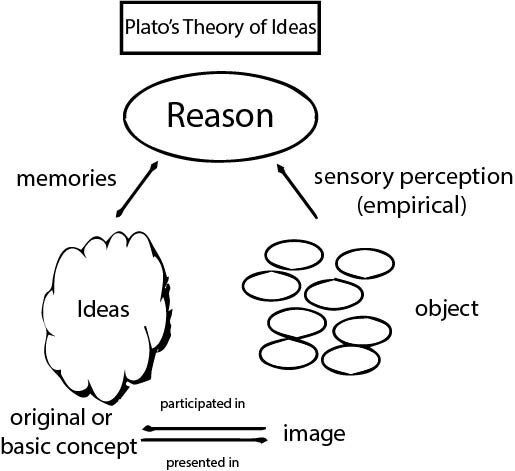
The conversation evolved dramatically with Plato. He proposed that the physical world we perceive with our senses is not the real world at all. Instead, it's just a shadow or an imperfect copy of a higher, more real world of perfect “Forms” or “Ideas.” For Plato, the idea of a chair is more real than any physical chair you can sit on.
His student, Aristotle, took a different approach. While Plato looked to an abstract world of Forms, Aristotle focused on the concrete world we experience. He wanted to understand the principles that govern the things right in front of us. He cataloged the different ways things can be said to “be,” pioneering the study of existence itself. Aristotle's work laid the groundwork for metaphysical inquiry for centuries to come.
The Core Questions
Metaphysics revolves around a few central questions that philosophers have debated for thousands of years. These aren't questions with easy answers, but exploring them helps us clarify our own understanding of the world.
One key area is ontology, the study of being. It asks, simply: What does it mean to exist? Are numbers and ideas as “real” as tables and chairs? This leads to other puzzles. For example, what is an object? Is a ship still the same ship if you replace all of its planks one by one? This question probes the nature of identity and change.
What makes something the same thing over time? If you change, are you still you?
Another fundamental question concerns properties. We see that a ball is red and round. Are “redness” and “roundness” real things that exist on their own? Or are they just features of the ball? This debate leads to two major theories.
Realism argues that these properties, or “universals,” are real and exist independently of the objects that have them. Plato was a realist; for him, the Form of “Redness” was a real entity.
Nominalism, on the other hand, claims that only individual objects exist. “Redness” is just a name or a label we use to group similar things together. There is no separate, existing thing called redness.
These questions might seem abstract, but they touch on how we organize and understand our world, from language to science.
Ready to test your understanding of these foundational concepts?
Metaphysics is the branch of philosophy primarily concerned with which fundamental question?
According to Plato's philosophy, which of the following is considered the MOST real?
Metaphysics provides the tools to think critically about the nature of reality. It's a journey into the deepest questions we can ask, shaping our view of the world and our place within it.