Metabolic Optimization and Longevity Science
Cellular Signaling Switches
The Growth vs. Repair Switch
Your cells are constantly making a fundamental decision: Is it time to grow, or is it time to repair? This choice is governed by two master signaling pathways that act like a biological toggle switch. Think of them as a construction foreman and an energy auditor for your body.
When nutrients are plentiful, the foreman, a protein complex called mTOR, gives the green light for growth. It shouts, "Times are good! We have plenty of materials!" and fires up the machinery for building new proteins and cells. This is the anabolic, or growth, phase. mTOR is essential for muscle growth, development, and cellular proliferation.
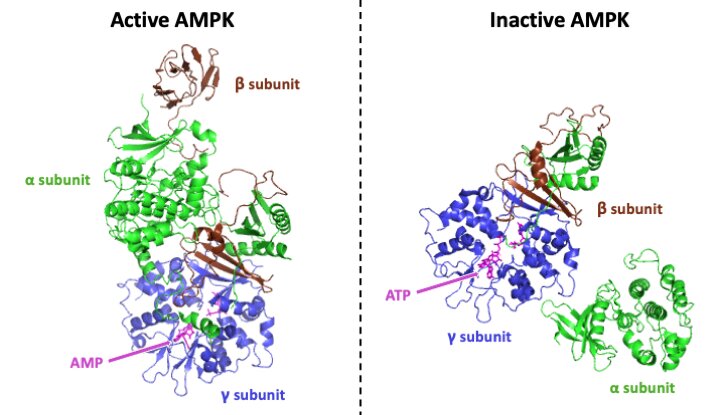
But when energy is scarce, the auditor steps in. This is a protein called AMPK. It senses when the cell's energy currency, ATP, is running low. AMPK slams the brakes on growth projects and shifts the cell's focus to conservation and repair. This is the catabolic, or breakdown, phase. It activates processes like fat burning for fuel and autophagy, the cellular cleanup crew that recycles old, damaged parts.
For health and longevity, we’d want systemic mTOR levels to be low most of the time, with occasional periods of activation.
Sensing the Energy Crisis
How does AMPK know when to take over? It monitors the ratio of two molecules: adenosine triphosphate (ATP), the cell's main energy-carrying molecule, and adenosine monophosphate (AMP), which accumulates when ATP is used up. A high AMP-to-ATP ratio signals an energy deficit.
When AMPK is activated, it sets off a cascade of events. One of its most crucial jobs is to initiate autophagy. It does this by phosphorylating, or adding a phosphate group to, a protein complex called ULK1. This action essentially tags ULK1 to kickstart the formation of the autophagosome, a structure that engulfs cellular junk. At the same time, active AMPK directly inhibits the mTOR pathway, ensuring that the cell isn't trying to grow and clean up simultaneously. It's an elegant system that prioritizes survival and maintenance when resources are tight.
The Two Faces of mTOR
The foreman, mTOR, isn't just one entity. It exists in two distinct protein complexes with different jobs: mTORC1 and mTORC2.
mTORC1 (mechanistic Target of Rapamycin Complex 1) is the primary one we've been discussing. It's highly sensitive to nutrients, especially amino acids like leucine, and growth signals like insulin. When active, it promotes protein synthesis, lipid creation, and cell growth, while strongly suppressing autophagy. Think of it as the engine of anabolism.
mTORC2 (mechanistic Target of Rapamycin Complex 2) is less about immediate growth and more about long-term survival and cell structure. It's activated primarily by growth factors and helps organize the cell's internal skeleton. It also plays a key role in activating other signaling proteins, like Akt, which influences glucose metabolism and cell survival. While both are related, mTORC1 is the main player in the growth-vs-repair trade-off.
| Pathway | Primary Function | Activated By | Key Outcomes |
|---|---|---|---|
| AMPK | Energy Sensing & Repair | High AMP/ATP ratio, Exercise, Calorie Restriction | Fat oxidation, Autophagy, ↓ Growth |
| mTORC1 | Nutrient Sensing & Growth | Amino Acids, Insulin, Growth Factors | Protein synthesis, Cell proliferation, ↓ Autophagy |
In our modern world, with constant access to food, many people experience chronic activation of mTORC1. The foreman is always on the job, pushing for relentless growth without enough downtime for the repair crew. This imbalance is linked to accelerated aging and many age-related diseases. By intentionally creating periods of low energy through practices like exercise or fasting, we give AMPK a chance to activate. This silences mTORC1, allowing to initiate critical cellular maintenance and keep our systems running efficiently for the long haul.
In the analogy presented, which protein complex acts as the 'construction foreman' that signals for cellular growth?
What specific cellular condition triggers the activation of AMPK?