Metabolic Glow: Science of Glutathione and Weight Loss
The Gut Skin Axis
The Gut-Skin Axis
Your gut and your skin are in constant communication. This intricate connection is known as the gut-skin axis, a bidirectional pathway where the health of one directly influences the other. It's not a one-way street. What happens in your digestive tract can show up on your face, and likewise, signals from your skin can influence your gut.
Think of it as a biological feedback loop. An imbalanced gut sends out inflammatory signals that can trigger skin issues, while a healthy, diverse microbiome helps maintain a clear, resilient complexion.
When Your Gut Talks, Your Skin Listens
The community of microorganisms in your gut, your microbiome, is a powerful regulator of systemic inflammation. When this community falls out of balance, a condition known as , harmful microbes can proliferate. This imbalance can compromise the integrity of your intestinal lining, leading to increased intestinal permeability, often called "leaky gut."
A leaky gut allows pro-inflammatory molecules, such as lipopolysaccharides (LPS) from bacteria, to pass from the intestines into the bloodstream. Once circulating, these molecules trigger a body-wide immune response. This chronic, low-grade inflammation can manifest on your skin as dullness, redness, acne, and even hyperpigmentation, as the skin is a major target for inflammatory signals.
A Healthy Gut's Contribution
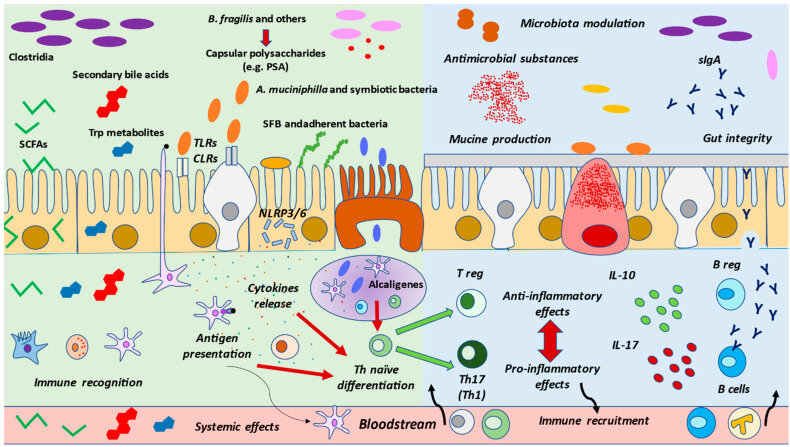
Conversely, a healthy and diverse gut microbiome works to protect and enhance your skin. Beneficial bacteria feast on dietary fiber and produce powerful metabolites, most notably (SCFAs) like butyrate, propionate, and acetate.
These SCFAs are multitasking powerhouses. First, they strengthen the intestinal barrier, effectively counteracting the "leaky gut" phenomenon. A stronger barrier means fewer inflammatory triggers enter your circulation. Second, SCFAs that reach the skin have been shown to enhance its natural barrier function, improve hydration, and support the integrity of proteins like collagen. They essentially help your skin defend itself from the inside out.
The connection doesn't stop at inflammation and metabolites. Your gut is also a major endocrine organ, producing and regulating various hormones. For example, gut-derived hormones can influence sebum production in the skin's oil glands. An imbalance can lead to either excessive oiliness and acne or dryness. Similarly, these hormones can play a role in regulating melanin production, impacting skin tone and pigmentation.
Now, let's test your understanding of these connections.
What is the primary role of Short-Chain Fatty Acids (SCFAs) in the context of the gut-skin axis?
The term for an imbalance in the gut's microbial community that can lead to a compromised intestinal lining is known as:
Understanding the gut-skin axis is the first step in leveraging nutrition to support both metabolic health and a radiant complexion. By focusing on the gut, we can address the root causes of many skin concerns.