Mesoamerica Beyond the "Ancient" Label
Introduction to Mesoamerican Civilizations
What is Mesoamerica?
When we hear about great historical societies, names like ancient Rome or Egypt often come to mind. But halfway across the world, a tapestry of extraordinary cultures was also rising, flourishing, and falling. This region, a cradle of civilization in its own right, is known as Mesoamerica.
Mesoamerica
noun
A historical and cultural area in the Americas, extending from central Mexico through Belize, Guatemala, El Salvador, Honduras, Nicaragua, and northern Costa Rica.
Mesoamerica isn't just a geographical location; it's a "culture area." This means that for thousands of years, the many different peoples who lived here shared fundamental ideas and practices. They traded goods, of course, but they also exchanged knowledge. This created a unique cultural toolkit that many groups drew from.
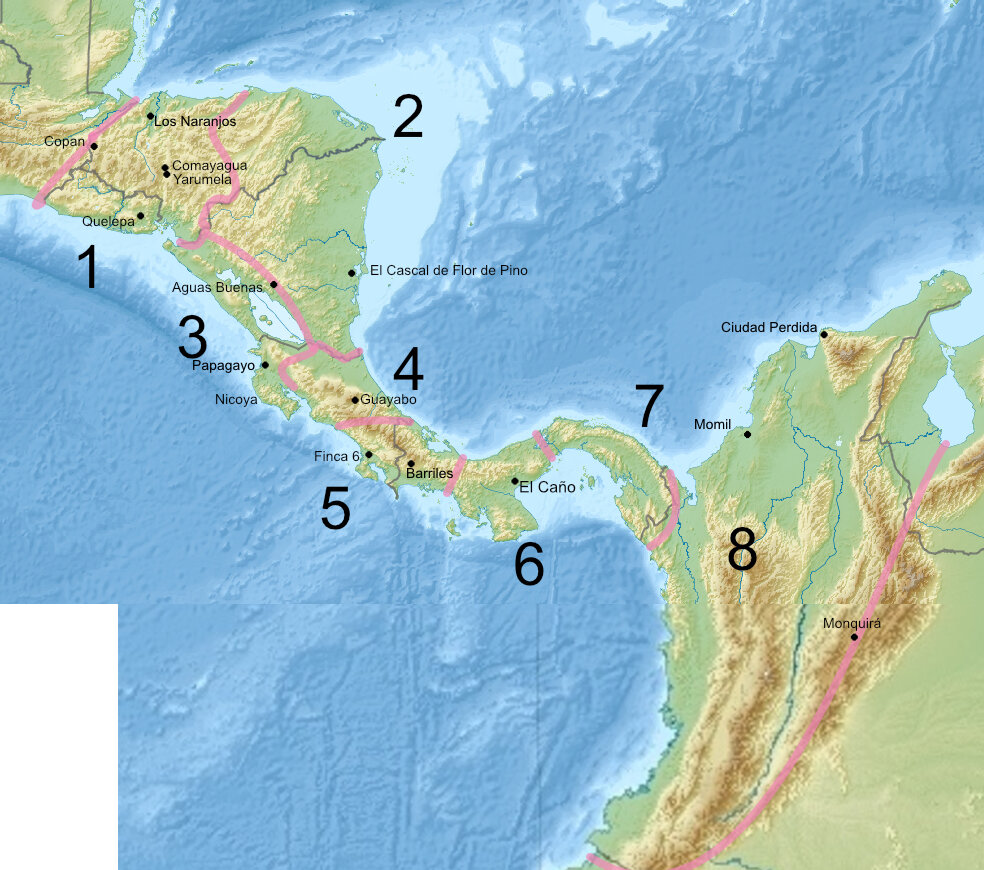
Some of these shared traits included building monumental pyramids, developing complex calendar systems (often more than one), and playing a ritual ballgame with solid rubber balls. While each civilization had its own distinct language, art, and politics, they were all part of the same larger story.
A World of Many Cultures
Mesoamerica wasn't a single, unified empire. It was home to a succession of different peoples who rose to prominence at different times. Among the most well-known are the Olmec, the Maya, and the Aztec.
The Olmec are often called the "mother culture" of Mesoamerica because they appeared early and influenced many who came after. The Maya are famous for their sophisticated writing system, mathematics, and stunning cities hidden in the jungle. The Aztec, who came much later, built a powerful empire with a magnificent capital city, Tenochtitlan, where Mexico City stands today.
Historians group these civilizations into a general timeline to make sense of this long history.
| Period | Timeframe (Approx.) | Major Cultures Active |
|---|---|---|
| Formative (or Pre-Classic) | 2000 BCE – 250 CE | Olmec, early Maya |
| Classic | 250 CE – 900 CE | Maya city-states at their peak, Teotihuacan |
| Post-Classic | 900 CE – 1521 CE | Toltec, Aztec |
This is a simplified view. Many other peoples, like the Zapotec, Mixtec, and Toltec, also made significant contributions. The key takeaway is that Mesoamerican history is dynamic, with different groups taking center stage over centuries.
Not 'Ancient' in the Way You Think
A common mistake is to lump all Mesoamerican societies into a single, "ancient" past, as if they were all contemporaries of the Egyptian pharaohs. This isn't accurate and obscures their unique histories.
The Olmec civilization did indeed begin in ancient times. But the Maya classic period was happening at the same time as the so-called "Dark Ages" in Europe. And the Aztec Empire was at the height of its power when Leonardo da Vinci was painting and Columbus was sailing the Atlantic.
The Aztec capital, Tenochtitlan, was one of the largest cities in the world in the early 1500s. Its civilization wasn't a long-lost relic; it was a vibrant, living society when Europeans first arrived.
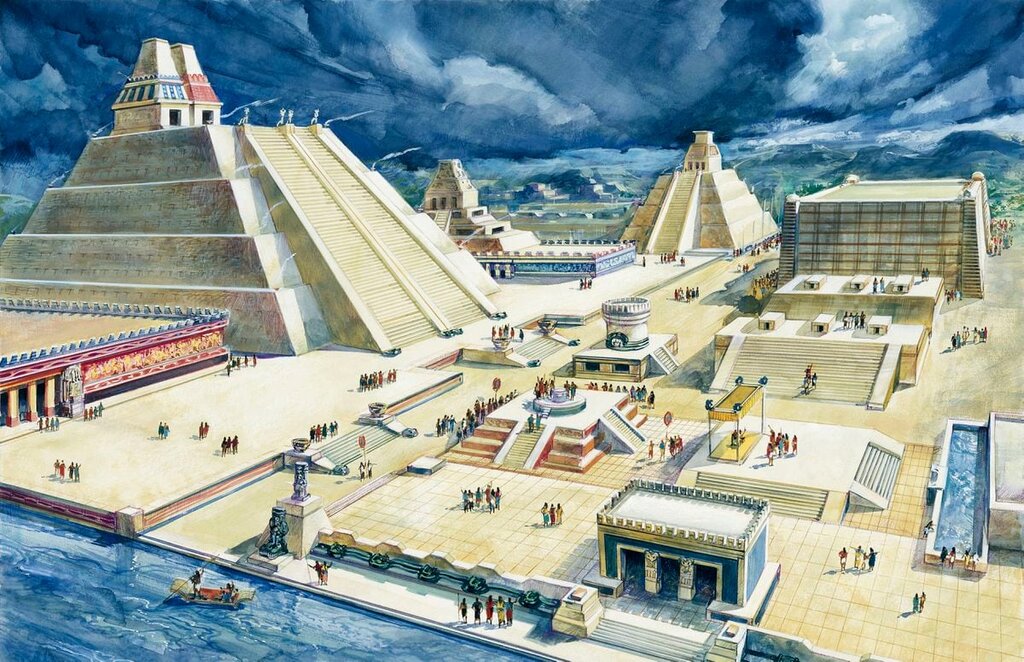
Understanding this timeline is crucial. It allows us to appreciate these civilizations on their own terms, not as mysterious relics of a forgotten world. They were complex societies tackling the same challenges of politics, war, and innovation as their counterparts across the ocean, just in a completely different context.
What does it mean to describe Mesoamerica as a "culture area"?
Which civilization is often called the "mother culture" of Mesoamerica because it appeared early and influenced many later cultures?
With this foundation, we can begin to explore the incredible achievements of each of these unique cultures.