Mesh Radio and MeshCore Fundamentals
Introduction to Mesh Radio Networks
Beyond the Router
Most of us connect to the internet through a single point: a Wi-Fi router. All our devices, from laptops to phones, talk directly to that one box. If the router goes down, or if you're too far away from it, you lose your connection. It's a simple setup, but it has a crucial weakness.
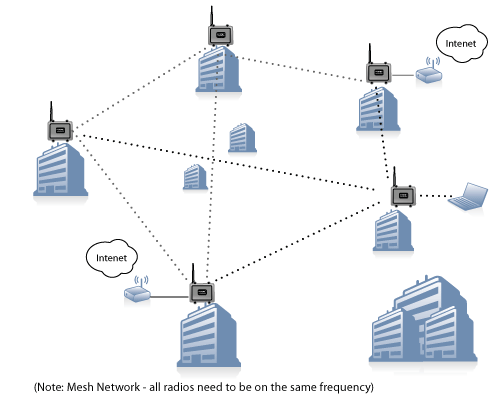
Mesh networks offer a smarter way. Instead of relying on one central hub, a mesh network is made of many individual points, called nodes. These nodes talk to each other, creating a web of connections. Your device connects to the nearest node, which then intelligently passes your data along to other nodes until it reaches its destination. Think of it like a team of people passing a bucket of water from a well to a house, rather than one person running back and forth.
The Power of Decentralization
This decentralized design gives mesh networks a few powerful advantages. The biggest one is resilience. In a traditional network, if the router fails, everyone is offline. In a mesh network, if one node goes down, the other nodes simply find a new path around it. The network automatically "heals" itself.
Mesh networks are also highly scalable. To expand coverage, you just add another node. The new node automatically connects to its neighbors, strengthening the entire network. There's no complex reconfiguration needed. Data travels along the quickest and most efficient path available at that moment, hopping from node to node.
This self-organizing behavior is managed by special sets of rules, known as protocols. You don't need to know the technical details, but two common protocols that enable this are IEEE 802.11s, which is an extension of the Wi-Fi standard, and OLSR, which is optimized for mobile networks where nodes are constantly moving.
| Protocol | What It Does |
|---|---|
| IEEE 802.11s | An official Wi-Fi standard that allows devices to form a mesh network. |
| OLSR | (Optimized Link State Routing) A protocol good at finding the best routes in dynamic networks. |
Real-World Impact
The benefits of mesh networks make them ideal for situations where traditional infrastructure is unavailable or unreliable. During natural disasters, when cell towers and internet cables are damaged, first responders can quickly set up a mesh network to communicate.
A network of portable nodes can create an instant communication grid for a search and rescue team, even in a remote area with no existing service.
Mesh technology is also a powerful tool for bridging the digital divide. In rural or remote areas where laying fiber optic cable is too expensive, a community can build its own internet service. By placing nodes on homes and buildings, they can share a single internet connection across a wide area, creating affordable and reliable access for everyone.
Now, let's review what we've covered.
What is the primary structural difference between a traditional Wi-Fi network and a mesh network?
If a single node in a mesh network goes offline, the rest of the network can typically continue to function.