Mercedes W201 and W124: Engineering Icons
Introduction to Mercedes-Benz W201 and W124
A New Kind of Mercedes
By the late 1970s, Mercedes-Benz had a reputation for building large, luxurious, and incredibly durable cars. But the world was changing. The 1973 oil crisis sent fuel prices soaring, creating a huge demand for smaller, more efficient vehicles. Mercedes-Benz saw an opportunity to enter a new market segment without compromising its core values.
The company embarked on a massive project to create a compact, modern sedan. The goal was to build a car that felt every bit a Mercedes in terms of quality and safety, just in a smaller package. After nearly a decade of development and an investment of over 600 million Deutschmarks, the result was unveiled in 1982.
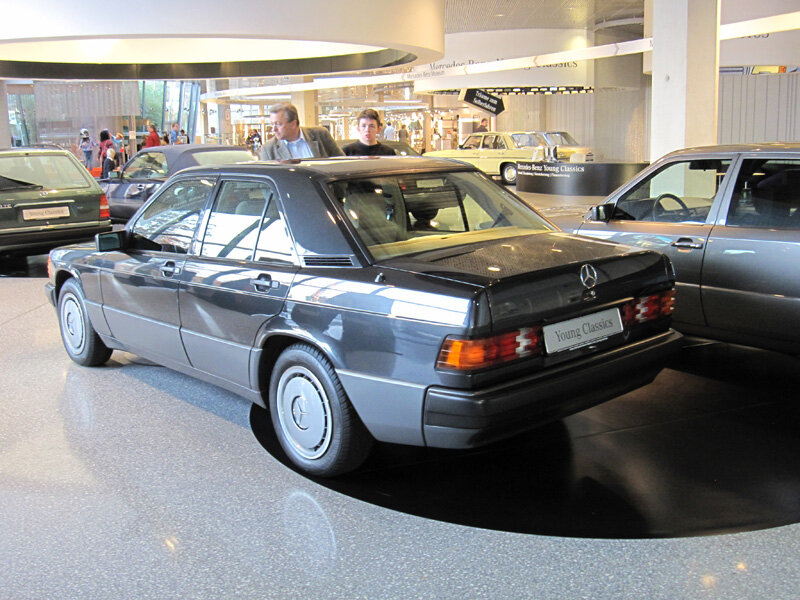
This new car was the W201, marketed as the 190. It was a radical departure from the company’s previous offerings. To ensure it handled like a true Mercedes, engineers developed a sophisticated multi-link rear suspension, a design that was revolutionary for its time and later adopted by many other automakers. The car also underwent extensive crash testing, making it one of the safest compact cars on the road.
While the W201 was making waves, Mercedes was also working on the successor to its mid-size W123 series, which was a global bestseller known for its legendary reliability.
Building on Success
The challenge for the new mid-size sedan was immense: how do you replace a legend? The answer was the W124, launched in 1984. It took the engineering principles pioneered in the W201 and applied them to a larger, more refined platform. The W124 shared the W201's focus on aerodynamics, safety, and advanced suspension technology.
Visually, the W124 was a clear evolution of the W201's design language, with a clean, understated look that has aged remarkably well. It offered more space, more engine options, and a higher level of comfort, solidifying its place between the compact 190 and the flagship S-Class.
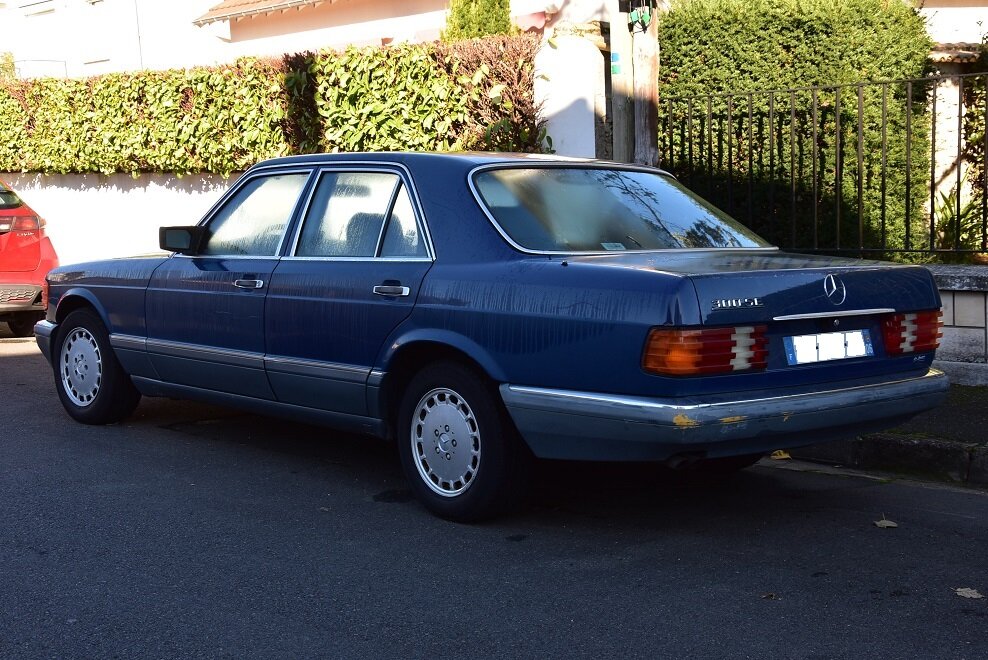
Both the W201 and W124 set new standards for the automotive industry. They proved that a car could be both compact and luxurious, safe and efficient. They also marked a significant period of engineering prowess for Mercedes-Benz.
The MB W124 was built with over-engineering standards, making it one of the most durable Mercedes models ever produced.
This philosophy of 'over-engineering' meant that components were designed to last far beyond their expected service life, a key reason why so many of these cars are still on the road today. A timeline shows how these two influential models came to be.
| Year | Milestone |
|---|---|
| 1974 | Development begins on the W201 compact model. |
| 1976 | Development begins on the W124 mid-size model. |
| 1982 | The W201 (Mercedes-Benz 190) is officially launched. |
| 1984 | The W124 sedan (E-Class predecessor) is launched. |
| 1985 | The W124 coupe and station wagon versions are introduced. |
| 1993 | The W201 ends production after more than 1.8 million units sold. |
| 1995 | The W124 sedan ends its production run. |
Lasting Impact
The W201 and W124 are significant for several reasons. First, the W201 successfully opened up a new market for Mercedes-Benz, paving the way for the future C-Class. It introduced a new generation of buyers to the brand.
Second, both models became benchmarks for quality and durability in their respective classes. Their advanced engineering, particularly in suspension design and safety features like anti-lock brakes and airbags, pushed the entire industry forward.
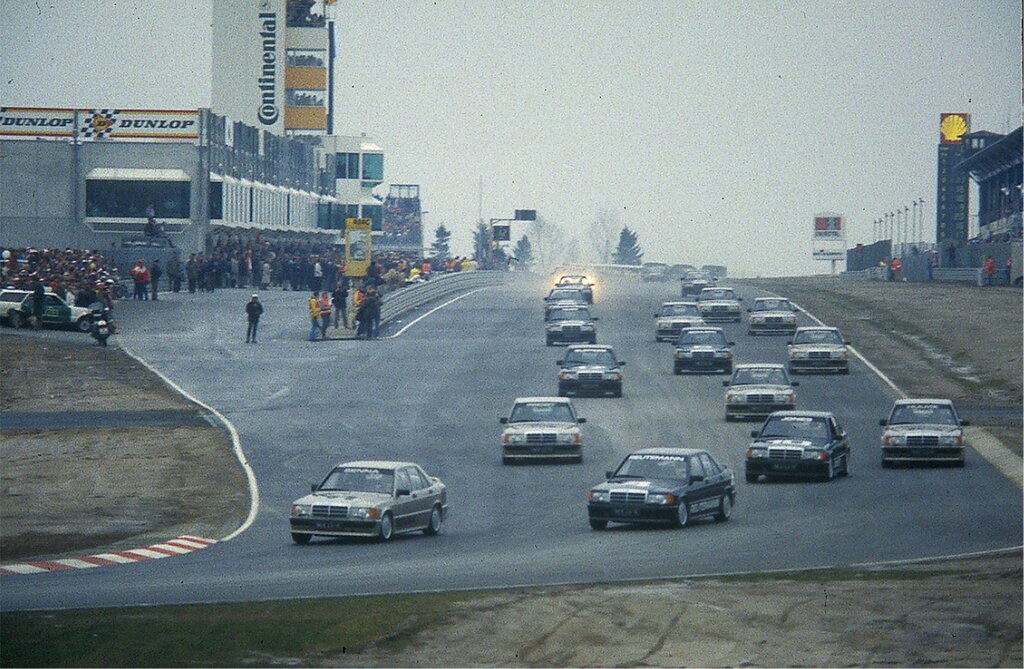
The legacy of these cars is their perfect balance of innovation, quality, and timeless design. They represented a pivotal moment for Mercedes-Benz, defining the modern era for the brand and creating a blueprint for the cars that would follow. They weren't just new models; they were a statement about the future of the automobile.
The W201 and W124 introduced advanced multi-link rear suspension and a focus on aerodynamics that influenced car design for decades.
Ready to check your understanding of these iconic models?
What major global event was the primary catalyst for Mercedes-Benz to develop the compact W201 (190)?
Which revolutionary engineering feature was developed for the W201 to give it the handling characteristics of a larger Mercedes-Benz?