Mendel's Laws of Inheritance
Introduction to Genetics
The Blueprint of Life
Have you ever been told you have your mother’s eyes or your father’s smile? We inherit traits from our parents, from the color of our hair to the shape of our nose. This passing of characteristics from one generation to the next is called heredity. The instructions for these traits are contained in a remarkable molecular blueprint found in nearly every cell of your body.
The fundamental unit of this blueprint is the gene. Think of a gene as a single recipe in a giant cookbook. One recipe might hold the instructions for eye color, while another determines if your hair is curly or straight. These genes are the basic units of heredity.
DNA: The Instruction Manual
The entire cookbook—the material that contains all the recipes—is called DNA, or deoxyribonucleic acid. DNA is a long, complex molecule shaped like a twisted ladder, a structure known as a double helix. The two long sides of the ladder are made of sugar and phosphate molecules, forming a backbone.
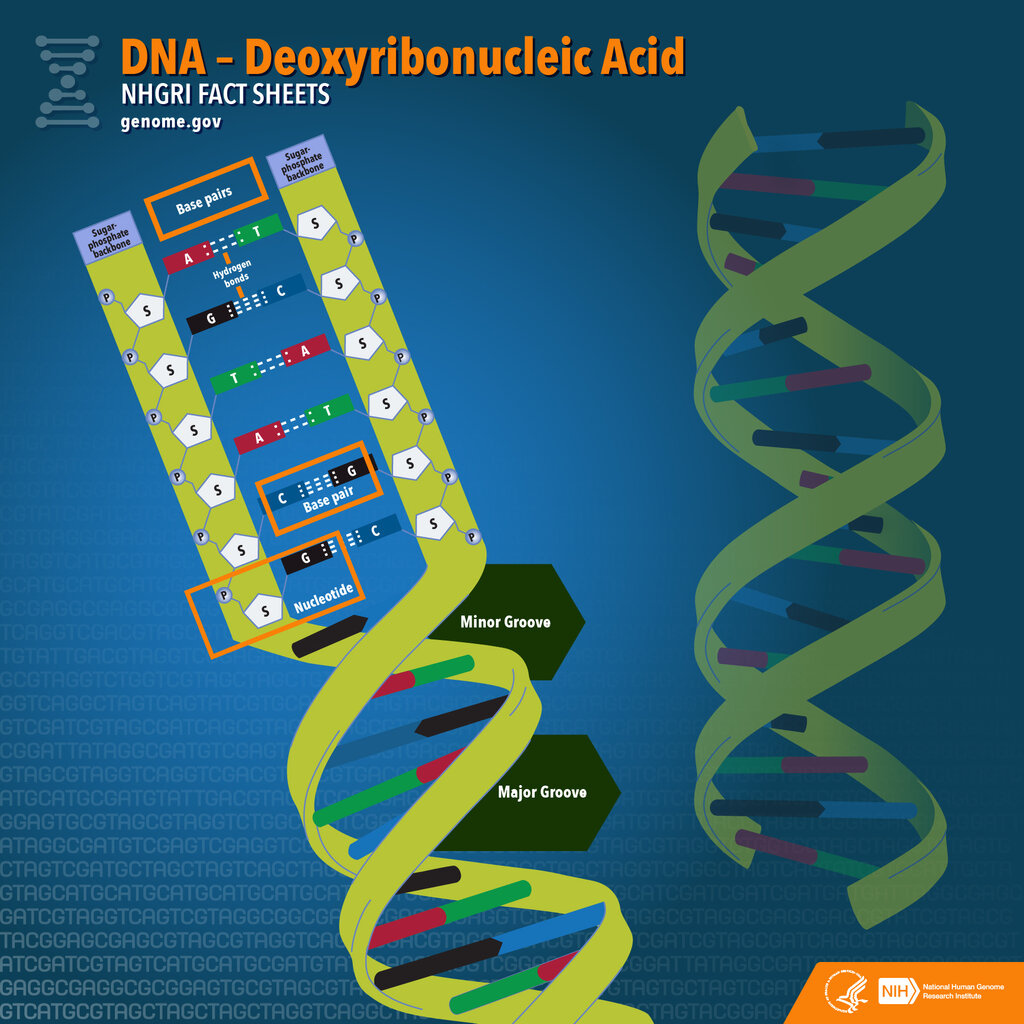
The rungs of the ladder are what make the code. Each rung consists of a pair of smaller molecules called bases. There are four types of bases in DNA:
- Adenine (A)
- Guanine (G)
- Cytosine (C)
- Thymine (T)
These bases follow a strict pairing rule: Adenine always pairs with Thymine (A-T), and Cytosine always pairs with Guanine (C-G). The specific sequence of these base pairs along the ladder forms the genetic code. A single gene is simply a stretch of this DNA sequence that codes for a specific outcome, like producing a particular protein.
The sequence of DNA bases is the language that tells a cell what to do, from building proteins to regulating other cellular activities.
Organizing the Code
If you stretched out the DNA from a single human cell, it would be about two meters long. To fit all of this information inside a microscopic nucleus, the DNA is expertly packaged. It's tightly coiled around proteins and condensed into structures called chromosomes.
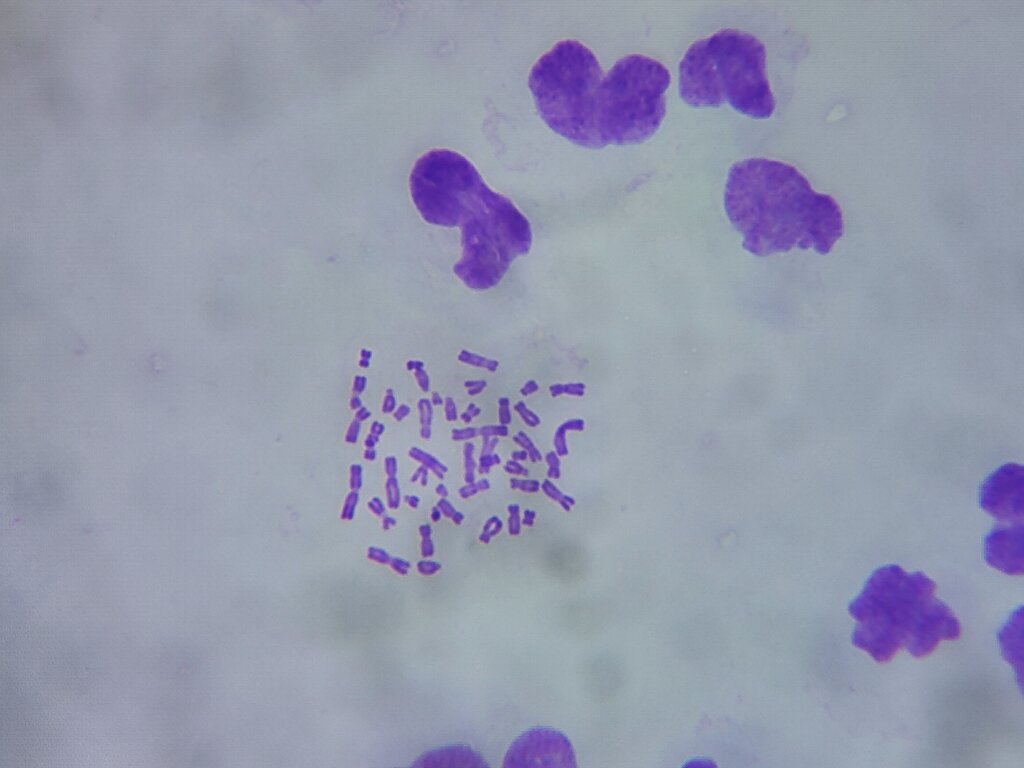
Humans typically have 46 chromosomes, arranged in 23 pairs. When you were conceived, you inherited one chromosome from each of your mother's pairs and one from each of your father's, giving you a complete set of 23 pairs. This is how genetic information is physically passed down. Each chromosome contains hundreds or thousands of genes, all arranged in a specific order.
Different Flavors of a Gene
For any given trait, like eye color, there can be multiple variations. The gene for eye color might have a version for brown eyes and another for blue eyes. These different versions of the same gene are called alleles. You inherit two alleles for each gene—one from each parent.
Allele
noun
One of two or more alternative forms of a gene that arise by mutation and are found at the same place on a chromosome.
The combination of alleles you possess determines your specific traits. Sometimes one allele is dominant, meaning it masks the effect of the other, recessive allele. For example, if you inherit a brown-eye allele (dominant) and a blue-eye allele (recessive), you will have brown eyes. To have blue eyes, you would need to inherit two copies of the recessive blue-eye allele. The interaction between these alleles creates the rich diversity of traits we see in the world around us.
Ready to check your understanding of these core concepts?
What is the fundamental unit of heredity that contains the instructions for a specific trait?
In the DNA double helix, Adenine (A) always pairs with which base?
These building blocks—DNA, genes, alleles, and chromosomes—form the basis of heredity. They are the machinery that ensures life's instructions are copied and passed from one generation to the next.