Meiosis and Genetic Diversity
Meiosis Fundamentals
The Purpose of Meiosis
Most cells in your body, like skin cells or muscle cells, divide through a process called mitosis to create identical copies for growth and repair. But to create reproductive cells—sperm and eggs—a different process is needed. This special type of cell division is called meiosis.
The main goal of meiosis is to produce gametes. These cells are unique because they have exactly half the number of chromosomes as a typical body cell. Our body cells are diploid, meaning they have two sets of chromosomes, one from each parent. We represent this as . Gametes, on the other hand, are haploid, meaning they contain only one set of chromosomes ().
Why is this reduction necessary? When a sperm and egg unite during fertilization, they combine their genetic material. If each gamete had a full set of chromosomes, the resulting offspring would have double the correct amount. Meiosis ensures that when two gametes fuse, the new organism has the proper diploid number of chromosomes.
gamete
noun
A mature haploid male or female germ cell (like a sperm or egg) that is able to unite with another of the opposite sex in sexual reproduction to form a zygote.
A Two-Part Division
Unlike mitosis, which has one round of division, meiosis involves two consecutive rounds: Meiosis I and Meiosis II. This two-step process is what allows the cell to reduce its chromosome number by half.
Think of it this way: before meiosis begins, the cell's DNA has already been replicated. So, the cell starts with duplicated chromosomes. Meiosis I is the first and most unique division, often called the reductional division. This is where pairs of homologous chromosomes are separated, halving the chromosome count. Meiosis II, the equational division, is much more like mitosis. It separates the two identical halves of each duplicated chromosome, called sister chromatids.
Meiosis I separates homologous chromosomes. Meiosis II separates sister chromatids.
Meiosis I: Pairing and Separating
The first division is where the most important and complex events of meiosis occur.
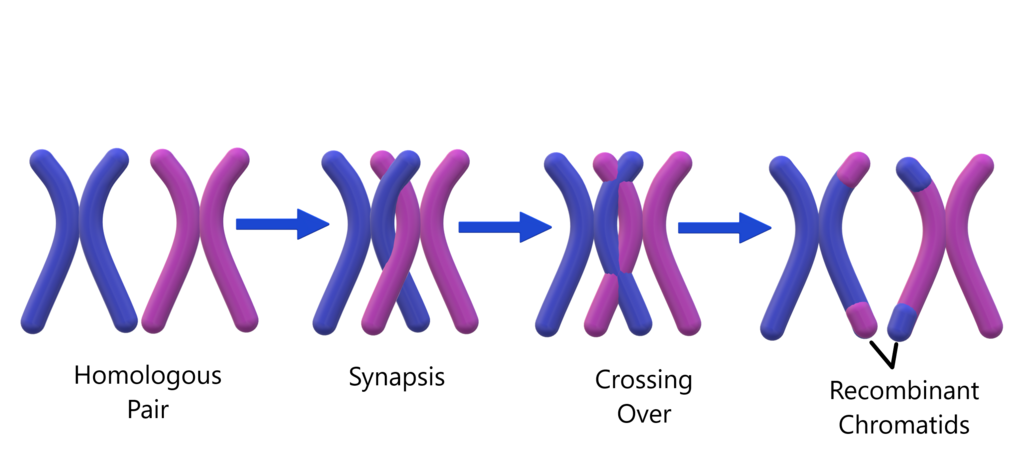
Prophase I: This is the longest phase of meiosis. Here, homologous chromosomes—one from each parent—find each other and pair up side-by-side. This pairing process is called synapsis. While paired, a remarkable event called crossing over happens. Segments of DNA are exchanged between the homologous chromosomes. This creates new combinations of genes on each chromosome.
Metaphase I: The paired homologous chromosomes, now called bivalents, line up along the center of the cell, known as the metaphase plate.
Anaphase I: The homologous chromosomes are pulled apart and move to opposite ends of the cell. Critically, the sister chromatids of each chromosome remain attached to each other.
Telophase I and Cytokinesis: The cell divides into two new cells. Each of these daughter cells is now haploid in terms of chromosome number, but each chromosome still consists of two sister chromatids.
Meiosis II: The Final Split
The two cells produced during Meiosis I immediately enter Meiosis II without any further DNA replication. This second division is a more straightforward process, mirroring the steps of mitosis.
Prophase II: The chromosomes condense again in each of the two haploid cells.
Metaphase II: The chromosomes (each still made of two sister chromatids) line up individually along the metaphase plate in each cell.
Anaphase II: The sister chromatids are finally pulled apart. They move to opposite poles of the cell and are now considered individual chromosomes.
Telophase II and Cytokinesis: The cells divide one last time. The process concludes with four haploid daughter cells, each containing a single set of chromosomes. In males, all four cells typically develop into sperm. In females, the division of cytoplasm is unequal, resulting in one large egg cell and smaller polar bodies that degrade.
Time to check your understanding of these fundamental steps.
What is the primary purpose of meiosis?
A diploid cell is represented as . After meiosis is complete, the resulting daughter cells are:
Meiosis is a beautifully orchestrated process that halves the chromosome number while creating unique combinations of genetic material, setting the stage for sexual reproduction.