Meditate Away Stress
Understanding Stress
What Is Stress?
Stress is your body's natural response to a demand or threat. When you sense danger, whether it's real or imagined, your body's defenses kick into high gear in a rapid, automatic process known as the "fight-or-flight" response. This reaction is a survival mechanism that prepares you to either confront the threat or flee to safety.
Stress
noun
A state of mental or emotional strain resulting from demanding circumstances.
Not all stress is bad. In fact, it can be helpful in small doses. This is called acute stress. It's the short-term burst of energy you feel before a presentation or the jolt of focus that helps you slam on the brakes to avoid an accident. It comes on quickly and, once the challenge has passed, your body returns to its normal state.
Problems arise when the stress response stays activated over a long period. This is chronic stress. It's what happens when the source of stress is constant, like a difficult job, financial worries, or relationship problems. Your body never receives a clear signal to return to normal functioning, leaving you in a prolonged state of high alert.

With chronic stress, the alarm is always on. This constant state of readiness can disrupt nearly all of your body's processes, leading to significant wear and tear.
The Body on High Alert
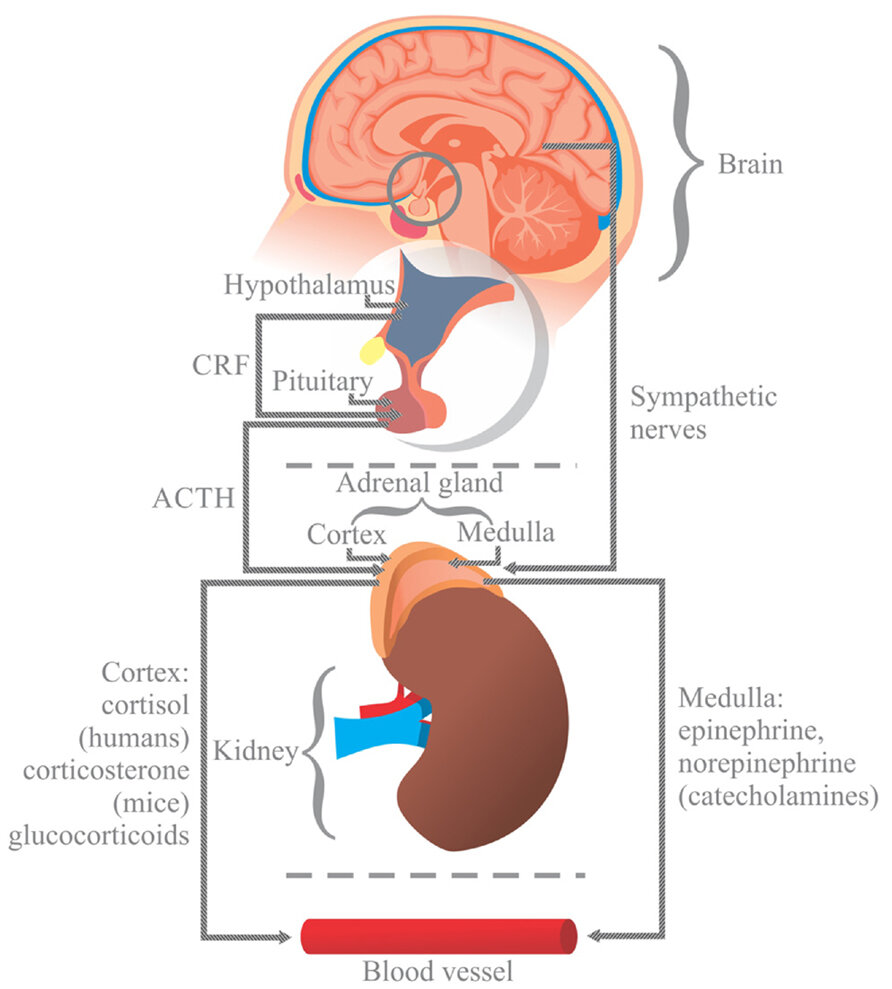
When your brain perceives a threat, a tiny region called the hypothalamus sets off an alarm system. This system prompts your adrenal glands, located on top of your kidneys, to release a surge of hormones, including adrenaline and cortisol.
Adrenaline increases your heart rate and blood pressure. Cortisol, the primary stress hormone, increases sugars in the bloodstream and curbs functions that would be nonessential in a fight-or-flight situation.
This hormonal cascade, known as the HPA (Hypothalamic-Pituitary-Adrenal) axis, is incredibly useful for escaping immediate danger. But when it's constantly active, it can cause problems.
Chronic stress keeps cortisol levels elevated, which can disrupt most of your body's systems. This can lead to a wide range of physical and psychological symptoms.
Physically, you might experience:
- Headaches and muscle tension
- Fatigue and sleep problems
- Digestive issues
- Increased susceptibility to illness
Psychologically, the effects can include:
- Anxiety and irritability
- Difficulty concentrating
- Feelings of being overwhelmed
- Depression
The Domino Effect
Unmanaged chronic stress is more than just a feeling of being frazzled. It's a serious health concern. Over time, the constant strain on your body can contribute to or worsen several major health problems.
For example, the continuous elevation of heart rate and blood pressure can damage your arteries and increase the risk of heart attack and stroke. A weakened immune system makes you more vulnerable to infections and can worsen autoimmune diseases. Chronic stress can also lead to metabolic issues like obesity and type 2 diabetes.
The link between mind and body is clear. The psychological toll of chronic stress can be just as damaging, leading to clinical anxiety, depression, and other mental health disorders.
Taming the Stress Response
The good news is that you can take active steps to manage your stress. The goal isn't to eliminate stress completely—that's impossible and not even desirable. Instead, stress management is about learning how to recognize your body's signals and respond in a healthy way.
Techniques can be simple and practical. Regular exercise, a balanced diet, and sufficient sleep are foundational. Building strong social connections and making time for hobbies can also provide a powerful buffer against stress.
Incorporating a mindfulness practice into your life can help interrupt the stress cycle and allow space to respond instead of reacting.
This is where meditation comes in. Meditation is a practice that trains awareness and helps you achieve a mentally clear and emotionally calm state. By focusing on your breath or the sensations in your body, you can gently pull your mind away from the cycle of stressful thoughts.
Regular meditation helps activate the body's relaxation response, which is the opposite of the fight-or-flight response. It can lower your heart rate, blood pressure, and cortisol levels. It provides a way to consciously calm your nervous system, giving your body and mind a much-needed break from being on high alert.
What is the primary purpose of the body's 'fight-or-flight' response?
Acute stress is a long-term, constant state of high alert caused by ongoing stressors like financial worries.