Medieval Universities Guilds of Scholars
Origins of Medieval Universities
The Rise of a New Institution
Before universities as we know them, the centers of learning in Europe were quiet and secluded. For centuries, education was found within the stone walls of monasteries and cathedrals. Monastic schools focused on religious texts and training monks, while cathedral schools educated local clergy and the sons of nobles. Their purpose was clear and limited: to serve the needs of the Church and preserve existing knowledge, not necessarily to create new ideas.
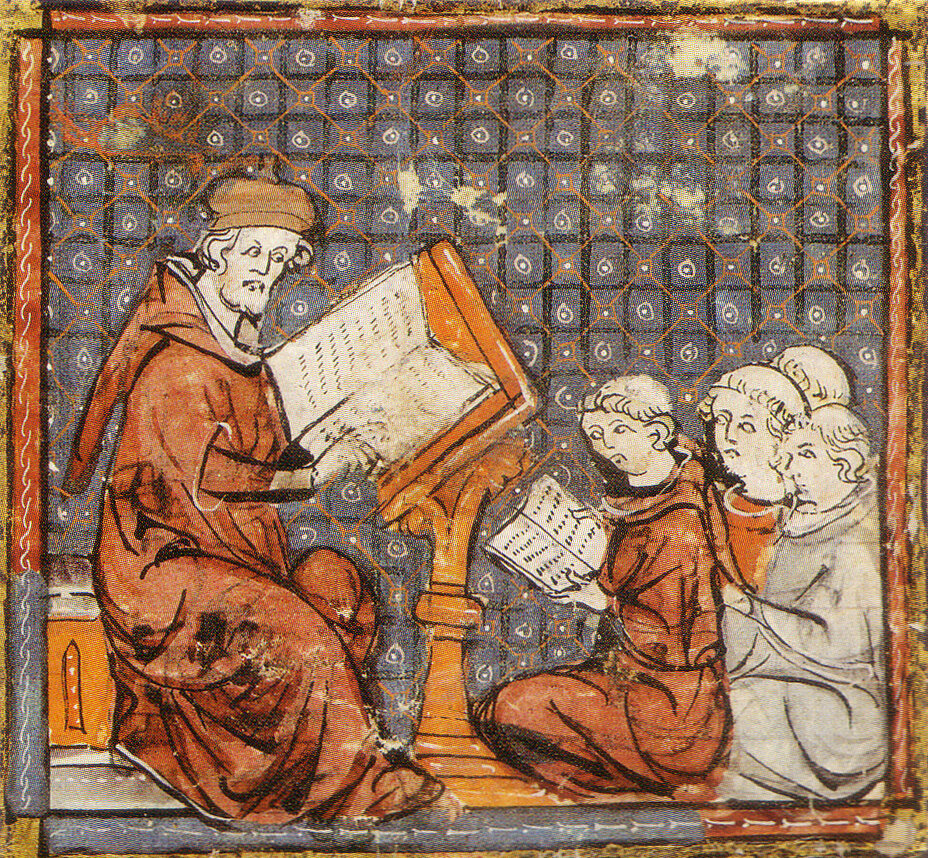
But by the 11th and 12th centuries, Europe was changing rapidly. Towns and cities were growing, trade was expanding, and contact with the Byzantine and Islamic worlds during the Crusades brought a flood of forgotten knowledge back into Europe. Lost texts from figures like Aristotle and Euclid were rediscovered and translated, sparking a new hunger for learning.
The translated and reinterpreted texts during this period became a fundamental part of the European educational canon during the late Middle Ages.
This intellectual awakening created new demands. Growing kingdoms needed trained administrators and lawyers. Bustling cities required skilled doctors. The Church itself needed experts in theology and canon law to navigate complex doctrinal disputes. The old system of cathedral and monastic schools simply wasn't equipped to handle this explosion of new information and professional needs. A new kind of institution was required.
A Guild of Scholars
The first universities didn't start with grand buildings or formal charters. They began as organic gatherings of people who wanted to learn and teach. The very word "university" comes from the Latin universitas, which originally meant a guild or corporation, like a guild of carpenters or stonemasons.
universitas
noun
A Latin term originally meaning any community or corporation. In the medieval context, it referred to a guild of masters (teachers) or students who came together for the purpose of higher learning.
These were essentially academic guilds. In some places, like Bologna in Italy, students formed a guild to protect their interests. They hired professors, set their salaries, and could even fine them for being late or delivering a dull lecture. The University of Bologna became a model for universities in southern Europe, renowned for the study of law.
In other places, like Paris, the masters, or teachers, formed the guild. They set the curriculum, determined the requirements for degrees, and controlled who could teach. The University of Paris became the leading center for theology and philosophy, and its master-led model was copied across northern Europe, including at Oxford and Cambridge.
The key idea is that the first universities were not physical places, but self-governing communities of scholars who banded together to pursue and regulate advanced learning.
These guilds of scholars sought legal protection and privileges from popes, emperors, and kings. They gained the right to govern themselves, to set their own standards, and to award degrees, which were essentially licenses to teach. This independence allowed them to become centers of debate and inquiry, laying the groundwork for the modern university.