Medieval Siege Weaponry Unveiled
Introduction to Medieval Siege Warfare
Taking the Castle
Medieval warfare wasn't always about massive armies clashing on open fields. More often, it was a slow, grinding contest of wills centered on a single strong point: a castle or a fortified city. This was siege warfare.
A siege is an attempt to capture a fortified place by surrounding it, cutting off its supplies, and breaking down its defenses. Instead of a quick, decisive battle, a siege was a long-term investment of time, resources, and lives. The goal was to force the defenders to surrender, either through starvation, psychological pressure, or a direct assault.
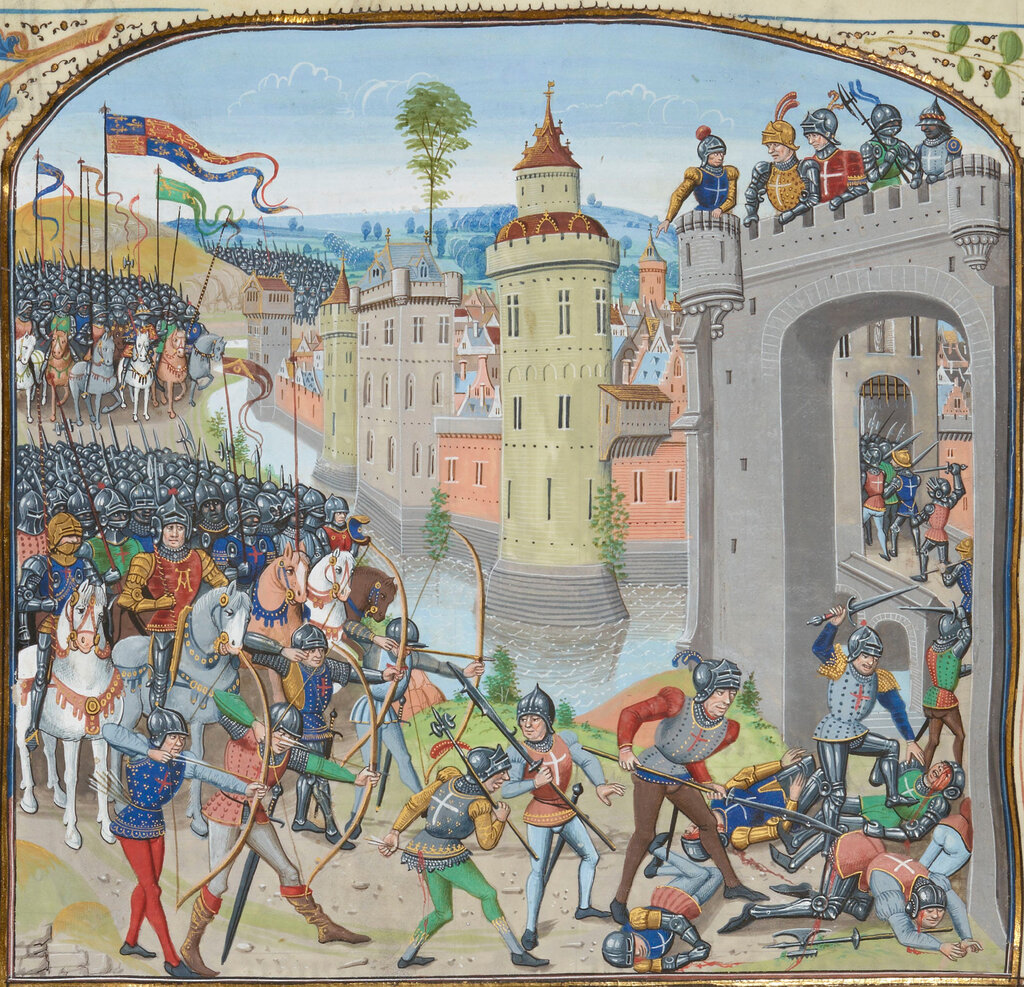
Why go to all that trouble? Because castles and walled towns were the centers of power. They controlled rivers, roads, and farmland. An army couldn't simply march past an enemy fortress. Doing so would leave a hostile force in their rear, free to raid supply lines and threaten their campaign. To control the land, you had to control its strongholds.
A Game of Strategy
Both attackers and defenders had a playbook of common strategies. The besieging army's first move was to completely surround the target, a process called investment. This prevented anyone or anything from getting in or out. With the trap set, the attackers had several options.
The simplest, and often safest, tactic was to wait. A well-stocked castle could last for months, but food and water would eventually run out. This turned the siege into a brutal waiting game.
For a more direct approach, attackers would try to breach the walls. They might dig tunnels, called mines, underneath the fortifications to collapse a section of the wall. Or they could attempt a direct assault with ladders and siege towers, a bloody and often desperate affair.
Defenders weren't passive victims. Their primary advantage was the fortification itself. High walls gave their archers a clear advantage, while narrow gates created deadly chokepoints. They stockpiled food, dug wells, and rationed supplies to outlast the attackers. Sometimes, defenders would launch surprise attacks, called sorties, to disrupt the siege works and destroy enemy equipment.
An Evolving Battlefield
Siege warfare was an arms race. As defensive architecture evolved from simple wooden forts to complex stone castles with concentric walls, attacking armies had to develop new methods and more powerful tools to overcome them. Techniques used by ancient armies, like the Romans, were refined and adapted throughout the Middle Ages.
The contest between the castle designer and the siege engineer drove military innovation for centuries. The strength of a kingdom was measured not just by its armies in the field, but by the thickness of its walls and its ability to both conduct and withstand a siege.
Ready to test your knowledge on the basics of a siege?
What was the primary goal of a medieval siege?
Why was it strategically dangerous for an army to simply march past an enemy fortress?
Understanding these core strategies is the first step. Next, we'll look at the specific machines and weapons that made breaking down a castle's defenses possible.