Medieval Japanese Swordsmanship Mastery
Kamakura Battlefield Evolution
From Horseback to Hand-to-Hand
In the wake of the Genpei War, the ideal samurai was a mounted archer. The battlefield was dominated by cavalry charges and the precise lethality of the longbow, a style of warfare known as yabusame. In this context, the sword was a secondary weapon, a sidearm for when the fighting got too close for an arrow. The primary sword of this era was the tachi, a long, deeply curved blade worn slung from the belt with its cutting edge facing down.
This design was no accident. The deep curvature, or sori, made the tachi exceptionally well-suited for a mounted warrior. It allowed for a smooth, powerful drawing cut from the scabbard, using the horse's momentum to add force to the slash. These blades were typically elegant, slender, and optimized for cutting through the gaps in the ō-yoroi armor of the time, targeting unarmored or lightly protected areas.
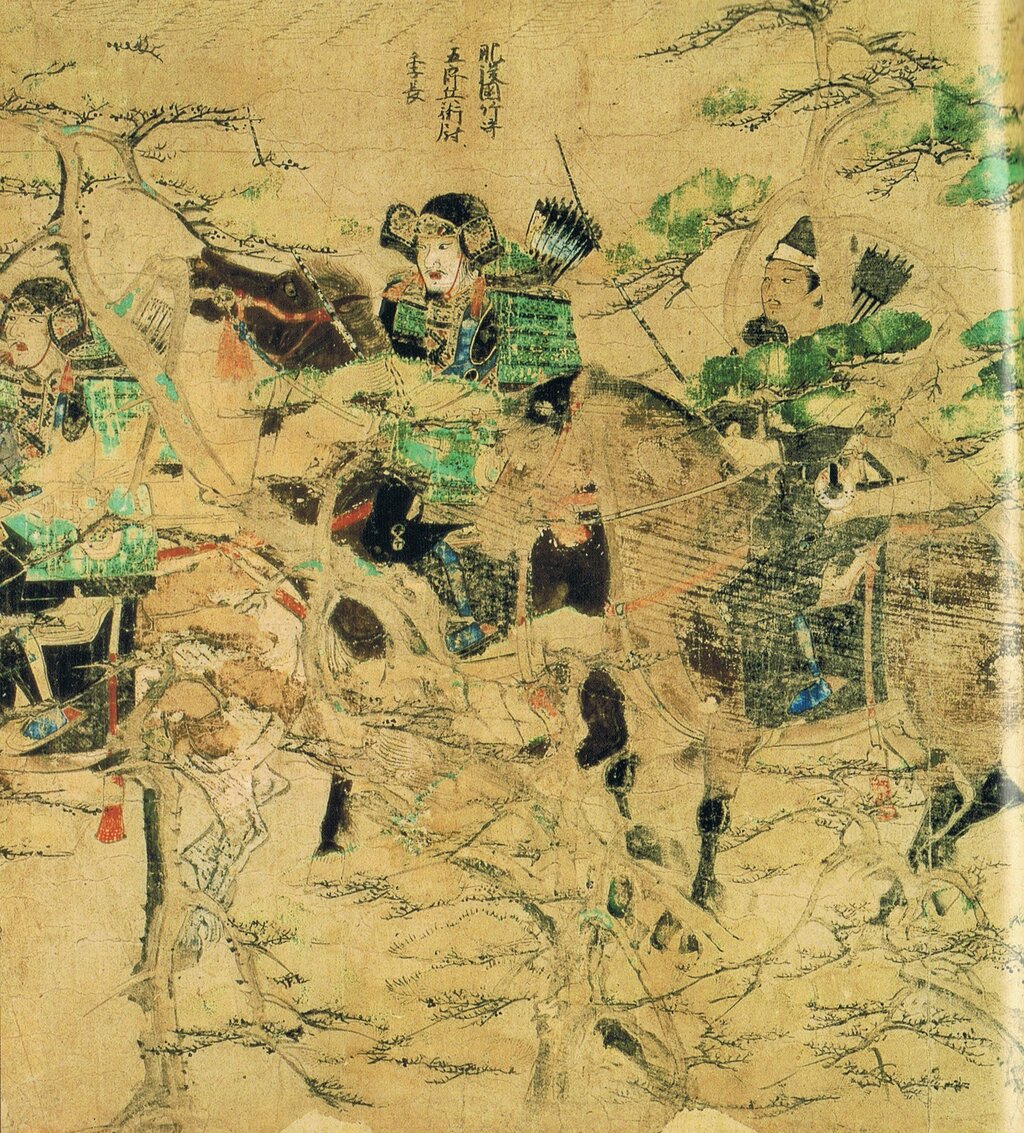
The Mongol Shock
This established way of war was violently upended in the late 13th century by the Mongol invasions of Japan (元寇, Genkō). The invaders brought a completely different philosophy of battle. They fought in disciplined, coordinated units, used powerful composite bows, and most importantly, wore tough armor made of boiled leather, often carrying large shields. The Japanese warrior's individualistic, cavalry-centric approach suddenly met its match.
The elegant tachi blades, designed for slicing soft targets, struggled against the Mongol armor. The thin blades were prone to chipping, bending, or even breaking when striking the hardened leather. It became clear that dismounted, close-quarters combat was now a brutal necessity, and the Japanese sword needed to evolve to survive it.
The shock of the Mongol invasions forced a rapid, practical evolution in Japanese weapon design and fighting doctrine. The focus shifted from graceful cuts to powerful, armor-defeating strikes.
Swordsmiths responded to this new reality. Blades became wider, thicker, and heavier. They featured a more robust cross-section with more 'meat' behind the edge, a quality known as niku. This added mass and strength, allowing the sword to withstand the impact of hitting tough armor without failing. The once-dramatic sori was often reduced, making the blade tip stronger and better suited for thrusting into gaps in armor during a ground fight.
The Birth of Formal Schools
The shift toward ground combat also spurred the development of systematic fighting methods. It was no longer enough to be a skilled horseman; a warrior needed a repeatable, effective system for fighting on foot with a sword. This need gave rise to the first formal martial arts traditions, or ryū.
Among the earliest of these were the Nen-ryū and the Chūjō-ryū, both founded in the 14th century during the tumultuous period following the invasions. The was founded by the samurai Sōma Shiro Yoshimoto, who was known by his Buddhist name Nen'ami Jion. The style emphasized simplicity and directness, focusing on a small number of practical techniques that could be relied upon under the stress of battle. It included techniques for both the long sword and the short sword.
The Chūjō-ryū, founded by Chūjō Hyōgo no Kami Nagahide, became one of the most influential early traditions. Nagahide served the Ashikaga shogunate and developed a comprehensive system that became the martial art of the shoguns. This school focused heavily on sword-drawing techniques suitable for dismounted skirmishes, a critical skill when a fight could begin suddenly. The teachings of the Chūjō-ryū would later form the technical and spiritual basis for many other famous sword schools.
The decline of the samurai class marked one of the most significant transitions in Japanese history, as the nation moved from feudalism to modernity.
The Kamakura period was a crucible for the Japanese sword and the art of using it. Forged in the fires of foreign invasion, the blade and the warrior who wielded it were transformed forever, setting the stage for the golden age of kenjutsu.