Medical Residency in Qatar
Medical Education Pathway
The Path to Practice
Becoming a licensed physician in Qatar is a structured journey. It combines rigorous academic coursework with hands-on clinical experience, ensuring every doctor is prepared for the responsibilities of patient care. The typical path starts with an undergraduate medical program, which usually spans six years.
This program is divided into two main phases. The first is the pre-medical curriculum, which often covers the first year or two. Here, students build a strong foundation in the basic sciences—biology, chemistry, physics, and mathematics. This coursework provides the essential scientific principles needed for medical studies. Following the pre-medical phase, students enter the medical curriculum. The focus shifts to core medical subjects like anatomy, physiology, and pharmacology, gradually leading to more complex clinical sciences.
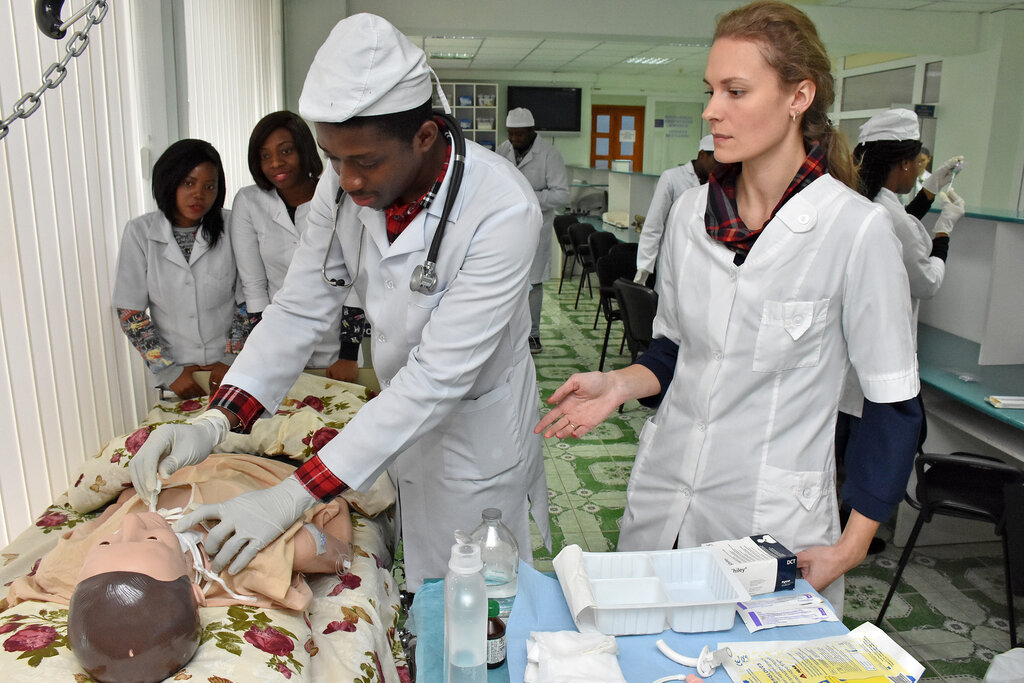
As students progress, the focus shifts from the classroom to the clinic. This is where clinical rotations, also known as clerkships, begin. During these rotations, students become active members of medical teams in hospitals and clinics. They work under the supervision of experienced physicians across various specialties, such as internal medicine, surgery, pediatrics, and obstetrics.
This hands-on training is critical. It's the first time students apply their theoretical knowledge to real patient scenarios. The journey culminates in a final internship year, which is an intensive, full-time period of clinical practice. Interns take on more responsibility for patient care, preparing them for the transition from student to independent practitioner.
Earning Your License
Graduating from medical school is a major achievement, but it's not the final step. To legally practice medicine in Qatar, every physician must obtain a medical license. This process is managed by the Qatar Council for Healthcare Practitioners (QCHP), the country's regulatory body for healthcare professionals.
The QCHP's role is to ensure that all practicing physicians meet the required standards of competence and professionalism. To get a license, graduates must submit their credentials for verification and pass specific standardized examinations. These exams are designed to assess a candidate's medical knowledge and clinical reasoning skills, ensuring they are ready for safe and effective practice.
Key exams for licensure often include the United States Medical Licensing Examination (USMLE) Step 2 Clinical Knowledge (CK) or the International Foundations of Medicine (IFOM) Clinical Science Exam (CSE).
Passing these exams demonstrates that a medical graduate has the comprehensive clinical knowledge required to provide patient care at an international standard. Once all requirements are met—including graduation, internship, and passing the necessary exams—the QCHP will grant a license to practice medicine in Qatar.
What is the primary role of the Qatar Council for Healthcare Practitioners (QCHP) in the process of becoming a physician?
The pre-medical phase of a medical program in Qatar focuses on building a strong foundation in basic sciences.
This pathway, from foundational science to full licensure, ensures that doctors in Qatar are well-equipped with the knowledge and skills needed to serve the community.