Medical Device Development and Approval
Introduction to Medical Device Development
From Idea to Patient
Bringing a new medical device to life is a journey with many steps. It starts with a simple idea—a better way to diagnose a disease, a new tool for surgeons, or an implant that improves a patient's quality of life. But turning that idea into a safe, effective product that doctors can use requires a careful, structured process.
This process isn't just about engineering and manufacturing. It's a highly regulated path designed to protect patients and ensure that every device is reliable. Think of it as a series of checkpoints, each one building on the last, moving from a rough concept to a finished product used in the real world.
Each stage has a specific purpose. During Concept & Feasibility, teams identify a problem and brainstorm solutions, checking if the idea is technically possible and commercially viable. Design & Development is where blueprints become reality through prototyping and engineering. Here, the team defines every detail, from the materials used to the software that runs it.
Next comes Verification & Validation, a critical testing phase. Verification asks, "Did we build the device right?" It checks the device against its design specifications. Validation asks, "Did we build the right device?" It confirms the device meets the user's needs and works as intended in a clinical setting.
Once testing is complete, the company seeks Regulatory Approval from government bodies like the U.S. Food and Drug Administration (FDA). After getting the green light, Manufacturing & Launch begins, scaling up production and distributing the device. But the work doesn't stop there. Post-Market Surveillance involves collecting data on the device's performance in the real world to catch any issues and inform future improvements.
The Rules of Safety
Because medical devices can have a huge impact on people's health, they are regulated by strict quality standards. These aren't suggestions; they are mandatory frameworks that ensure every step of the development process is documented, controlled, and focused on safety.
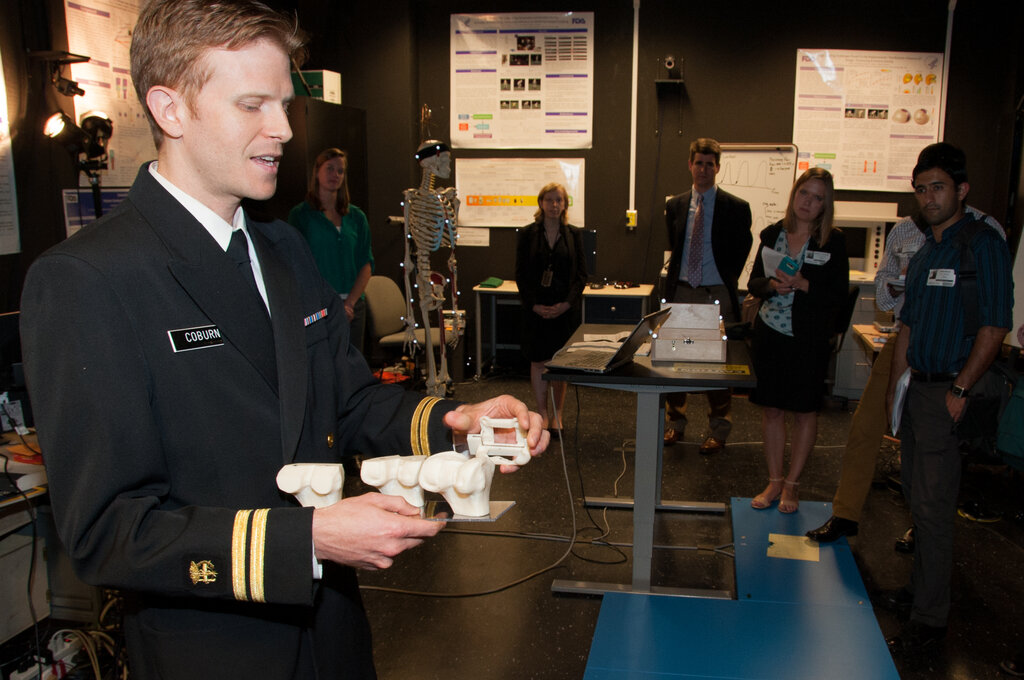
In the United States, the primary framework is the FDA's Quality System Regulation (QSR), also known as 21 CFR Part 820. The QSR establishes the requirements for a company's quality management system (QMS). A QMS is essentially the company's rulebook for how it designs, manufactures, and supports its products. It covers everything from how design changes are managed to how customer complaints are handled.
The core idea of the QSR is simple: build quality and safety into the device from the very beginning, rather than trying to inspect it in at the end.
Many companies also follow ISO 13485, an international standard for medical device quality management systems. While the FDA's QSR is a legal requirement in the U.S., ISO 13485 is often required to sell devices in other countries, like in Europe, Canada, and Australia.
The two standards are very similar, and both emphasize the importance of risk management, documentation, and process control. Complying with these regulations isn't just about avoiding penalties. It's about creating a culture of quality that protects patients and leads to better, more reliable medical devices.
Ready to check your understanding of the medical device development landscape?
What is the key difference between Verification and Validation in medical device development?
Which of the following is the primary U.S. Food and Drug Administration (FDA) regulation that establishes the requirements for a medical device company's quality management system?
Understanding this structured, regulated process is the first step in appreciating the innovation and care that goes into every medical device we rely on.