Medical Biochemistry Pathways Explained
Cellular Biochemistry
The Cell's Building Blocks
Every living thing is made of cells, and every cell is like a bustling city, full of tiny structures working together. To understand how this city functions, we first need to know what it's built from. The primary materials are four types of large organic molecules, often called biomolecules.
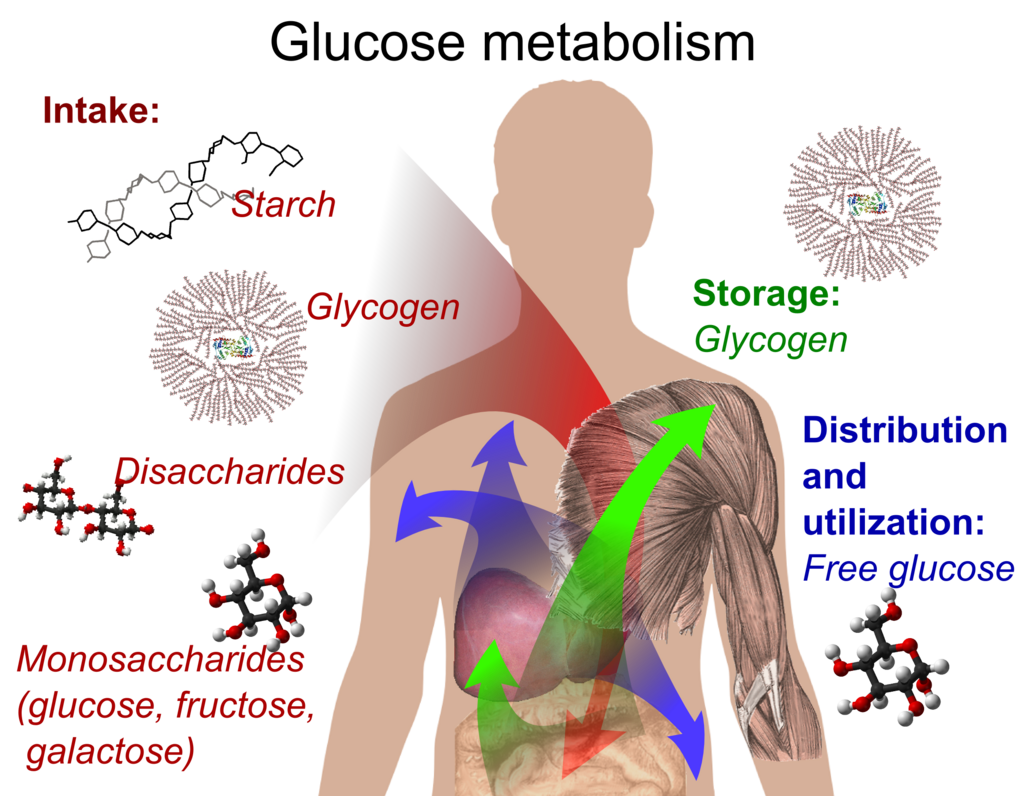
Carbohydrates are the main fuel source. They're made of sugar units. A single unit is a monosaccharide, like glucose, which is the simple sugar our bodies use for quick energy. Two units linked together make a disaccharide, like table sugar (sucrose). Long chains of these units form polysaccharides, such as starch in plants or glycogen in animals, which act as long-term energy reserves.
Lipids, commonly known as fats, are essential for storing energy and building cell structures. They don't dissolve in water, a property that makes them perfect for forming the protective outer barrier of a cell, the cell membrane. They pack more energy than carbohydrates, making them an efficient way to store fuel for the long haul.
Proteins are the workhorses of the cell. They do just about everything, from providing structural support to transporting materials. They are made from smaller units called amino acids, linked together like beads on a string. The sequence of these amino acids determines how the protein folds into a specific three-dimensional shape, and this shape dictates its unique function.
Nucleic Acids, like DNA (deoxyribonucleic acid) and RNA (ribonucleic acid), are the cell's information keepers. They are built from units called nucleotides. DNA contains the genetic blueprint for building and running the entire organism. RNA acts as a messenger, carrying instructions from the DNA to the parts of the cell that build proteins.
| Biomolecule | Building Block | Primary Function |
|---|---|---|
| Carbohydrate | Monosaccharide | Quick energy, energy storage |
| Lipid | Fatty Acid & Glycerol | Long-term energy storage, membranes |
| Protein | Amino Acid | Enzymes, structure, transport |
| Nucleic Acid | Nucleotide | Information storage and transfer |
The Cellular Factory
A cell isn't just a bag of molecules. It's a highly organized space with different compartments, called organelles, each performing a specific job. Think of it like a factory, where each department has a specialized role in the production line.
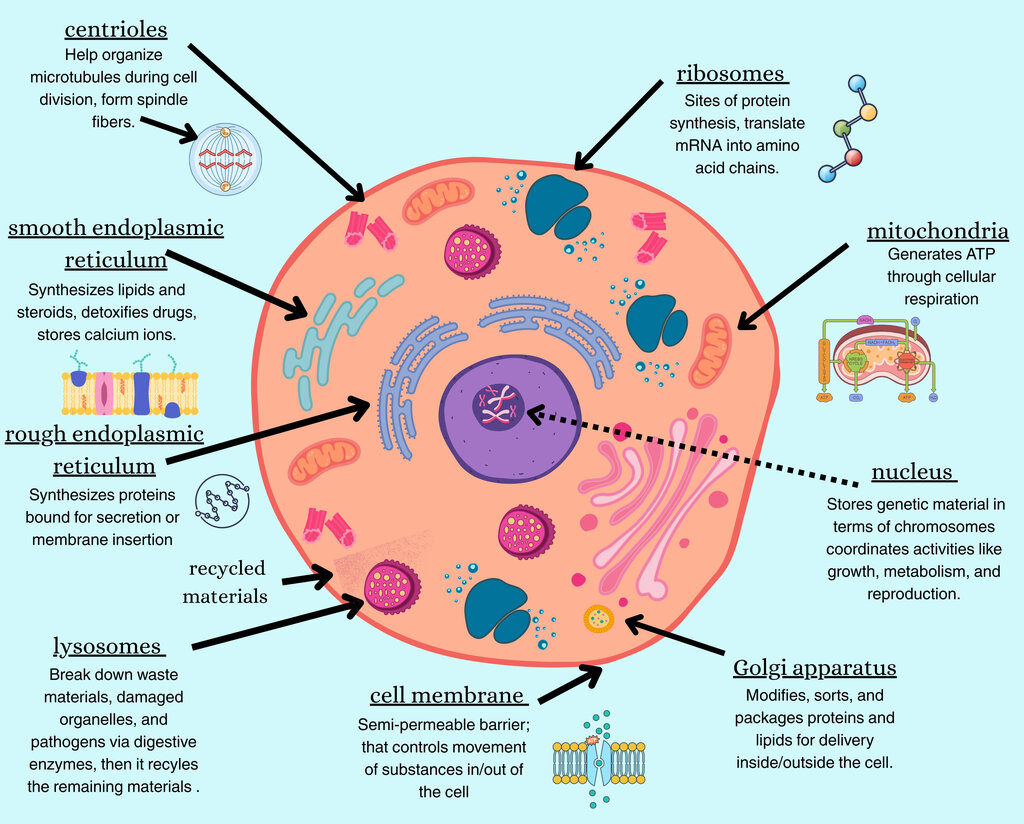
The cytoplasm is the factory floor, the gel-like substance filling the cell where many metabolic reactions occur. The nucleus is the main office, housing the DNA blueprints. The mitochondria are the power plants, generating most of the cell's energy. Ribosomes are the assembly machines that build proteins based on instructions from RNA.
The endoplasmic reticulum is a network of membranes involved in protein and lipid synthesis, like a manufacturing and processing wing. Finally, the Golgi apparatus acts as the shipping department, modifying, sorting, and packaging proteins and lipids for delivery to other destinations.
The Workers of Metabolism
Chemical reactions in the cell need to happen quickly and efficiently. That's where enzymes come in. Enzymes are proteins that act as biological catalysts, speeding up reactions without being used up in the process.
Enzyme
noun
A substance, typically a protein, produced by a living organism that acts as a catalyst to bring about a specific biochemical reaction.
Each enzyme has a unique, three-dimensional shape with a special pocket or groove called the active site. This site is precisely shaped to fit a specific molecule, called the substrate, much like a lock and key. When the substrate binds to the active site, the enzyme helps the reaction occur much faster than it would on its own. Once the reaction is complete, the product is released, and the enzyme is ready for the next substrate.
Anabolism and Catabolism
All the chemical reactions happening inside a cell are collectively called metabolism. Metabolism can be divided into two main categories.
Catabolism: The breakdown of complex molecules into simpler ones. This process releases energy. Think of it as disassembling a complex model to get back the individual bricks.
Anabolism: The synthesis of complex molecules from simpler ones. This process requires an input of energy. This is like using those individual bricks to build something new and elaborate.
The energy that connects these two processes is often carried by a molecule called adenosine triphosphate, or ATP. Catabolic reactions generate ATP, and anabolic reactions use that ATP to power the building process. ATP is the universal energy currency of the cell, spent to get work done.
Ready to check your understanding of the cell's basic components and processes?
Which class of biomolecules is primarily responsible for storing and transmitting genetic information?
The ______ is the organelle that acts as the cell's 'shipping department', modifying, sorting, and packaging proteins and lipids.
With these fundamentals in place, we can begin to explore the specific pathways that cells use to manage energy and build the molecules of life.