MEDDIPIC Framework Explained
Introduction to Information Security Risk Assessment
What is Risk Assessment?
At its core, an information security risk assessment is a formal process for figuring out what could go wrong and what the consequences would be. It’s like when you leave your house. You might check if the doors are locked and the windows are closed. You're quickly assessing the risk of a break-in and taking simple steps to prevent it.
In business, the stakes are higher. Organizations use risk assessments to protect valuable assets like customer data, financial records, and intellectual property. It’s not just about preventing hackers; it’s about understanding all potential dangers to your information systems. This process is crucial for making smart decisions about security spending and for proving to regulators that you're taking security seriously.
Cyber security risk assessment is a systematic process designed to identify vulnerabilities and threats, assess their potential impact, and prioritize remediation based on risk exposure.
A good assessment helps you focus your resources where they matter most. Instead of guessing what to protect, you have a clear, prioritized list of risks to address.
The Key Ingredients
Every risk assessment involves three main components: threats, vulnerabilities, and impact. Understanding how they relate is key. A threat exploits a vulnerability, and the result is an impact.
A threat is what could cause harm. A vulnerability is a weakness that a threat could exploit. An impact is the damage that results.
For example, a phishing email is a threat. An employee who hasn't been trained to spot phishing emails is a vulnerability. The impact could be a data breach if that employee clicks a malicious link and enters their credentials.
| Component | Description | Example |
|---|---|---|
| Threat | The potential cause of an unwanted incident. | A skilled hacker, a flood, a disgruntled employee. |
| Vulnerability | A weakness in a system, process, or control. | Unpatched software, a weak password policy, no backup plan. |
| Impact | The result of a threat exploiting a vulnerability. | Data theft, system downtime, financial loss, reputational damage. |
Measuring the Risk
Once you've identified threats, vulnerabilities, and potential impacts, you need to evaluate the level of risk. There are two main ways to do this: qualitatively and quantitatively.
Qualitative
adjective
A method of risk assessment that uses descriptive scales like 'High,' 'Medium,' and 'Low' to rank or score risks. It relies on judgment and experience.
A qualitative assessment is subjective. It’s faster and simpler, making it a great starting point. You might create a risk matrix that plots the likelihood of a threat against its potential impact. A highly likely threat with a high impact would be a top priority.
On the other hand, a quantitative assessment tries to assign a specific monetary value to risk.
Quantitative
adjective
A method of risk assessment that assigns numerical, often monetary, values to risks. It uses calculations based on the value of assets and the probability of loss.
This approach is more objective because it’s based on data. It often involves calculating the Annualized Loss Expectancy (ALE), which estimates the cost of a risk over a year. The formula looks like this:
Here, SLE is the Single Loss Expectancy (how much money you'd lose if the event happened once) and ARO is the Annualized Rate of Occurrence (how many times you expect it to happen per year).
Many organizations use a hybrid approach, starting with a qualitative assessment to identify high-priority areas and then using quantitative methods to analyze those specific risks in more detail.
Why Bother with Rules?
Performing risk assessments isn't just a good practice—it's often a legal and regulatory requirement. Many industries have standards that mandate how organizations must protect data.
For example:
- HIPAA (Health Insurance Portability and Accountability Act) requires healthcare organizations to conduct risk assessments to protect patient health information.
- PCI DSS (Payment Card Industry Data Security Standard) mandates that any company handling credit card data must perform risk assessments.
- GDPR (General Data Protection Regulation) requires organizations that process the data of EU citizens to implement measures that ensure data security, which starts with understanding the risks.
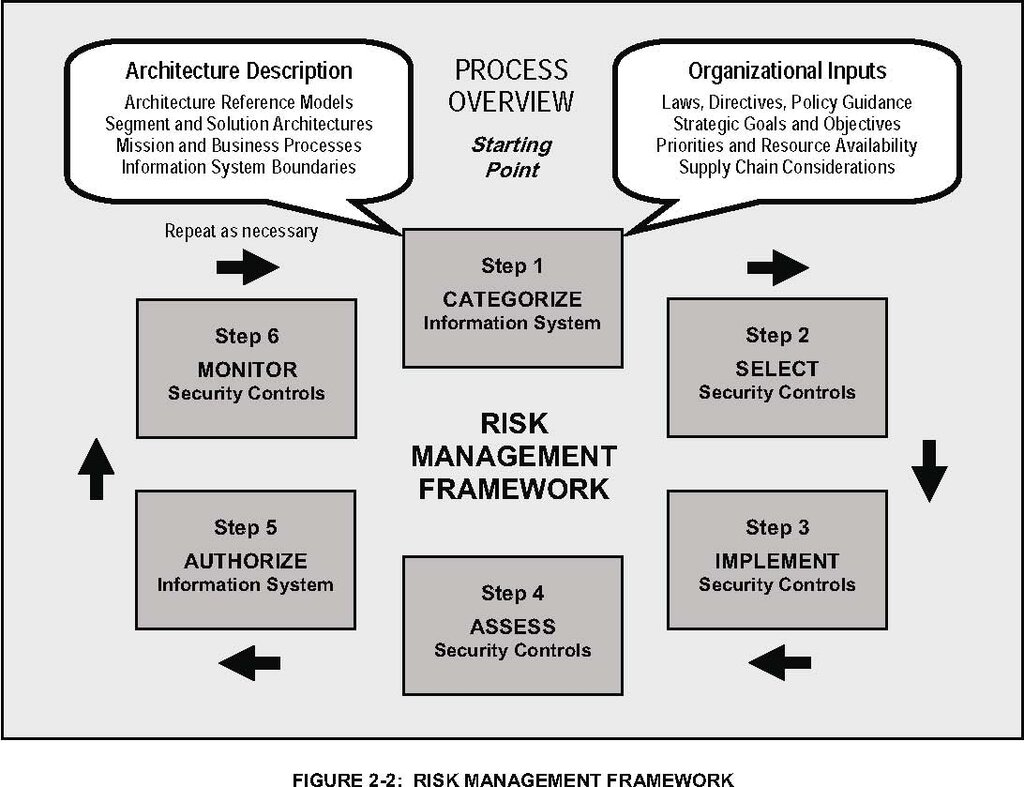
Failing to comply can result in hefty fines and legal trouble. These standards provide a baseline, guiding organizations to build a robust security posture built on a solid foundation of risk assessment.
Now that you understand the core concepts, let's test your knowledge.
What is the primary purpose of an information security risk assessment?
Complete the sentence: In the context of a risk assessment, a ______ exploits a ______, resulting in an impact.
Understanding these fundamentals—threats, vulnerabilities, impact, and assessment methods—is the first step in building an effective security strategy. It’s a continuous cycle, not a one-time task, that helps organizations adapt to an ever-changing digital landscape.