Mechanisms of Drug Induced Psychosis
Dopamine and Mesolimbic Hyperactivity
The Dopamine Flood
Deep within the brain lies a network called the mesolimbic dopamine pathway, often called the reward circuit. This system is designed to make us notice and repeat actions essential for survival, like eating or socializing. It originates in the Ventral Tegmental Area (VTA) and sends dopamine projections to the Nucleus Accumbens (NAc), a key hub for motivation and reward.
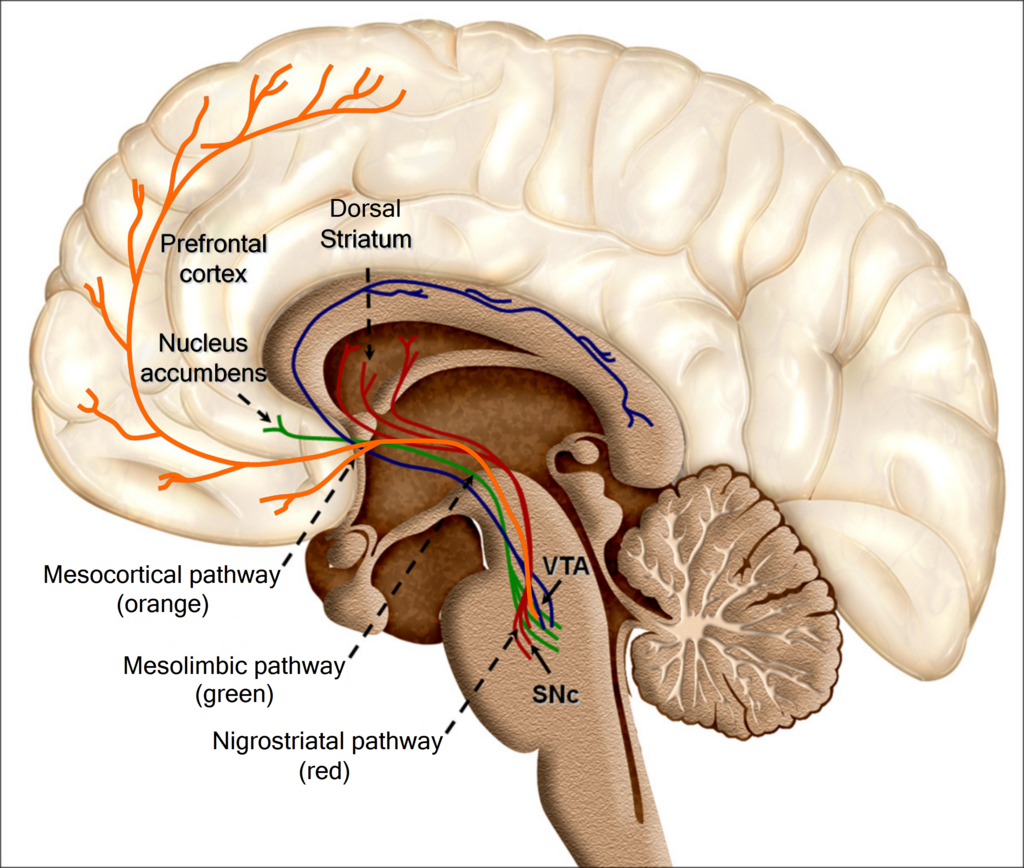
Under normal circumstances, dopamine is released into the synapse—the tiny gap between neurons—to send a signal. After the message is delivered, a protein called the Dopamine Transporter (DAT) acts like a vacuum, pulling the dopamine back into the original neuron for reuse. This recycling process keeps dopamine levels balanced and ensures signals are clear and meaningful.
Hijacking the System
Psychostimulants directly interfere with this delicate balance, but in different ways. Cocaine is a dopamine reuptake inhibitor. It essentially clogs the DAT vacuum, preventing it from clearing dopamine from the synapse. The neurotransmitter lingers, repeatedly stimulating the receiving neuron.
Amphetamines, like methamphetamine, are more aggressive. They not only block the DAT but also reverse its function. Instead of just preventing cleanup, they force the neuron to pump even more dopamine out into the synapse. The result of both actions is a massive, uncontrolled flood of dopamine far beyond what natural rewards could ever produce.
This synaptic flooding is the neurochemical basis for the intense euphoria users feel, but it comes at a steep price. The brain's reward system isn't designed for this level of activity.
When Signals Get Scrambled
The overwhelming surge of dopamine leads to a state known as 'aberrant salience.' Salience is the quality that makes something stand out and seem important. Dopamine is our natural salience signal, telling the brain, "Pay attention to this!" When the system is flooded, everything can seem important. Neutral stimuli—a passing car, a glance from a stranger, a crack in the ceiling—are suddenly imbued with profound, often threatening, significance.
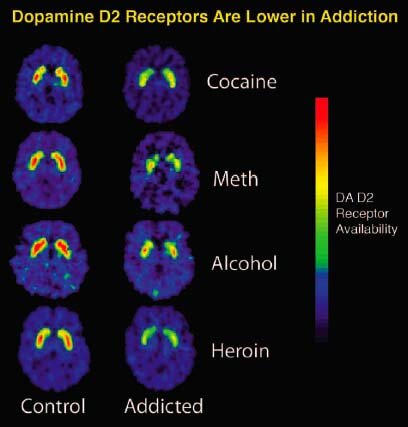
This is the breeding ground for delusions. The brain tries to make sense of these faulty importance signals, weaving them into a narrative that may be paranoid or grandiose. The overstimulation of a specific type of dopamine receptor, the D2 receptor, is thought to be a critical factor in this process, mediating the transition from a powerful reward signal to a scrambled perception of reality.
Primed for Psychosis
Repeatedly exposing the mesolimbic pathway to these massive dopamine surges changes it. The brain becomes sensitized, a phenomenon often called 'kindling.' Just as small twigs can kindle a large fire, repeated, smaller exposures to a substance can lead to progressively larger and more severe responses.
Over time, the brain's dopamine system becomes hyper-reactive. A dose that once only caused euphoria might now trigger paranoia or hallucinations. Eventually, the system can become so dysregulated that psychotic symptoms emerge even with low doses or persist long after the drug has worn off. This sensitization process helps explain how acute intoxication can escalate into a sustained, substance-induced psychotic disorder.
Over time, meth use can permanently change a person’s brain structure and function.
Let's review the key mechanisms behind how psychostimulants disrupt the dopamine system and lead to psychosis.
What are the two key brain regions that form the core of the mesolimbic dopamine pathway, also known as the reward circuit?
How does the primary mechanism of amphetamines on the dopamine system differ from that of cocaine?
Understanding these neurochemical pathways is crucial for grasping how substance use can fundamentally alter perception and thought.