Mechanics: Work, Energy, and Power Fundamentals
Work and Energy
The Physics of Work
In everyday language, “work” can mean anything from doing chores to solving a tough problem. In physics, the term has a much more specific meaning. Work is done on an object when a force causes it to move over a distance. If you push against a solid wall, you might feel tired, but you haven't done any work in the physics sense because the wall didn't move.
For work to occur, two things are essential: a force must be applied, and there must be a displacement in the direction of that force. The amount of work done is the product of the component of the force in the direction of the displacement and the magnitude of this displacement.
Imagine you're pulling a suitcase through an airport. If you pull the handle at an angle, only part of your force is actually pulling the suitcase forward. The term isolates exactly that part. If you pull horizontally (), then , and the entire force contributes to the work. If you were to lift the suitcase straight up while walking forward, the upward lifting force is perpendicular () to the forward motion. In this case, , and that lifting force does no work in the horizontal direction.
Key takeaway: No displacement means no physical work. An applied force must cause motion for work to be done.
Energy and Its Forms
So, what does it take to do work? Energy. Energy is the capacity to do work. When work is done on a system, its energy changes. In mechanics, we often focus on two primary forms of energy: kinetic and potential.
Kinetic Energy
adjective
The energy an object possesses due to its motion.
Anything that moves has kinetic energy. The faster an object moves, and the more mass it has, the more kinetic energy it possesses. The relationship is not linear; doubling the speed of an object quadruples its kinetic energy.
Potential energy, on the other hand, is stored energy. It's the energy an object has because of its position, configuration, or state. There are several types, but two are very common in mechanics.
Gravitational Potential Energy: This is energy stored in an object as a result of its vertical position or height. The higher an object is lifted against gravity, the more gravitational potential energy it stores. Its formula is , where is mass, is the acceleration due to gravity, and is the height.
Elastic Potential Energy: This is energy stored in an elastic object, like a spring or a rubber band, when it is stretched or compressed. The formula is , where is the spring constant (a measure of the spring's stiffness) and is the distance the spring is stretched or compressed from its equilibrium position.
Connecting Work and Energy
Work and energy are not just related; they are two sides of the same coin. The work-energy theorem provides the direct link: the net work done on an object equals the change in its kinetic energy. In other words, doing work on an object is the process of transferring energy to it.
If you push a cart from rest, the work you do gives it kinetic energy. If a braking force does negative work on a moving car (by acting opposite to the direction of motion), it removes kinetic energy, causing the car to slow down.
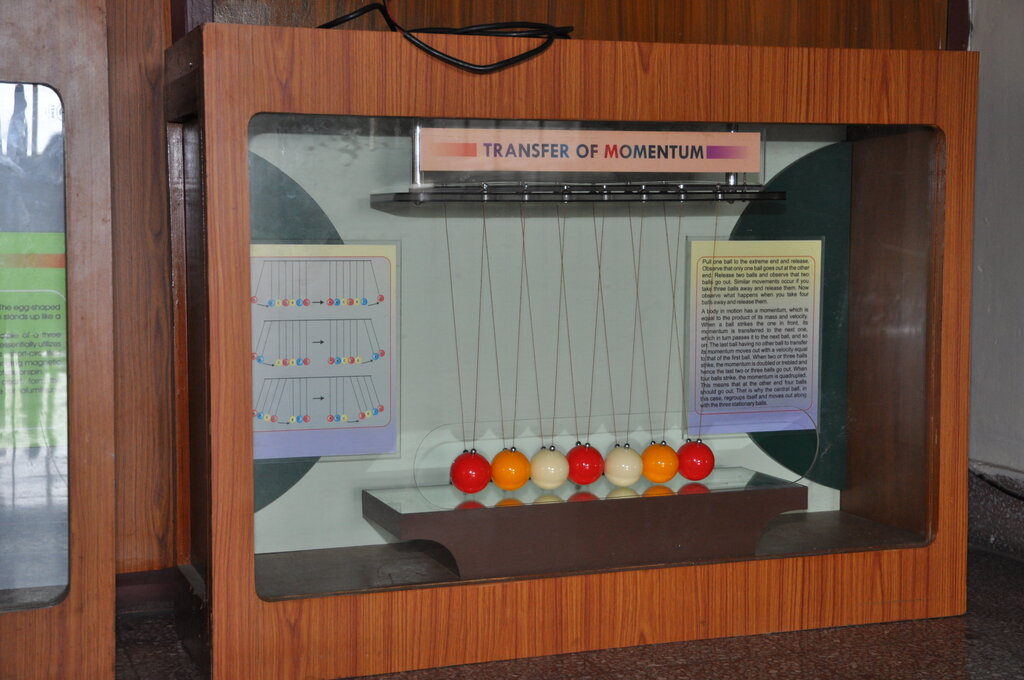
This principle also connects to potential energy. When you lift a book, you do positive work against gravity. That work doesn't disappear; it's stored as an increase in the book's gravitational potential energy. If you let go, gravity does positive work on the book, converting that potential energy back into kinetic energy as it falls.
Work in Action: Simple Machines
Simple machines are devices that change the direction or magnitude of a force. They don't reduce the amount of work you have to do, but they can make the work easier by reducing the force you need to apply. They do this by increasing the distance over which the force is applied.
Let's look at two examples: levers and inclined planes.
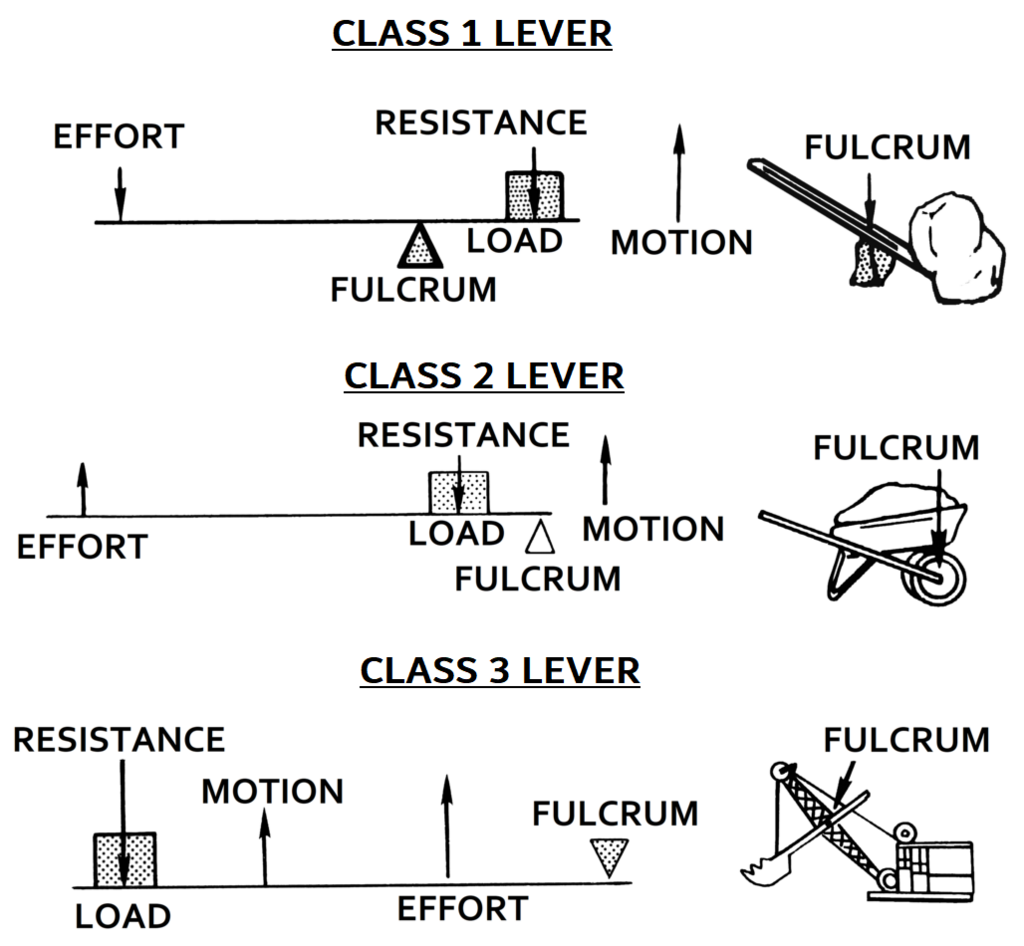
A lever is a rigid bar that pivots around a fixed point called a fulcrum. By applying a small force (effort) over a long distance on one side of the fulcrum, you can exert a large force over a short distance on the other side. Think of using a crowbar to lift a heavy rock. You push down on the long end of the crowbar, and the short end lifts the rock with much greater force. The work you do (small force × long distance) is equal to the work done on the rock (large force × short distance), ignoring friction.
An inclined plane, or a ramp, is another classic simple machine. Lifting a heavy box straight up requires a large force to counteract gravity. Pushing that same box up a long ramp requires less force. You trade a large force over a short vertical distance for a smaller force over a longer diagonal distance. Again, the total work done is the same (ignoring friction), but the required effort at any given moment is reduced.
Understanding the relationship between work and energy is fundamental to all areas of physics. It allows us to analyze everything from planetary orbits to the mechanics of a car engine, all through the lens of energy transfer and transformation.