Mechanics of Plant Energy Production
Chloroplast Ultra-structure
The Powerhouse Within
To find the engine of photosynthesis, we need to look inside the plant cell, at a specialized organelle called the chloroplast. Think of it as a microscopic factory. It's enclosed by a double membrane, an inner and an outer layer, which carefully controls the passage of molecules in and out, much like a factory gate.
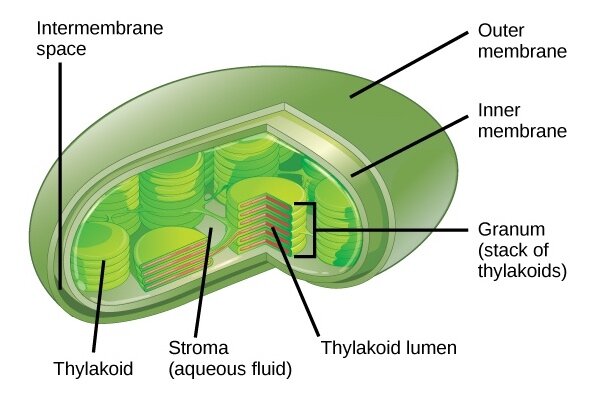
Inside the inner membrane is a dense, alkaline fluid called the stroma. This isn't just empty space; it’s a bustling chemical soup filled with enzymes, starch granules, and, surprisingly, the chloroplast's own genetic material. Chloroplasts contain their own circular DNA and ribosomes, allowing them to produce some of their own proteins. This is where the second stage of photosynthesis, the Calvin cycle, takes place, using the energy captured earlier to build sugars.
A Folded Factory
Floating within the stroma is the chloroplast's most remarkable feature: the thylakoid system. This is a third membrane system, a complex network of interconnected, flattened sacs. The light-dependent reactions of photosynthesis, where light energy is converted into chemical energy, happen right here. The thylakoid membrane is rich in pigments like chlorophyll, which absorb light.
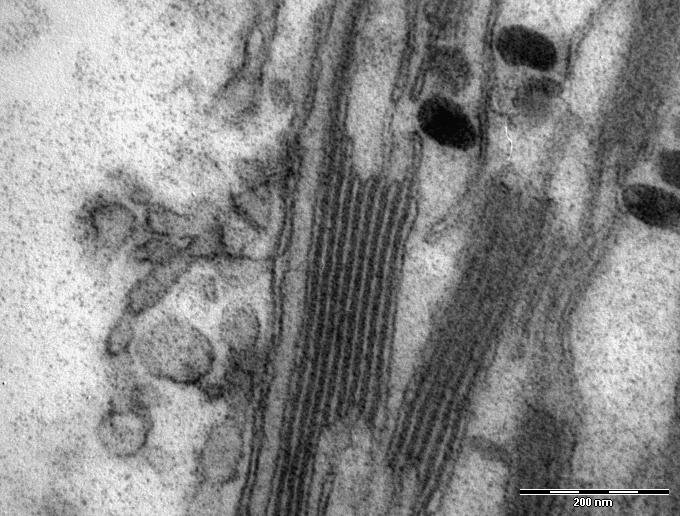
In many places, thylakoids are stacked up like coins into structures called grana. These stacks are connected to each other by unstacked thylakoids known as stroma lamellae, forming a single, continuous, and highly folded network. This intricate folding massively increases the surface area of the thylakoid membrane, allowing more space for the light-capturing machinery.
Gradients and Energy
The interior of each thylakoid is called the lumen. The thylakoid membrane creates a vital separation between the lumen and the surrounding stroma. This separation is key to energy production. During the light-dependent reactions, protein complexes embedded in the membrane use light energy to pump protons (hydrogen ions, ) from the stroma into the thylakoid lumen.
This pumping action creates a high concentration of protons inside the lumen and a low concentration in the stroma. This difference is an electrochemical gradient, a form of stored potential energy, much like water stored behind a dam.
The only way for the protons to escape the crowded lumen and flow back down their concentration gradient is through a special protein complex called ATP synthase. As protons rush through this enzyme, it spins like a molecular turbine, using the energy of the flow to generate ATP. The specific positioning of the Photosystems (which capture light) and ATP synthase complexes within the membrane is crucial for creating this efficient energy-converting assembly line.
Ready to test your knowledge? Let's see how well you've understood the internal architecture of the chloroplast.
What is the name for the dense fluid inside the chloroplast's inner membrane, where the Calvin cycle takes place?
The intricate folding of the thylakoid membrane into stacks (grana) serves to increase its surface area.
This highly organised internal structure is a perfect example of how form dictates function in biology. Every fold and compartment within the chloroplast is precisely arranged to maximise its ability to convert sunlight into the chemical energy that fuels life.