Mechanics of National Economies
National Income Dynamics
The Ripple Effect of Spending
An economy isn't a static machine. It's a dynamic system where every dollar spent has a life of its own. We can track this flow using the Expenditure Approach, a core tool for understanding national income.
This isn't just an accounting identity. It's a map of how money moves. A change in any one component doesn't just add or subtract from the total—it kicks off a chain reaction.
The Spending Multiplier
Imagine the government spends $100 million on a new infrastructure project. That money doesn't just disappear into a vault. It's paid as wages to construction workers, profits to engineering firms, and revenue to material suppliers.
What do those people and companies do with their new income? They spend a portion of it. The construction workers buy groceries, the engineers buy new software, and the suppliers invest in new equipment. That spending becomes income for grocers, software developers, and equipment manufacturers. This cycle continues, with each round of spending being a bit smaller than the last.
This phenomenon is called the multiplier effect. The initial $100 million in government spending might ultimately create $180 million, $250 million, or even more in total economic activity. The size of this ripple depends on how much of each new dollar of income people choose to spend versus save. This is captured by the (MPC).
Marginal Propensity to Consume (MPC)
noun
The proportion of an aggregate raise in pay that a consumer spends on the consumption of goods and services, as opposed to saving it.
A higher MPC means a larger multiplier effect, as more money is re-injected into the economy at each stage. The formula for the spending multiplier is surprisingly simple.
Drivers of Change
While government spending () is a direct lever for policy, other components of GDP are driven by more complex forces.
Investment (I): This isn't about buying stocks. It's about businesses spending on new equipment, factories, and software. Two main factors influence this: interest rates and business confidence. Low interest rates make borrowing cheaper, encouraging investment. But even with low rates, if businesses are pessimistic about the future, they won't spend. [{
}], as Keynes called it, can often outweigh cold financial calculation.
Net Exports (NX): This component is sensitive to global events. If a trading partner's economy booms, they'll buy more of your country's goods, increasing exports. Conversely, a strong domestic currency can make your goods more expensive for foreigners, reducing exports. A sudden change in trade policy or a global supply chain disruption can create a major shock to NX.
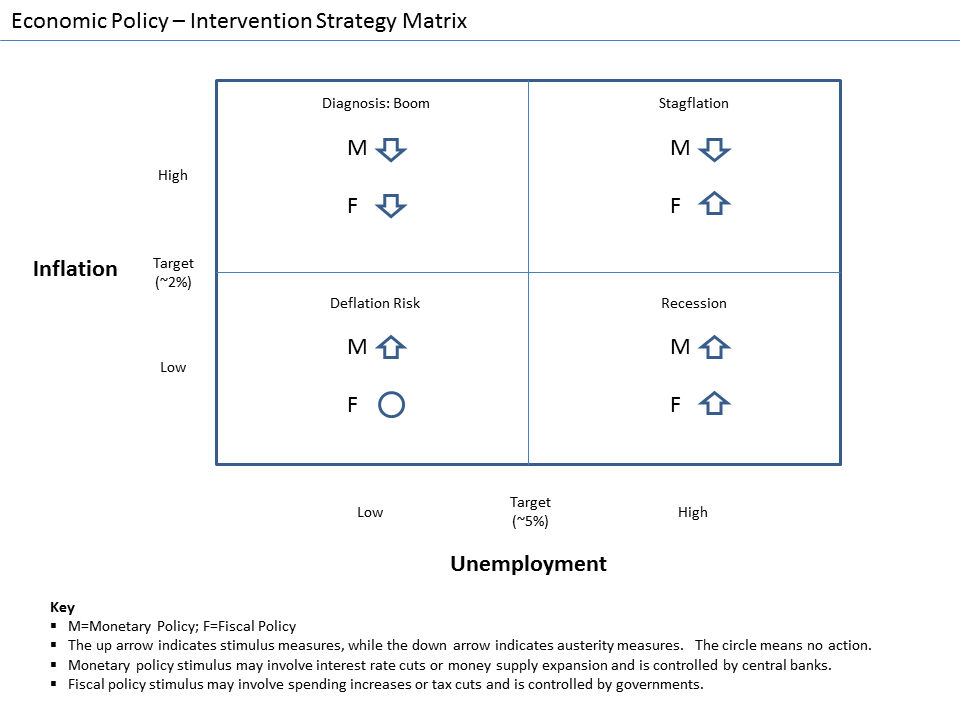
By understanding how these components interact through the multiplier, we can see how a small shock in one area—like a dip in business confidence or a sudden drop in exports—can lead to a much larger contraction in the national economy. Similarly, a well-timed injection of spending can be amplified, helping to steer the economy toward growth.
Time to check your understanding of how these economic forces interact.
What is the core principle of the economic multiplier effect?
If the government initiates a $50 billion infrastructure spending program in an economy where the Marginal Propensity to Consume (MPC) is 0.8, what is the maximum potential increase in total economic activity?
Understanding these dynamics provides the framework for analyzing everything from government budget debates to the impact of global trade negotiations.